
A young dog developing a stiff leg after lying down can be concerning, especially when the stiffness appears suddenly and then improves once they start moving.
A dog may hesitate before standing, take a few unusual steps, or briefly favor one leg after getting up.
Occasional stiffness may be related to temporary discomfort, but repeated episodes should not automatically be dismissed as growing pains.
Table of Contents
Young Dog Stiff Leg After Lying Down: Why It Happens
A dog may develop a stiff leg after lying down when a joint, muscle, ligament, tendon, or other part of the limb becomes uncomfortable after being inactive.
In a young dog, temporary stiffness can sometimes follow strenuous activity, an awkward sleeping position, or a minor strain, but recurring stiffness can also indicate an orthopedic problem that needs evaluation.
The pattern is particularly useful to notice. If a dog is stiff for only a few steps and then walks normally, the cause may differ from a dog that continues limping, avoids putting weight on the leg, or shows signs of pain.
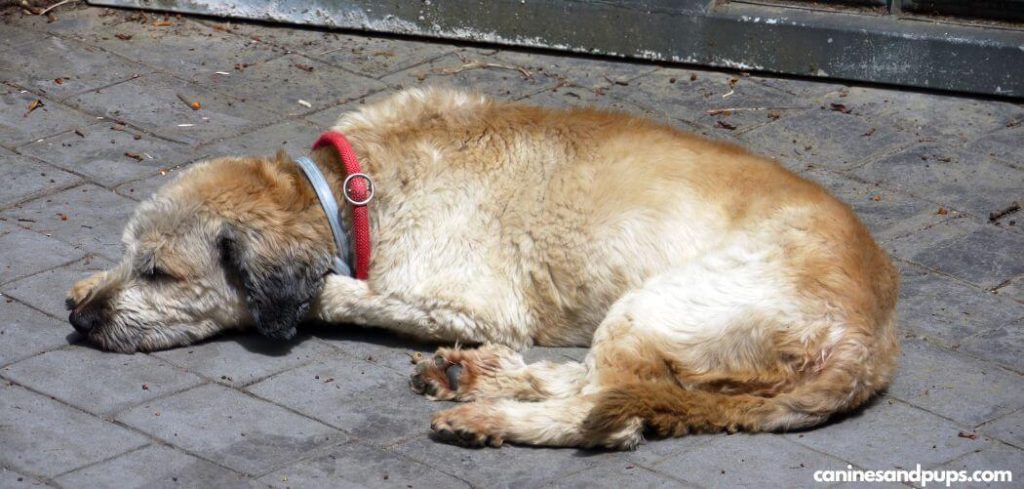
Young Dog Stiff Leg After Lying Down: Symptoms
Depending on the underlying problem, other symptoms may occur at the same time, including:
Stiffness in one leg after getting up
Limping for a few steps
Hesitation before standing
Favoring one leg
Difficulty climbing stairs
Reluctance to jump or run
Licking or chewing at a leg
Stiffness that improves after walking
Young Dog Stiff Leg After Lying Down: Common Causes
Sleeping Position or Temporary Stiffness
A young dog can occasionally appear stiff after remaining in one position for an extended period. A leg may feel uncomfortable when the dog first stands, resulting in a few stiff or unusual steps.
The stiffness should generally resolve quickly as your dog begins moving. Your dog should otherwise remain comfortable, active, and willing to use the leg normally.
Occasional brief stiffness without pain or other symptoms may be less concerning, but repeated episodes should be monitored rather than automatically considered normal.
Related: Dog Suddenly Very Stiff (Causes and treatment)
Muscle Soreness After Activity
Young dogs often have plenty of energy and may run, jump, chase toys, or play intensely. Overdoing activity can leave a muscle sore, making one leg appear stiff after a period of rest.
A dog may be slightly reluctant to move immediately after lying down but become more comfortable after gentle walking.
Rest and controlled activity may help a minor strain, but persistent limping, worsening pain, or refusal to use the leg requires veterinary assessment.
Minor Sprain or Strain
A sudden twist, awkward landing, slip, or jump can strain a ligament, tendon, or muscle. The event may happen quickly enough that an owner does not notice an injury occurring.
The dog may favor the affected leg, hesitate to jump, or become stiff after resting. Some dogs lick the painful area.
Even a young dog can develop a significant soft-tissue injury. If the stiffness continues, becomes more noticeable, or interferes with normal activity, veterinary evaluation is appropriate.
Related: Sudden stiffness in a dog’s front legs (Causes and treatment)
Growing or Developmental Orthopedic Problems
Some young dogs develop orthopedic conditions involving the hips, knees, elbows, or other joints. Depending on the specific problem, stiffness may be more noticeable after rest or following exercise.
Intermittent limping, an unusual gait, reluctance to run, difficulty rising, or reduced willingness to jump may also be noticed.
Large and rapidly growing dogs can be particularly prone to certain developmental orthopedic problems, although joint problems can occur in dogs of many sizes.
Repeated stiffness should therefore be assessed rather than assumed to be a normal part of growing.
Patellar Luxation
Patellar luxation occurs when the kneecap moves out of its normal position. It can cause intermittent hind-leg stiffness or limping, particularly in young dogs.
Some dogs briefly carry a back leg or take several unusual steps before returning to normal movement. Others develop more persistent lameness or discomfort.
A veterinarian can assess the knee and determine whether the kneecap is moving abnormally. Treatment depends on the severity of the problem and the dog’s individual circumstances.
Hip or Joint Problems
Hip abnormalities and other joint conditions can affect young dogs and may cause stiffness after lying down. Your dog may take longer to get up or appear uncomfortable when starting to walk.
Other signs can include reluctance to climb stairs, difficulty jumping, an altered gait, or reduced willingness to participate in activities that were previously enjoyable.
Persistent or recurring stiffness warrants veterinary examination so that joint problems can be identified early and appropriately managed.
Injury to the Paw or Nail
Sometimes the apparent stiffness comes from a problem lower down in the leg. A torn nail, irritated paw pad, thorn, foreign material, or small wound can cause a dog to favor the limb.
A dog may lick the paw, hold it up briefly, or walk differently after getting up.
If your dog allows it, gently look at the paw and between the toes for an obvious problem. Do not force an examination if the area is painful, and seek veterinary care when the problem is not easily identified or resolved.
Less Common Joint, Bone, or Neurological Problems
Less common orthopedic or neurological conditions can also cause intermittent stiffness or abnormal movement in young dogs. These problems may involve the bones, joints, nerves, or spinal cord.
Additional signs may include persistent lameness, weakness, unusual coordination, muscle loss, or difficulty using more than one limb.
A recurring or unexplained stiff leg should be evaluated by a veterinarian, particularly if the symptoms are becoming more frequent or severe.
Related: Sudden stiffness in a dog’s back legs (Causes and treatment)
Young Dog Stiff Leg After Lying Down: What to Do
If your young dog is only briefly stiff after lying down and then returns completely to normal, monitor the pattern closely.
Keep activity moderate for a few days and avoid excessive running, jumping, or rough play if you suspect your dog has overexerted the leg.
Provide a comfortable resting area with good traction. Slippery floors can make it easier for a dog with a sore leg to slip or place additional stress on the limb.
If your dog allows it, check the paw, nails, and spaces between the toes for obvious foreign material, swelling, or injury. Stop if your dog appears painful.
Observe whether the same leg is affected each time. Note whether stiffness occurs after sleeping, after exercise, or at particular times of day.
A short video showing your dog getting up and walking can be useful for your veterinarian, especially if the stiffness disappears before the appointment.
Do not stretch or manipulate the leg if your dog appears painful. Avoid giving human painkillers or anti-inflammatory medications unless your veterinarian specifically instructs you to do so.
When to Call or Visit the Vet
Occasional brief stiffness may be less concerning when a young dog immediately returns to normal, but repeated episodes should be investigated.
Persistent lameness or pain is not something that should simply be attributed to growing.
Schedule an appointment if you notice:
Stiffness that repeatedly occurs after lying down
Limping that continues beyond a few steps
The same leg repeatedly being affected
Reluctance to run or play
Difficulty climbing stairs
Reluctance to jump
Licking or chewing at the leg
Swelling or recurring pain
Seek emergency veterinary attention immediately if your dog develops:
Inability to use the leg
Severe or uncontrolled pain
Obvious major swelling
A visibly abnormal limb
Inability to stand or walk
Sudden severe weakness
Collapse
Significant bleeding
Severe distress
Young Dog Stiff Leg After Lying Down: Treatment
Veterinary treatment for a young dog that develops a stiff leg after lying down starts with a thorough examination of the affected limb, including the paws, joints, muscles, bones, ligaments, and gait.
The veterinarian may recommend X-rays or other diagnostic imaging to identify problems that are not visible externally, while additional tests may be performed when appropriate.
Treatment may include prescription pain relief, anti-inflammatory medication, restricted activity, physical rehabilitation, or other targeted therapy based on the diagnosis.
Key Takeaway
A young dog with a stiff leg after lying down may simply have temporary stiffness or muscle soreness, but repeated episodes can also be associated with sprains, joint problems, patellar luxation, developmental orthopedic conditions, or other injuries.
Watch for patterns, particularly if the same leg is repeatedly affected or the stiffness is accompanied by limping, pain, swelling, or reluctance to exercise.
Avoid strenuous activity while you monitor the problem and never give human pain medication unless directed by your veterinarian.
If the stiffness persists or keeps returning, arrange a veterinary examination.
With appropriate evaluation, the underlying cause can be identified and your young dog can receive the treatment and activity plan needed for a safe return to normal movement.