
If your female dog has stopped eating after her heat cycle, it is important to pay attention to how long ago the heat ended and whether she has developed other changes in her behavior.
Some dogs experience temporary appetite changes because of hormonal fluctuations, but refusing food after heat can also indicate a reproductive health problem.
Table of Contents
Dog Not Eating After Heat Cycle: Why It Happens
A dog may stop eating after her heat cycle because of hormonal changes, false pregnancy, stress, or an underlying reproductive or digestive condition.
Hormonal changes after heat can affect appetite and behavior, and some dogs develop false pregnancy, which may cause nesting, mammary enlargement, and changes in eating habits.
However, loss of appetite in an unspayed female dog can also be an early sign of pyometra, which commonly develops within several weeks after heat.
The timing is particularly important. Pyometra often develops around two to eight weeks after a heat cycle, although it can occur outside this typical period.
Some dogs develop vaginal discharge, while others have a closed cervix and show no visible discharge at all.
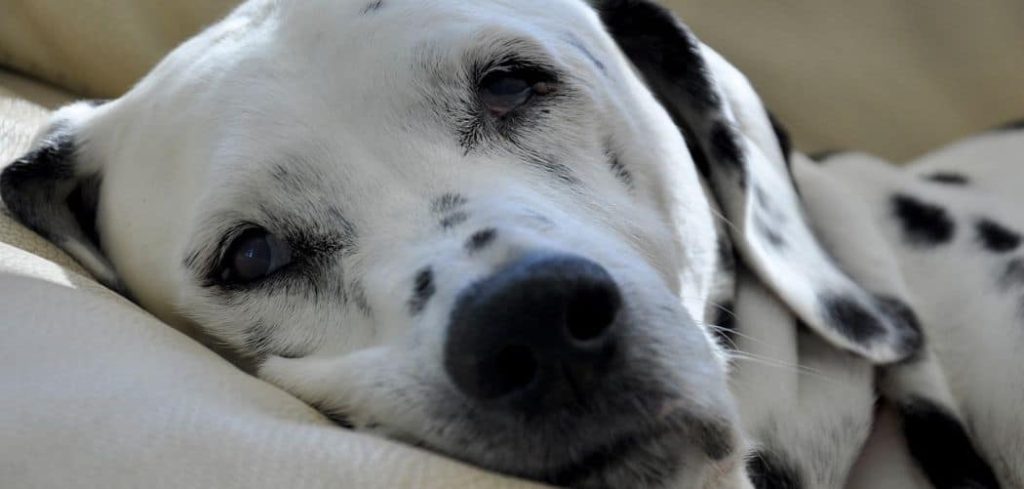
Dog Not Eating After a Heat Cycle: Causes
1. Pyometra (Uterine Infection)
Pyometra is one of the most important conditions to investigate when an unspayed female dog stops eating after her heat cycle.
It is a bacterial infection of the uterus that develops following hormonal changes associated with the reproductive cycle. The uterus can become enlarged and fill with infected fluid, making the dog increasingly unwell.
Loss of appetite may be one of the first noticeable signs. Other symptoms include lethargy, vomiting, increased thirst, frequent urination, fever, and sometimes a swollen or painful abdomen.
There are two main forms of pyometra. With open-cervix pyometra, infected discharge may drain from the vagina and appear bloody, yellowish, or cream-colored.
With closed-cervix pyometra, the infected material remains trapped inside the uterus, so there may be no visible discharge.
The closed form can be particularly dangerous because owners may not notice an obvious reproductive symptom until the dog becomes seriously ill.
Related: Old Dog Heat Cycle: What It Means, Risks, And What To Expect
2. False Pregnancy (Pseudopregnancy)
False pregnancy is a hormonal condition that can occur after a dog’s heat cycle, even when she has not mated.
Changes in reproductive hormones can cause the body to behave as though pregnancy has occurred.
Some dogs develop reduced appetite, restlessness, nesting behavior, enlarged mammary glands, or milk production. They may also become unusually attached to toys or behave as though they are caring for puppies.
Appetite changes can occur alongside these behavioral and physical changes.
Although false pregnancy often resolves without treatment, a veterinarian should first rule out pyometra, particularly if the dog is refusing food or appears unwell.
Related: My Dog Is In Heat and Not Eating (Why It Happens)
3. Hormonal Changes After Heat
The hormonal changes that occur as a dog moves out of heat can influence appetite, behavior, and activity levels.
Some dogs become quieter, less interested in food, or temporarily change their usual eating patterns.
However, hormonal changes should not automatically be blamed when a dog completely refuses food.
If the appetite loss persists, or if there are additional symptoms such as vomiting, increased thirst, or unusual tiredness, an underlying medical condition needs to be investigated.
4. Stress and Behavioral Changes
A heat cycle can involve changes in routine, activity, attention from other dogs, and behavior.
Some dogs become restless or distracted during and shortly after heat, which may temporarily affect their interest in food.
Changes in the home environment, separation from familiar animals, or other stressful experiences may also contribute.
Stress-related appetite changes should generally improve as the dog settles. Persistent refusal to eat, however, requires veterinary assessment rather than being assumed to be behavioral.
5. Pregnancy
If your dog had contact with an intact male during her heat cycle, pregnancy is another possibility.
Hormonal changes during early pregnancy may be accompanied by changes in appetite, although refusing food is not enough to establish that a dog is pregnant.
Other changes may include altered activity, mild behavioral differences, and later physical changes as pregnancy progresses.
A veterinarian can confirm pregnancy using appropriate examination and ultrasound at the correct stage.
It is also important to distinguish pregnancy from pyometra because both can occur after heat but require very different management.
6. Vaginal or Reproductive Tract Infection
Infections affecting the reproductive tract can cause discomfort, inflammation, and changes in appetite.
Unusual vaginal discharge, frequent licking around the vulva, restlessness, or changes in urination may be noticed.
Pyometra is the most important uterine infection to rule out, but other reproductive conditions may also need investigation.
A veterinary examination is necessary to determine whether the problem involves the uterus, vagina, urinary tract, or another structure.
Related: Dog Bleeding Excessively During Heat (Here’s Why)
7. Digestive Problems
A dog may also stop eating after heat because of an unrelated digestive condition.
Gastritis, intestinal infections, pancreatitis, dietary indiscretion, and other gastrointestinal problems can cause nausea and reduced appetite.
Vomiting, diarrhea, abdominal discomfort, excessive drooling, or changes in bowel movements may be noticed.
However, when an unspayed dog stops eating after a heat cycle, reproductive disease should be investigated rather than assuming the problem is simply an upset stomach.
8. Other Underlying Medical Conditions
Sometimes appetite loss after heat is coincidental and caused by an unrelated health problem.
Kidney disease, liver disease, fever, infections, and other illnesses can make a dog feel nauseated or generally unwell.
What may be noticed includes increased thirst, changes in urination, vomiting, weight loss, or reduced energy.
Blood tests and a physical examination can help identify these conditions and determine whether the appetite loss is related to the reproductive cycle or another illness.
Related: Dog Diarrhea Due to Heat Cycle (What It Means)
Dog Not Eating After Heat Cycle but Acting Normal
A dog may refuse food after her heat cycle while continuing to walk, play, drink water, and interact normally.
Hormonal changes and false pregnancy can sometimes cause temporary appetite changes without obvious illness.
However, early pyometra may also cause reduced appetite before more noticeable symptoms develop.
This is why normal behavior should not be used to rule out a uterine infection. If your dog is unspayed and has stopped eating after heat, arrange a veterinary examination today.
Dog Not Eating 2 Weeks After Heat Cycle
When a dog stops eating approximately two weeks after her heat cycle, it is important to investigate the cause rather than assuming her hormones are still settling.
Although pyometra is more commonly recognized several weeks after heat, it can develop earlier or later.
Other possibilities include false pregnancy, digestive problems, and unrelated infections.
Contact your veterinarian promptly, especially if your dog has also become quieter, is drinking more water, or has developed vaginal discharge.
Dog Not Eating After a Heat Cycle: What to Do
1. Arrange a Veterinary Examination
Contact your veterinarian today and explain that your dog has stopped eating following her heat cycle.
Mention when the heat started and ended, whether she is spayed, and when the appetite loss began.
The veterinarian should specifically consider pyometra and other reproductive conditions.
2. Monitor Her Drinking and Urination
Pay attention to whether your dog is drinking more water than usual or urinating more frequently.
Increased thirst and urination can accompany pyometra because the infection and its effects on the kidneys interfere with normal fluid regulation.
Record any noticeable changes and share them with your veterinarian.
3. Check for Vaginal Discharge
Observe the area around your dog’s vulva and look for unusual bloody, yellowish, cream-colored, or foul-smelling discharge.
However, remember that a dog with closed-cervix pyometra may have no visible discharge.
Do not rely on the absence of discharge as reassurance.
4. Observe Her Abdomen and General Behavior
Watch for abdominal enlargement, unusual tiredness, vomiting, weakness, or difficulty getting comfortable.
Avoid pressing or manipulating her abdomen, particularly if it appears swollen or painful.
These changes can indicate a serious underlying problem requiring emergency care.
5. Keep Fresh Water Available
Make sure your dog has access to clean drinking water.
Do not force her to eat or give human medication to stimulate her appetite.
If she vomits repeatedly or cannot keep water down, seek emergency veterinary attention.
6. Do Not Assume It Is False Pregnancy
False pregnancy can cause appetite and behavioral changes after heat, but its symptoms can overlap with more serious reproductive conditions.
Have your veterinarian rule out pyometra before assuming hormonal changes are responsible.
When to Call or Visit Your Vet
If your unspayed dog is not eating after her heat cycle, arrange a veterinary examination today to rule out pyometra.
Do not wait for additional symptoms to appear.
Seek emergency veterinary attention if you notice:
- Complete refusal to eat accompanied by unusual tiredness.
- Drinking significantly more water than normal.
- Repeated vomiting or diarrhea.
- Bloody, yellow, cream-colored, or foul-smelling vaginal discharge.
- A swollen or painful abdomen.
- Fever or marked weakness.
- Pale gums or signs of dehydration.
- Collapse or difficulty standing.
Importantly, a dog with closed-cervix pyometra may not have any vaginal discharge.
The infection can remain hidden inside the uterus while the dog’s condition deteriorates.
Dog Not Eating After Heat Cycle: Treatment
Treatment depends on the underlying cause. Your veterinarian will perform a physical examination and review the timing of the heat cycle, appetite changes, and any reproductive symptoms.
If pyometra is suspected, abdominal ultrasound is particularly useful for identifying an enlarged, fluid-filled uterus.
Blood tests and sometimes urine testing help assess infection, dehydration, and organ function.
Pyometra generally requires urgent surgery to remove the infected uterus and ovaries, alongside intravenous fluids, antibiotics, and supportive care.
False pregnancy may require monitoring or veterinary medication if symptoms are troublesome, while digestive and other medical conditions need treatment based on their diagnosis.
Key Takeaway
A dog not eating after a heat cycle may be experiencing hormonal changes, false pregnancy, stress, or an unrelated digestive problem. However, pyometra is one of the most important conditions to rule out in an unspayed female dog.
The timing is particularly important because this uterine infection commonly develops within several weeks after heat and can become life-threatening without prompt treatment.
If your dog has stopped eating after her heat cycle, do not assume it is a normal hormonal change. Arrange a veterinary examination today, even if she is still behaving normally or has no visible vaginal discharge.


