
Seeing an old dog’s eyes rolling back in its head can be alarming, especially if the change happens suddenly or the dog appears confused, unsteady, or unable to respond normally.
What is seen is the eyes rolling upward, moving back and forth, flickering, or briefly showing more of the white of the eye.
The appearance alone does not identify what is happening. In some situations, an upward movement may occur briefly during sleep or relaxation, while abnormal eye movements can also occur with seizures, vestibular disorders, or other neurologic problems.
In an older dog, a new or repeated change in eye movement deserves attention because several different conditions can produce similar-looking signs.
Table of Contents
Old Dog Eyes Rolling Back in Head: Why It Happens
An old dog may have its eyes rolling back or appearing to roll upward because of sleep, a seizure, fainting, weakness, or an abnormal eye movement. During deep sleep, dogs may briefly show the whites of their eyes as the eyelids partially open.
However, if the eyes roll back while the dog is awake, particularly with loss of awareness, stiffening, paddling, collapse, or uncontrolled movements, a neurological or circulatory problem is possible and requires veterinary assessment.
If the episode is sudden, prolonged, or repeated, record a video if it is safe to do so and show it to the veterinarian.
A seizure lasting several minutes, repeated seizures without normal recovery, collapse, difficulty breathing, or prolonged unresponsiveness is an emergency.
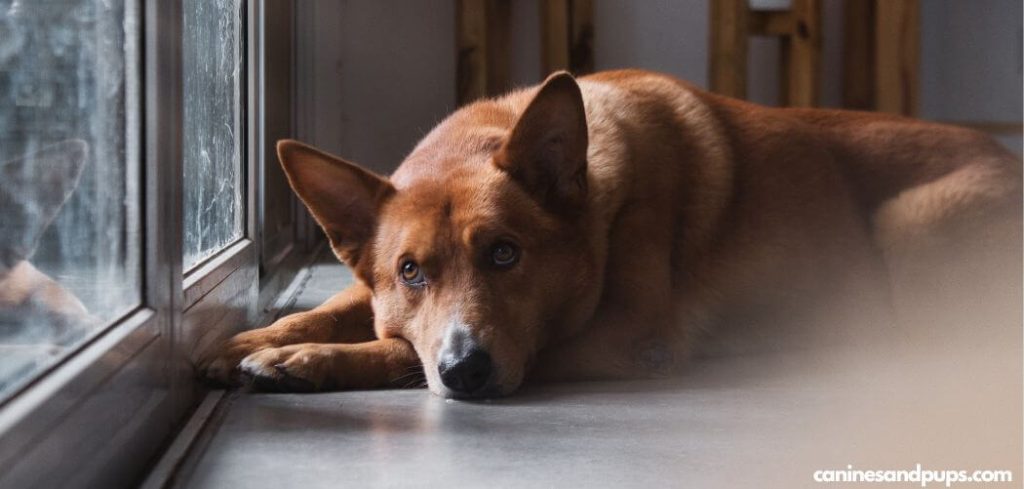
Old Dog’s Eyes Rolling Back: Common Causes
Normal Eye Movement During Sleep
If the eyes only appear to roll upward while the dog is asleep, particularly when the eyelids are partly closed, this can sometimes be a normal part of sleep.
The third eyelid can also become more visible when the eye is partially closed. This can make the eye look unusual without the eyeball actually being pushed backward.
The situation is more concerning if the eye movement also occurs while the dog is awake, becomes frequent, or is accompanied by changes in awareness, balance, or behavior.
Related: Old dog’s eyes moving back and forth (What it means)
Vestibular Disease
Vestibular disease affects the system responsible for balance and spatial orientation. It can produce abnormal involuntary eye movements, a head tilt, loss of balance, circling, leaning, or difficulty walking.
Older dogs can develop vestibular problems, and the sudden appearance of abnormal eye movement can sometimes be one of the first noticeable signs.
A dog with vestibular disease may look as though its eyes are moving or rolling when the actual problem is involuntary rhythmic movement of the eyes.
Read more: Old dog vestibular disease (Signs, causes and tretment)
Inner Ear Disease
Problems affecting the middle or inner ear can interfere with the vestibular system and cause abnormal eye movements.
Inner ear disease may be accompanied by a head tilt, falling or leaning to one side, difficulty walking, nausea, or circling. Some dogs may also have signs of ear disease, such as discomfort or changes in hearing.
Seizure or Focal Seizure Activity
Seizures do not always look like dramatic whole-body convulsions. Some seizures can involve abnormal movements or changes in awareness that are more subtle.
During a seizure, a dog may have unusual eye or facial movements, altered responsiveness, staring, or other involuntary movements. Generalized seizures can cause loss of consciousness and abnormal movements of the limbs and head.
If the eyes roll back while the dog becomes unresponsive, stiff, trembles, collapses, or behaves unusually afterward, a seizure or another neurologic event should be considered.
Other Neurologic Problems
The nerves controlling eye movement are connected with the brain and other parts of the nervous system. Disorders affecting these structures can produce abnormal eye positioning or movement.
Neurologic problems may also cause changes in balance, coordination, head posture, walking, reflexes, or mental awareness.
In an older dog, a newly developing neurologic problem warrants veterinary assessment rather than being assumed to be a normal part of aging.
Related: Old Dog’s Eyes (Common Senior Dog Eye Problems)
Vision or Eye Disease
Not every unusual eye appearance comes from the brain.
Eye disorders can affect the way the eyes look or move, while diseases affecting the optic nerve can cause vision changes. For example, optic nerve disease can lead to sudden or partial loss of vision and abnormal pupillary responses.
Painful eye conditions can also cause squinting, changes in pupil size, rubbing at the face, redness, or reluctance to open the eye.
Fainting or Reduced Consciousness
If the eyes roll upward during an episode in which the dog becomes weak, collapses, or briefly loses awareness, reduced consciousness rather than a primary eye problem may be involved.
Fainting and neurologic episodes can sometimes look similar to an owner, which is why the events are best evaluated based on what happens immediately before, during, and after the episode.
Severe Systemic Illness
Changes in the brain’s function can sometimes occur secondary to serious metabolic or systemic disease.
Abnormal blood glucose, electrolyte disturbances, organ dysfunction, toxins, or other systemic problems can cause weakness, altered behavior, tremors, or neurologic abnormalities.
These possibilities cannot be distinguished simply by observing the eyes and generally require a veterinary examination and appropriate diagnostic testing.
Old Dog’s Eyes Rolling Back While Sleeping
If the eyes roll upward only while your dog is asleep and return to their normal position when the dog wakes, this can be very different from abnormal eye movement in an awake dog.
Watch for whether the movement continues after the dog is fully awake. Also note whether there is any head tilt, loss of balance, confusion, unusual responsiveness, or other abnormal behavior.
If you are uncertain whether the dog is asleep or experiencing an episode of abnormal awareness, recording a short video can help your veterinarian understand what you observed.
Related: Old Dog Eyes Droopy (Why it happens)
Old Dog’s Eyes Rolling Back and Head Shaking
Eyes rolling or moving abnormally together with head shaking can raise the possibility of an ear or vestibular problem, particularly if the dog also develops a head tilt or becomes unsteady.
Inner ear disease can produce spontaneous nystagmus along with head tilt, circling, leaning, falling, and incoordination.
However, head shaking is also common with ordinary ear irritation, so the combination does not establish that the inner ear is affected.
Old Dog’s Eyes Rolling Back and Shaking
If the dog is physically shaking at the same time that its eyes appear to roll back, the distinction between a neurologic episode, pain, fear, and another medical problem becomes important.
Pay attention to whether the dog remains conscious and responsive. A dog that remains aware and quickly returns to normal may be experiencing something different from a dog that becomes unresponsive, collapses, or shows abnormal movements.
Repeated episodes should be evaluated rather than assumed to be an inevitable part of aging.
Old Dog’s Eyes Rolling Back and Not Responding
An episode in which an older dog appears not to respond normally is more concerning than an isolated eye movement during sleep.
Reduced responsiveness can occur with seizures, fainting, severe neurologic disease, or other medical problems. The veterinarian may need to determine whether the episode originates from the brain, cardiovascular system, eyes, or another part of the body.
If your dog is currently unresponsive or cannot stand normally, prompt veterinary attention is warranted.
When to Call or Visit the Vet
An old dog’s eyes rolling back should be evaluated by a veterinarian if the movement occurs while the dog is awake, keeps happening, or is accompanied by other changes.
Seek immediate veterinary attention if your dog has:
Sudden or repeated abnormal eye movements
Loss of balance, falling, circling, or severe wobbling
A new head tilt
Seizure-like activity or loss of awareness
Collapse or inability to stand
Severe weakness or confusion
Sudden blindness or difficulty navigating familiar surroundings
Unequal pupils or unusual pupil responses
A painful, red, swollen, cloudy, or bulging eye
Repeated vomiting alongside balance problems
Sudden major changes in behavior or responsiveness
Possible toxin exposure or significant head trauma
A sudden neurologic change, collapse, seizure, severe loss of balance, or inability to respond normally should be treated as urgent rather than attributed simply to old age.
Old Dog Eyes Rolling Back in Head: Treatment
Treatment depends entirely on what is causing the abnormal eye movement. Veterinary assessment includes examination of the eyes and pupils and neurologic assessment, including evaluation of balance, coordination, head position, reflexes, and responsiveness.
Blood and urine testing may be recommended to look for metabolic or systemic problems, while ear examination and additional neurologic or imaging tests may be appropriate depending on the findings.
Treatment is then directed at the underlying condition, with further testing or referral to a veterinary neurologist or ophthalmologist considered when the cause is unclear or the signs persist.
Key Takeaway
An old dog’s eyes rolling back in its head can sometimes be related to sleep, but abnormal eye movement while awake can also occur with vestibular disease, inner ear problems, seizures, eye or optic nerve disorders, and other neurologic or systemic conditions.
The most important clues are what the eyes are actually doing, whether the dog remains responsive, and whether there are accompanying signs such as head tilt, falling, circling, shaking, weakness, confusion, or changes in vision.
If the behavior is new, recurrent, occurs while the dog is awake, or is accompanied by other neurologic changes, a veterinary examination is appropriate.
In an older dog, a sudden change in eye movement should not automatically be dismissed as a normal part of aging.