
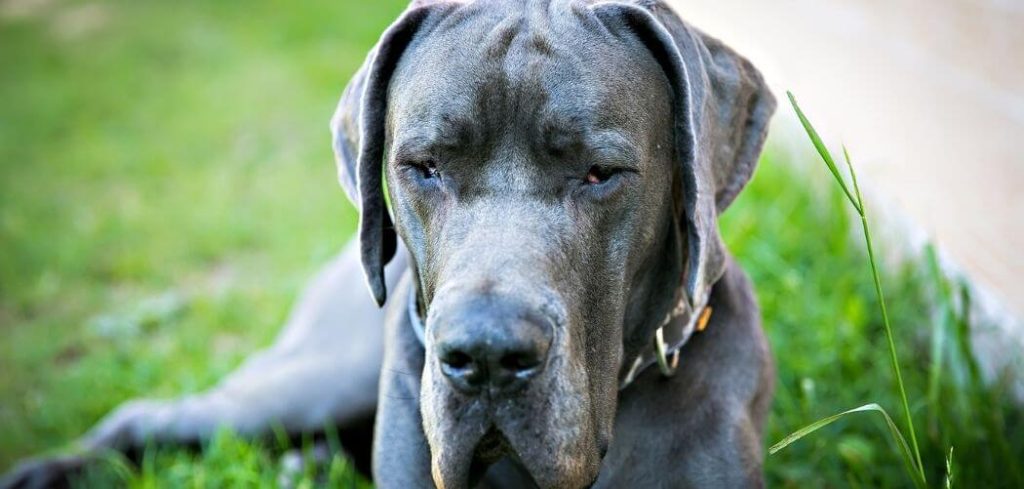
An old dog’s eyes may appear droopy when the eyelids hang lower than usual, the eyes look partly closed, or the face seems different from its normal appearance. The change may affect one eye or both, and it can be subtle or quite noticeable.
Droopy eyes in an older dog can have several explanations. Some are related to the eyelids themselves, while others involve the nerves that control the eyelids and facial muscles.
Eye irritation, inflammation, and certain neurologic conditions can also change how an eye looks.
A sudden change, particularly when only one side is affected, deserves more attention than a long-standing appearance that has always been normal.
Table of Contents
Old Dog Eyes Droopy: Why It Happens
An old dog may have droopy eyes because of aging-related changes, fatigue, pain, or a condition affecting the eyelids, facial nerves, or muscles around the eyes.
Drooping of one side of the face, including the eyelid, can occur with facial nerve dysfunction. Eye disease, inflammation, injury, or neurological disorders can also alter the appearance of the eyes.
If the drooping is new or affects only one eye, veterinary examination is needed.
A red or painful eye, excessive tearing, abnormal pupil size, inability to close the eye, facial drooping, head tilt, or balance problems should be assessed promptly because some eye and neurological conditions can worsen without treatment.
Common Causes of Droopy Eyes in an Old Dog
Horner Syndrome
Horner syndrome is a neurologic condition that can cause sudden drooping of the upper eyelid on one side.
The affected eye may also appear somewhat sunken, the pupil may become smaller, and the third eyelid may become more visible.
Horner syndrome results from disruption of the sympathetic nerves supplying the eye and surrounding facial structures.
Problems involving the neck, chest, trauma, tumors, or middle or inner ear disease can sometimes affect this nerve pathway, although some cases are classified as idiopathic because no underlying cause is identified.
If an older dog’s eye suddenly becomes droopy on one side, particularly when the pupil and third eyelid also look different, a veterinary examination is appropriate.
Related: Old dog’s eyes moving back and forth (What it means)
Facial Nerve Paralysis
Facial nerve dysfunction can affect the muscles responsible for blinking and facial expression.
Affected dogs may have a drooping eyelid, drooping ear or lip, difficulty blinking, or changes in tear production.
Facial paralysis can affect one side or both sides of the face. Causes can include inner or middle ear disease, trauma, hypothyroidism, generalized nerve disorders, inflammation, and, less commonly, tumors. In some dogs, no specific cause is identified.
A dog that cannot blink properly is at risk of drying and damaging the surface of the eye, so this should not be ignored.
Ectropion
Ectropion occurs when the eyelid, usually the lower eyelid, rolls outward and appears loose or droopy.
This exposes the conjunctival tissue to the environment and can contribute to dryness, irritation, inflammation, and corneal problems.
Ectropion is often related to facial or eyelid anatomy and is more commonly recognized in certain breeds.
Although it is frequently seen in younger dogs, changes in the eyelid associated with injury, scarring, or facial nerve dysfunction can also produce an abnormal eyelid position later in life.
Eye Irritation or Pain
A dog may appear to have droopy eyes because it is squinting or partially closing the eyelids in response to discomfort.
Corneal irritation, inflammation, a foreign object, eyelid abnormalities, or other painful eye conditions can cause squinting, excessive blinking, tearing, redness, and a changed facial appearance.
If the eye is being held partly closed rather than the eyelid simply hanging lower, pain or irritation becomes particularly important to consider.
Related: Old Dog’s Eyes (Common Senior Dog Eye Problems)
Blepharitis
Blepharitis is inflammation of the eyelid. It can cause redness, swelling, itching, squinting, discharge, crusting, or changes around the eyelid.
Possible causes include allergies, infections, parasites, trauma, irritants, gland problems, and other inflammatory disorders.
Some cases may also be associated with tumors or immune-mediated disease.
An inflamed or swollen eyelid can change the appearance of the eye and make it look heavier or more droopy.
Age-Related Facial or Muscle Changes
Older dogs can develop changes in facial muscle tone and the appearance of the tissues around the eyes. However, a new drooping eyelid should not automatically be attributed to age.
A gradual change affecting both eyes without redness, pain, discharge, or neurologic abnormalities may be less concerning than sudden one-sided drooping, but a veterinarian can determine whether the change is simply anatomical or whether an underlying condition is present.
Inner or Middle Ear Disease
Problems involving the middle or inner ear can affect nerves associated with the eye and face. They can also affect the vestibular system, which helps control balance.
An older dog with an ear-related neurologic problem may therefore develop a droopy eyelid along with a head tilt, balance problems, abnormal eye movements, facial changes, or signs of ear discomfort.
Thyroid or Other Systemic Disease
Some systemic diseases can affect the nerves or muscles involved in facial movement. Hypothyroidism, for example, is among the conditions associated with facial paralysis in dogs.
This becomes more relevant if the dog has other unexplained changes, such as altered energy, weight changes, skin or coat problems, or weakness.
A Mass or Structural Problem
Less commonly, a mass involving the eye socket, surrounding tissues, nerves, or other structures can change the position or movement of the eyelid.
A gradually worsening change, swelling around the eye, facial asymmetry, vision changes, or other neurologic abnormalities should be investigated rather than assumed to be normal aging.
Related: Old Dog Eyes Bulging (Why it happens)
Old Dog’s One Eye Is Droopy
A single droopy eye is particularly useful information for a veterinarian because several conditions that affect the nerves or facial muscles tend to produce one-sided changes.
Horner syndrome and facial nerve dysfunction are two possibilities. Eye pain or a local eyelid problem can also affect one eye.
Look for other differences between the two sides, including:
One pupil being smaller than the other
A more visible third eyelid
The eye appearing sunken
Inability to blink
A drooping ear or lip
Excessive tearing or discharge
Redness or swelling
Head tilt or balance problems
These accompanying signs can help distinguish an eyelid problem from a neurologic or eye disorder.
Old Dog’s Both Eyes Are Droopy
Drooping of both eyes can have different causes from sudden one-sided drooping.
Anatomical eyelid changes, facial muscle weakness, generalized nerve problems, eyelid inflammation, and certain systemic conditions can affect both sides.
If both eyelids have gradually changed without discomfort, redness, or other abnormalities, the problem may be less urgent.
However, a veterinarian should evaluate new bilateral drooping, particularly if the dog also has weakness, difficulty eating, excessive drooling, difficulty blinking, or other changes in facial movement.
Old Dog’s Droopy Eyes and Third Eyelid Showing
A visible third eyelid can sometimes make an eye look smaller, droopier, or partly covered.
When a droopy upper eyelid occurs together with a raised third eyelid and a smaller pupil on the same side, Horner syndrome is one possibility.
A visible third eyelid can also occur for other reasons, so this combination does not establish a diagnosis on its own.
Old Dog’s Droopy Eyes and Trouble Blinking
Difficulty blinking is particularly important because normal blinking helps protect and lubricate the eye.
Facial nerve paralysis can prevent normal eyelid closure and reduce tear production. This can leave the eye vulnerable to dryness and damage to the cornea.
An older dog that suddenly cannot close one eye properly should be examined promptly.
When to Call or Visit the Vet
Have an old dog with newly droopy eyes examined by a veterinarian, especially if the change is sudden, affects only one side, or keeps getting worse.
Seek immediate veterinary attention if you notice:
Inability to blink or completely close the eye
A painful, red, cloudy, or swollen eye
Excessive tearing or thick eye discharge
A sudden change in pupil size
One eye appearing sunken or significantly different from the other
A prominent or raised third eyelid
Drooping of the ear or lip on the same side
Head tilt, falling, circling, or loss of balance
Abnormal eye movements
Sudden vision problems
Facial weakness or difficulty eating
Significant swelling around the eye
A recent head, facial, or ear injury
Sudden or rapidly worsening facial changes
An eye that cannot close properly deserves particular attention because inadequate protection of the cornea can lead to dryness and injury.
Old Dog Eyes Droopy: Treatment
Treatment depends on whether the drooping is caused by an eyelid disorder, eye discomfort, facial nerve dysfunction, Horner syndrome, ear disease, or another underlying problem.
A veterinarian will examine the eyelids and eye surface, check pupil responses and the ability to blink, and perform a neurologic and ear examination when appropriate.
Tear-production testing and other eye tests may be needed, while blood tests or imaging can be considered when a systemic, neurologic, ear, or structural problem is suspected.
Key Takeaway
An old dog’s droopy eyes can result from an eyelid problem, eye irritation, facial nerve dysfunction, Horner syndrome, ear disease, or another medical condition.
While some gradual changes may be relatively minor, a new drooping eyelid should not automatically be considered a normal part of aging.
Pay particular attention to whether one eye is affected, whether the dog can blink normally, and whether there are changes in the pupil, third eyelid, ear, lip, balance, or vision.
These details can provide important clues about whether the problem involves the eyelid, eye, or nervous system.
If the drooping appeared suddenly, is getting worse, or occurs with pain, redness, discharge, inability to close the eye, facial weakness, balance problems, or other neurologic changes, veterinary evaluation is important.