
A dog eating poop bags can be concerning because the issue involves more than an unpleasant habit: the bag itself may create a risk if swallowed.
Even when a dog appears normal immediately afterward, ingesting part or all of a bag can raise questions about irritation, choking, or a possible intestinal blockage.
The level of concern depends on what was swallowed, how much was consumed, and whether the bag contained feces or other material.
We explain what to do if a dog eats poop bags, what complications you should understand, and when immediate veterinary care is necessary.
Table of Contents
Dog Eating Poop Bags: Why It Happens
A dog may eat poop bags because some dogs are naturally attracted to feces and continue scavenging even when the stool is inside a plastic bag. Others may be interested in the smell or texture of the bag itself.
Persistent eating of non-food objects is sometimes called pica. Pica can have behavioral or medical contributors, including gastrointestinal disease, parasites, nutritional problems, anemia, diabetes, hormonal disease, and medications that increase appetite.
However, a single incident does not necessarily mean your dog has pica. Curious dogs may simply grab a discarded bag because it smells like food or feces.
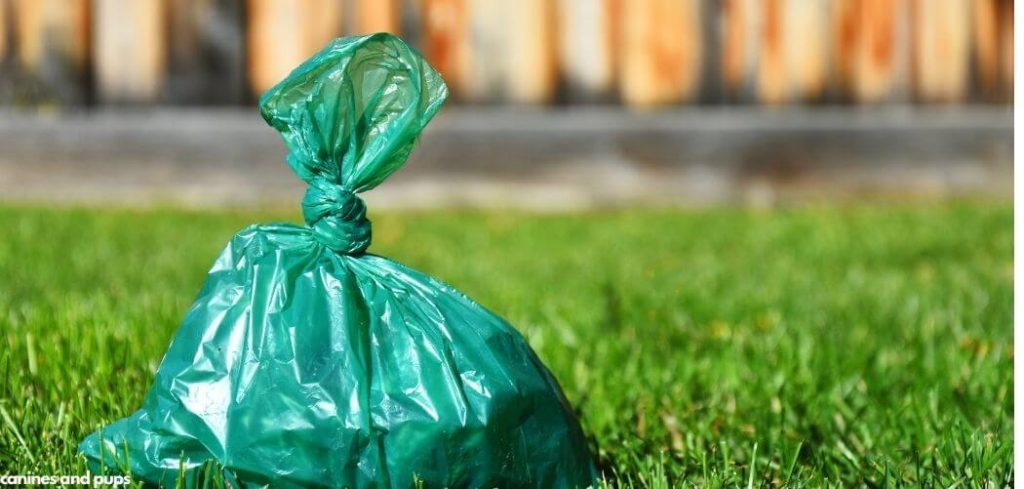
Dog Eating Poop Bags: Common Causes
Attraction to the Smell of Feces
A poop bag containing feces can retain strong odors that attract dogs. Since dogs naturally investigate smells with their mouths, a bag that seems uninteresting to a person may be highly appealing to a dog.
Coprophagia itself can be driven by scavenging behavior. Dogs may eat feces because of its odor, texture, taste, or perceived nutritional value.
This can make a tied or discarded poop bag especially tempting to a dog that already likes eating stool.
Related: Dog eating poop and throwing up (Why it happens)
Scavenging and Food-Seeking
Some dogs are persistent scavengers and will pick up almost anything that appears interesting.
Food wrappers, tissues, plastic, and other discarded objects are among the foreign materials dogs may swallow.
If your dog regularly searches through garbage, picks up objects outdoors, or eats several types of non-food items, the behavior may be broader than poop eating alone.
Pica
Pica refers to persistent ingestion of non-food substances. Dogs with pica may eat plastic, paper, fabric, rocks, sticks, mulch, or other inappropriate objects.
Medical problems and behavioral factors can contribute to pica. If your dog repeatedly eats poop bags, plastic, tissues, or other non-food objects, a veterinarian may want to determine whether there is an underlying reason.
Related: Dog eating poop and has diarrhea (Causes and what to do)
Increased Appetite
A dog that is unusually hungry may become more willing to eat things it would normally ignore.
Medical conditions affecting digestion or nutrient absorption can contribute to coprophagia and increased appetite. Digestive enzyme deficiencies, parasites, poor nutrition, and other medical problems can contribute to stool eating.
If poop-bag eating occurs alongside weight loss despite a good appetite, persistent diarrhea, or unusually strong food-seeking behavior, veterinary evaluation is worthwhile.
Puppy Exploration
Puppies commonly investigate objects with their mouths. A puppy that finds a used poop bag may not understand that the bag is not something to chew.
Puppies can also develop coprophagia as an exploratory or scavenging behavior.
Because puppies are smaller and may swallow objects they cannot safely pass, ingestion of plastic deserves particular attention.
Boredom or Learned Behavior
Some dogs learn that grabbing objects results in an exciting interaction with their owner.
Chasing a dog that has picked up a poop bag can unintentionally turn the event into a game.
This does not mean that every dog eating poop bags is bored or seeking attention. It simply means that repeated access can reinforce the behavior.
Dog Ate a Poop Bag but Did Not Swallow It
If your dog picked up a poop bag but you are confident that the plastic was not swallowed, the main concern may be exposure to feces rather than a foreign-body obstruction.
Still, watch the dog for any unusual digestive symptoms, particularly if the bag contained another animal’s feces. Dogs that eat feces can be exposed to parasites and infectious organisms.
If you are unsure whether part of the bag was swallowed, treat the situation more cautiously because a missing piece of plastic can be difficult to identify later.
Related: Dog eating poop side effects (Potential side effects)
Dog Ate a Poop Bag and Swallowed It
Swallowing a poop bag introduces the possibility of gastrointestinal foreign-body obstruction.
Plastic is not digested normally, and foreign objects can cause either partial or complete obstruction. Signs can include vomiting, loss of appetite, lethargy, abdominal pain, diarrhea, or abdominal swelling.
The absence of immediate symptoms does not necessarily prove that the bag will pass safely. Some dogs initially appear normal after swallowing a foreign object.
If you know your dog swallowed a substantial portion or an entire poop bag, contact a veterinarian promptly for advice rather than waiting for symptoms to appear.
Dog Eating Poop Bags but Acting Normal
A dog may look completely normal immediately after swallowing plastic. That can be reassuring, but it does not completely rule out a developing obstruction.
Foreign-body symptoms depend on the object’s location, size, shape, and whether it blocks the digestive tract completely or only partially.
If you are certain your dog only chewed an empty bag and did not swallow plastic, the situation is generally less concerning than confirmed ingestion. If plastic is missing, however, veterinary guidance is appropriate.
Dog Eating Poop Bags and Vomiting
Vomiting after swallowing a poop bag is more concerning because vomiting is one of the common signs associated with gastrointestinal obstruction.
Repeated vomiting, inability to keep water down, loss of appetite, weakness, abdominal pain, or a swollen abdomen should be treated as reasons for prompt veterinary assessment.
A dog with an esophageal foreign object may also drool excessively, gag, regurgitate, have difficulty swallowing, or repeatedly attempt to swallow.
Dog Eating Poop Bags and Not Pooping
Not passing stool after swallowing a poop bag can be concerning, particularly when it occurs with vomiting, abdominal discomfort, loss of appetite, or repeated unsuccessful attempts to defecate.
However, one missed bowel movement by itself does not prove that an obstruction is present.
The veterinarian will consider the dog’s entire history and symptoms and may use abdominal X-rays, ultrasound, contrast imaging, or endoscopy depending on the suspected location of the foreign material.
When to Call or Visit the Vet
Contact a veterinarian promptly if your dog has swallowed a poop bag or part of one, especially if the amount swallowed is unknown.
Seek urgent veterinary care if your dog develops:
Repeated vomiting or retching
Excessive drooling, gagging, or repeated swallowing
Difficulty swallowing
Loss of appetite
Significant lethargy or weakness
Abdominal pain or a swollen abdomen
Diarrhea accompanied by other signs of illness
Repeated unsuccessful attempts to defecate
Signs of dehydration
Collapse or rapid deterioration
The risk can be greater when the entire bag was swallowed, when several bags were swallowed, or when the dog is small relative to the size of the object.
Dog Eating Poop Bags: Treatment
Treatment depends on whether plastic was actually swallowed and where the foreign material is located.
The veterinarian may perform a physical examination and use X-rays or other imaging to look for evidence of a foreign body or obstruction; some objects can be removed with an endoscope, while an intestinal obstruction may require surgery.
If repeated ingestion of plastic or other non-food items is occurring, the veterinarian may also investigate pica and possible medical contributors such as gastrointestinal disease, parasites, nutritional problems, or conditions associated with increased appetite.
Key Takeaway
A dog eating poop bags is different from ordinary coprophagia because swallowing the plastic creates a foreign-body risk.
A dog may be attracted to a poop bag because it smells like feces, but the plastic itself cannot be digested normally and may potentially cause an obstruction.
If your dog swallowed any part of a poop bag, particularly an entire bag or an unknown amount, veterinary advice is appropriate.
Vomiting, loss of appetite, abdominal pain, lethargy, difficulty swallowing, or problems passing stool make the situation more concerning and warrant immediate evaluation.


