
A dog coughing due to an enlarged heart is a concern many owners have after an X-ray, ultrasound, or veterinary examination shows that the heart is larger than expected.
A persistent cough, coughing while resting or sleeping, or coughing after activity are common signs.
The meaning of the cough depends on why the heart is enlarged, how significant the enlargement is, and what other changes are present.
A dog’s age, medical history, breathing pattern, exercise tolerance, appetite, and other symptoms can help determine whether the cough is likely related to the heart or whether a separate respiratory problem may be responsible.
Table of Contents
Dog Coughing Due to Enlarged Heart: Why It Happens
A dog may be coughing due to an enlarged heart because some forms of heart disease can enlarge the heart and, in certain cases, contribute to pressure on nearby airways or changes in the circulation of the lungs.
Heart disease can also cause fluid to accumulate in the lungs when heart function becomes significantly impaired, which can lead to coughing and breathing changes.
However, an enlarged heart does not automatically mean that the heart is causing the cough.
Dogs with heart enlargement can also develop unrelated airway or lung disease, and coughing alone cannot determine whether heart disease has progressed.
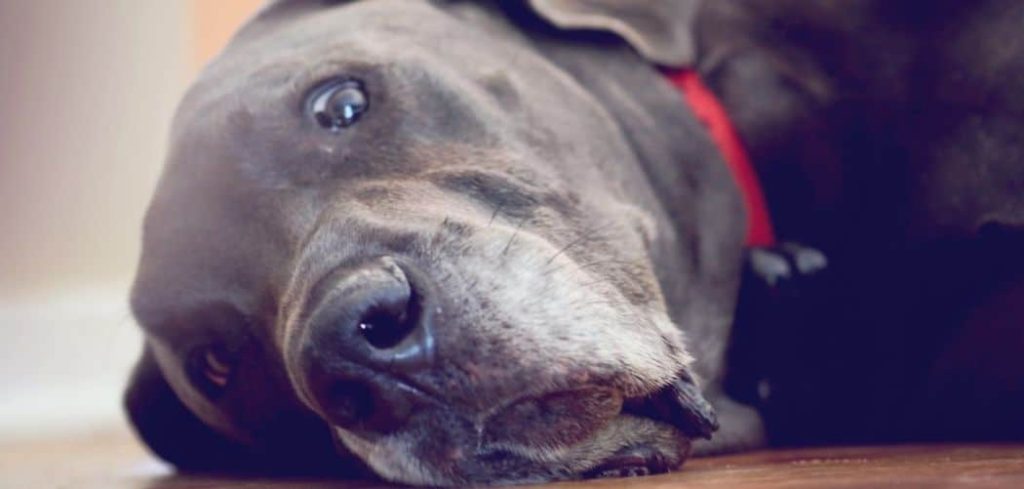
Coughing in a Dog With an Enlarged Heart: Common Causes
Heart disease and fluid buildup in the lungs
Some heart diseases eventually interfere with normal blood flow through the heart and lungs.
When pressure within the circulation becomes elevated, fluid can accumulate in the lungs.
This can cause coughing along with faster breathing, increased breathing effort, restlessness, reduced stamina, or difficulty getting comfortable.
A cough accompanied by a noticeable change in resting or sleeping breathing is particularly important to discuss with a veterinarian.
Related: Old dog fluid around the heart (Causes and treatment)
Enlarged heart pressing on nearby airways
The heart sits close to the major airways, including the main bronchi.
When certain parts of the heart become substantially enlarged, they may contribute to compression or irritation of nearby airways in some dogs.
This can produce coughing even when there is not significant fluid accumulation in the lungs.
This is one reason a dog may cough despite having no obvious signs of respiratory distress.
The relationship between heart size and airway compression, however, needs to be assessed through veterinary examination and imaging rather than assumed from the presence of an enlarged heart.
Mitral valve disease
Mitral valve disease is a common cause of heart enlargement in dogs, particularly older small-breed dogs.
As the mitral valve becomes abnormal, blood may leak backward through the valve. Over time, the affected chambers of the heart can enlarge.
Some dogs with mitral valve disease develop coughing, but a cough does not automatically mean that the dog has developed congestive heart failure.
Other causes of coughing remain possible, particularly when the dog is otherwise stable.
Dilated cardiomyopathy
Dilated cardiomyopathy causes the heart chambers to become enlarged while the heart muscle becomes weaker.
Affected dogs may develop coughing, faster breathing, reduced exercise tolerance, weakness, or other signs of impaired heart function. Abnormal heart rhythms can also occur.
The cough may be associated with changes caused by the heart disease, although respiratory conditions can occur at the same time.
Congenital heart disease
Some dogs are born with heart abnormalities that can eventually result in heart enlargement.
Depending on the specific defect and its severity, a dog may show no obvious symptoms for a period of time or may develop exercise intolerance, coughing, abnormal breathing, weakness, or other cardiovascular signs.
A congenital heart problem should be evaluated based on the specific defect rather than simply the amount of enlargement seen on an X-ray.
Related: Dog Coughing Due to Enlarged Heart (Why it happens)
Pulmonary hypertension
Pulmonary hypertension refers to abnormally increased pressure in the blood vessels supplying the lungs.
It can occur alongside certain heart diseases and may contribute to coughing, rapid breathing, exercise intolerance, weakness, or fainting.
If a dog has an enlarged heart and respiratory symptoms, the veterinarian may consider pulmonary hypertension depending on the examination and cardiac findings.
Tracheal collapse
Tracheal collapse is a common alternative explanation for coughing in some dogs, particularly small breeds.
It often causes a dry, harsh, or honking cough that may become more noticeable with excitement, exercise, heat, or pressure around the neck.
A dog can have both an enlarged heart and tracheal collapse. In that situation, the airway disease rather than the heart may be the primary reason for the cough.
Chronic bronchitis
Chronic bronchitis can cause a persistent cough because of long-term inflammation within the airways.
Dogs with chronic bronchitis may cough frequently while continuing to eat, play, and behave relatively normally. Some develop more noticeable coughing with activity or excitement.
If a dog with an enlarged heart has a long-standing cough but no evidence of worsening cardiac function, chronic airway disease may need to be considered.
Respiratory infection
Kennel cough and other respiratory infections can cause coughing in a dog that also happens to have an enlarged heart.
A respiratory infection may cause coughing, gagging, sneezing, nasal discharge, or other upper-airway symptoms. Some dogs remain bright and maintain their normal appetite.
A sudden cough therefore should not automatically be attributed to the enlarged heart, particularly when it follows recent exposure to other dogs.
Lung disease
Lung inflammation, pneumonia, parasites, masses, and other pulmonary conditions can cause coughing independently of heart enlargement.
The possibility of lung disease becomes more important when coughing is accompanied by fever, nasal discharge, reduced appetite, lethargy, abnormal breathing, or other signs of illness.
Chest imaging can help veterinarians distinguish changes involving the heart from abnormalities involving the lungs.
Related: Dog coughing up blood (Causes and treatment)
Dog Coughing With an Enlarged Heart but Acting Normal
A dog with an enlarged heart may cough while continuing to eat, play, and behave normally.
This can be reassuring, but acting normal does not establish whether the cough is cardiac or respiratory. Some dogs with early or relatively mild disease have few obvious changes between coughing episodes.
Pay attention to whether the cough is becoming more frequent, whether it occurs while your dog is resting or sleeping, and whether your dog tires more easily than before.
Changes in resting breathing can also be useful information for your veterinarian.
Dog Coughing at Night Due to an Enlarged Heart
Nighttime coughing can occur in dogs with heart disease, but it is not specific to an enlarged heart.
A dog may cough more noticeably while resting because respiratory or cardiovascular changes become easier to observe when the dog is no longer distracted by activity. Airway diseases can also cause coughing at night.
If your dog repeatedly wakes up coughing, cannot settle comfortably, or appears to be breathing harder than usual while resting, the dog should be assessed by a veterinarian.
Dog Coughing After Exercise With an Enlarged Heart
Coughing after exercise can occur with both cardiovascular and respiratory disease.
A dog whose heart disease is affecting circulation may also show reduced stamina, excessive tiredness, faster breathing, or a longer recovery period after activity.
Respiratory conditions can produce similar changes, so the pattern alone cannot establish the cause.
If your dog previously tolerated normal walks or play but now coughs or tires much sooner, mention the change to your veterinarian.
Does an Enlarged Heart Always Cause Coughing?
No. An enlarged heart does not always cause coughing.
Some dogs have heart enlargement without obvious respiratory symptoms. In other dogs, the underlying heart disease may eventually contribute to coughing through changes in circulation, fluid accumulation, or effects on nearby airways.
A separate respiratory problem can also occur at the same time.
This distinction is important because treating the cough effectively requires identifying what is actually causing it rather than assuming that heart enlargement is responsible.
When to Call or Visit the Vet
A new or worsening cough in a dog known to have an enlarged heart should be discussed with your veterinarian, particularly if the heart has not recently been reassessed.
Seek immediate veterinary attention if your dog:
Has difficulty breathing or noticeably increased breathing effort
Is breathing unusually fast while resting or sleeping
Has blue, gray, white, or unusually pale gums or tongue
Cannot settle or lie down comfortably because of breathing problems
Develops sudden or severe coughing
Coughs up blood
Becomes weak, collapses, or faints
Tires much more quickly during normal activity
Develops marked lethargy or weakness
Stops eating or drinking
Has a swollen or painful abdomen
Develops rapidly worsening respiratory symptoms
Has known heart disease with a significant new change in coughing or breathing
Dog Coughing Due to Enlarged Heart: Treatment
Treatment depends on whether the cough is caused by heart disease, airway compression, fluid accumulation, or an unrelated respiratory condition.
The veterinarian may perform a physical examination and listen to the heart and lungs, followed by chest X-rays, blood tests, blood pressure measurement, an electrocardiogram, or an echocardiogram when appropriate.
Additional respiratory testing may be needed if the findings suggest an airway or lung disorder.
Treatment is directed at the underlying diagnosis and may involve management of the heart condition, respiratory disease, or both; persistent or unexplained coughing may require repeat imaging or referral to a veterinary cardiologist or other specialist.
Key Takeaway
A dog coughing due to an enlarged heart may be experiencing a respiratory effect of underlying heart disease, but an enlarged heart does not automatically mean that the heart is responsible for the cough.
Significant heart disease can affect circulation, contribute to fluid accumulation in the lungs, or sometimes affect nearby airways.
Dogs with enlarged hearts can also develop tracheal collapse, chronic bronchitis, respiratory infections, or other lung conditions that cause coughing independently of the heart.
If your dog has an enlarged heart and develops a new, persistent, or worsening cough, veterinary reassessment can help determine what is actually causing the symptom.
Coughing accompanied by rapid or difficult breathing, weakness, fainting, or other significant changes requires prompt veterinary attention.