
When a dog is being sick and repeatedly licking its bum, seeing both symptoms together can leave one wondering whether they are connected.
While occasional licking around the rear can be normal, persistent licking alongside vomiting may indicate that your dog is uncomfortable or that something else is affecting their digestive or overall health.
Table of Contents
Dog Being Sick and Licking Bum: Why It Happens
A dog that is being sick and repeatedly licking its bum may have two related symptoms or separate problems occurring at the same time. Licking the area can occur when the anus or surrounding skin is irritated, while vomiting may indicate gastrointestinal discomfort.
In some dogs, discomfort around the anus can also lead to restlessness, excessive licking, scooting, or difficulty sitting comfortably.
However, certain conditions affecting the digestive tract can trigger both vomiting and discomfort around the rear end.
Looking at your dog’s bowel movements, appetite, energy, and the condition of the skin around the rear can provide useful context.
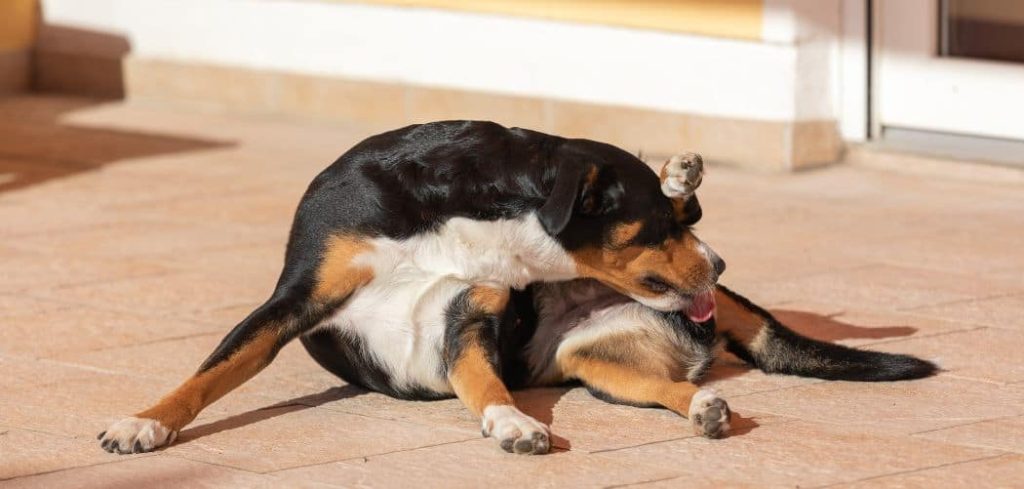
Depending on the underlying cause, a dog may also experience:
- Scooting along the floor
Diarrhea
Loss of appetite
Lethargy
Straining to pass stool
Redness or swelling around the anus
Dog Being Sick and Licking Bum: Common Causes
Anal Gland Problems
Anal gland disease is one of the most common reasons dogs repeatedly lick their bum. The anal glands can become impacted, inflamed, or infected, causing discomfort that leads to persistent licking and scooting.
Although anal gland disease does not directly cause vomiting, severe pain, infection, or the stress associated with significant discomfort may occasionally contribute to nausea.
Dogs may also struggle to pass stool or have a foul-smelling discharge from the anal glands.
Your veterinarian can examine and express the anal glands if necessary. Infected glands may require antibiotics, pain relief, or, in severe cases, surgical treatment.
Intestinal Parasites
Parasites such as tapeworms, roundworms, whipworms, hookworms, and Giardia can irritate both the digestive tract and the area around the anus. This may result in vomiting together with excessive licking of the rear end.
Dogs with parasites often develop diarrhea, weight loss, poor coat condition, bloating, or visible worms or tapeworm segments around the anus or in the stool. Puppies are especially vulnerable because of their developing immune systems.
Veterinarians diagnose parasites using fecal testing and prescribe appropriate deworming medications. Follow-up testing may be recommended to ensure the infection has completely resolved.
Read more: Dog suddenly vomiting and diarrhea (Possible causes)
Acute Gastroenteritis
Acute gastroenteritis causes inflammation of the stomach and intestines due to dietary indiscretion, infections, stress, or sudden food changes. Vomiting and diarrhea are the most common symptoms.
Frequent diarrhea can irritate the skin around the anus, making dogs lick their bum because of soreness or itching. The more severe or prolonged the diarrhea, the more likely irritation will develop.
Most mild cases improve with supportive care, but dogs with persistent vomiting, severe diarrhea, or dehydration should receive prompt veterinary attention.
Read more: Dog suddenly vomiting white foam (What it means)
Food Allergies
Food allergies can affect both the digestive tract and the skin. Dogs with food allergies often experience chronic vomiting or diarrhea alongside itchy skin, recurrent ear infections, and excessive licking around the paws or anal area.
Inflammation caused by the allergic response may also contribute to anal gland problems, making bum licking even more noticeable. Unlike seasonal allergies, food allergies usually cause symptoms throughout the year.
Diagnosis generally involves a veterinary-supervised elimination diet using a prescription or novel-protein food. Identifying and avoiding the trigger ingredient often improves both digestive and skin symptoms.
Inflammatory Bowel Disease (IBD)
Inflammatory bowel disease is a chronic condition that causes persistent inflammation within the digestive tract. Dogs commonly develop recurring vomiting, diarrhea, weight loss, and reduced appetite.
Repeated diarrhea may irritate the skin around the anus, leading to frequent licking. Some dogs with IBD also develop food sensitivities or anal gland problems that contribute to rear-end discomfort.
Diagnosis usually requires blood tests, fecal examinations, abdominal imaging, and sometimes intestinal biopsies after other causes have been ruled out. Long-term management often includes prescription diets and medications that reduce intestinal inflammation.
Poisoning or Toxin Exposure
Many toxins cause sudden vomiting and diarrhea. If diarrhea becomes severe, the skin around the anus may become irritated, leading to licking of the bum.
Depending on the toxin involved, dogs may also drool excessively, tremble, become weak, develop seizures, or collapse. Certain toxic plants, household cleaners, pesticides, and medications can produce these symptoms.
Any suspected poisoning should be treated as an emergency. Immediate veterinary care greatly improves the chances of preventing serious complications.
Perianal Skin Irritation or Infection
The skin around the anus can become inflamed because of diarrhea, allergies, bacterial infections, yeast infections, or excessive moisture. This irritation often causes persistent licking.
If vomiting is also present, the underlying illness may be affecting the digestive tract while the irritated skin causes additional discomfort. Dogs may also show redness, swelling, discharge, or an unpleasant odor around the anus.
Your veterinarian can examine the affected area and recommend treatment, which may include cleaning the area, topical medications, antibiotics, or antifungal therapy depending on the cause.
Constipation or Rectal Disorders
Dogs with constipation, rectal inflammation, small tears around the anus, or rectal masses may repeatedly lick their bum because passing stool is uncomfortable. Some dogs also vomit because prolonged constipation can lead to nausea and abdominal discomfort.
Affected dogs may strain to defecate, pass hard stools, cry while attempting to poop, or repeatedly squat without producing much stool. In severe cases, constipation may progress to obstipation, which requires veterinary treatment.
Diagnosis usually includes a physical examination and sometimes abdominal X-rays or rectal examination. Treatment depends on the underlying cause and may involve stool softeners, enemas, dietary changes, or surgery for more serious conditions.
Read more: Dog Being Sick and Licking Paws (Causes and treatment)
Dog Being Sick and Licking Bum: What to Do
If your dog vomits once and occasionally licks their bum but otherwise appears bright and alert, monitor them closely over the next 24 hours.
Check the area around the anus for redness, swelling, discharge, stuck feces, or visible tapeworm segments if it is safe to do so.
Pay attention to whether your dog has diarrhea, scoots across the floor, strains to pass stool, or shows signs of itching elsewhere on the body.
Also note whether the vomiting occurs before or after eating and whether your dog can keep water down, as this information can help your veterinarian identify the underlying cause.
Avoid using human creams or medications around the anal area unless instructed by your veterinarian, and prevent your dog from accessing potential toxins or spoiled food.
When to Call or Visit the Vet
Vomiting together with persistent bum licking should be evaluated if either symptom continues or worsens.
Schedule an appointment if you notice:
Repeated vomiting
Persistent licking around the anus
Scooting along the floor
Mild diarrhea
Reduced appetite
Weight loss
Recurring anal gland problems
Redness or swelling around the anus
Seek emergency veterinary attention immediately if your dog develops:
Repeated vomiting with inability to keep water down
Blood in the vomit or stool
Severe abdominal pain
Collapse or extreme weakness
Signs of dehydration
Suspected poisoning
Severe swelling, bleeding, or pus around the anus
Seizures or difficulty breathing
Dog Being Sick and Licking Bum: Treatment
Veterinary treatment for a dog that is vomiting and excessively licking its anus involves examining both the gastrointestinal and perianal areas.
The veterinarian may perform a rectal examination and fecal testing and assess the anal glands when appropriate.
Treatment may include anti-nausea medication, fluid therapy, gastrointestinal medication, prescription dietary management, or treatment directed at an identified intestinal or anal condition.
If the area is inflamed or infected, additional medication may be prescribed to relieve discomfort and resolve the problem.
Recovery and Monitoring
Recovery depends on the underlying cause. Mild gastroenteritis often improves within a few days, while food allergies, inflammatory bowel disease, chronic anal gland disease, or parasitic infections may require longer-term treatment and monitoring.
Monitor your dog’s appetite, water intake, body weight, bowel movements, anal area, and whether the vomiting and bum licking become less frequent after treatment begins.
Give all prescribed medications exactly as directed and attend follow-up appointments recommended by your veterinarian.
Contact your veterinarian if vomiting continues, diarrhea worsens, the anal area becomes increasingly swollen or painful, your dog refuses food or water, becomes lethargic, or shows signs of dehydration.
Key Takeaway
A dog being sick and licking their bum commonly results from anal gland disease, intestinal parasites, gastroenteritis, food allergies, inflammatory bowel disease, poisoning, perianal skin irritation, or constipation.
While vomiting and bum licking are sometimes unrelated, recurring episodes of both symptoms often indicate a digestive or anal health problem that requires veterinary attention.
Early veterinary evaluation can identify whether the symptoms are connected and ensure your dog receives the appropriate treatment.
If your dog repeatedly vomits, cannot keep water down, develops bloody diarrhea, has severe abdominal pain, collapses, is suspected of eating a toxic substance, or has severe swelling or discharge around the anus, seek emergency veterinary care immediately.
