
A Bulldog throwing up is a frightening and alarming sight. Yes, it is common for dogs to vomit once in a while but it is quite distressing to see it happen.
Bulldogs also throw up different vomit types from white foam, yellow foam, clear liquid, bile, and mucus. It’s certainly uneasy having a sick Bulldog.
Why does Bulldog vomiting occur? When should you worry?
Read on to learn why your Bulldog is throwing up, the complications, what to do, and when to seek veterinary care.
Table of Contents
Why Is My Bulldog Throwing Up?
A Bulldog throwing up occurs due to a gastrointestinal infection, food intolerance, diet change, intestinal parasites, ingestion of foreign toxins or objects, disease, motion sickness, a reaction to a medication, and heatstroke.
In most cases throwing up can improve on its own within a day and without any medical attention however, when it continues it can be a sign of an underlying health problem.
A Bulldog may either vomit or regurgitate contents swallowed, which are two separate processes that sometimes can be confused to be the same.
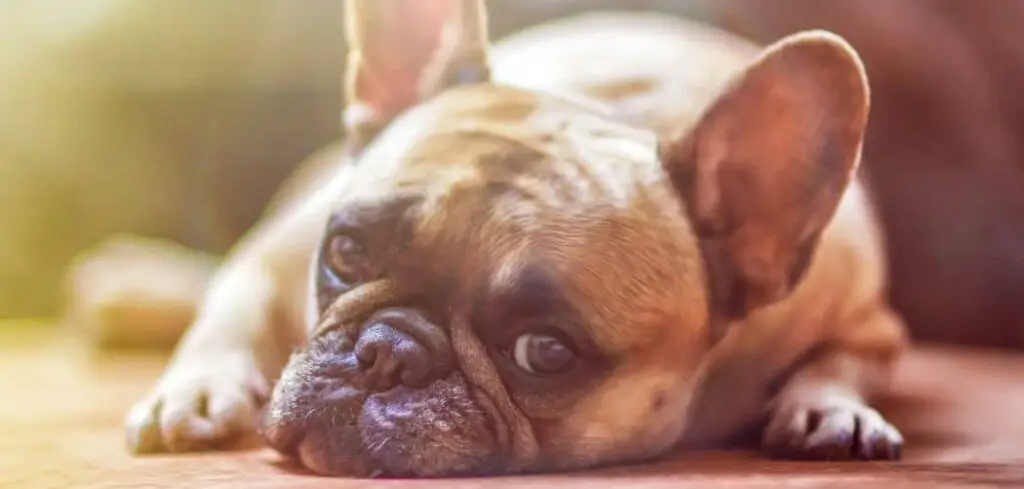
Is It Common for Bulldogs to Vomit?
Vomiting can be relatively common in bulldogs compared to some other breeds because they are prone to digestive sensitivity, brachycephalic (short-nosed) airway issues, and food intolerance.
They may also swallow air while eating, eat too quickly, or react poorly to rich or new foods.
However, frequent or repeated vomiting is not normal and often signals an underlying issue such as gastritis, reflux, pancreatitis, or obstruction.
If vomiting happens more than occasionally, or is paired with lethargy, diarrhea, or loss of appetite, it should be evaluated by a veterinarian.
How do I know if my Bulldog is vomiting or regurgitating?
Vomiting is an active process that involves the forceful expulsion of the stomach and the upper intestine’s contents through the mouth while regurgitation involves the expulsion of swallowed contents from the throat, esophagus, and mouth.
Just before vomiting, a dog experiences symptoms including nausea, repeated swallowing, restlessness, salivation, and licking of lips.
This is followed by abdominal contractions and forceful removal of food or liquid from the mouth.
Dog vomiting can occur immediately after eating or hours after that and lasts for several minutes.
The expelled contents can come out as undigested, partly digested, or digested.
Regurgitation is a passive process that happens quickly and without warning. Compared to vomiting, there are no symptoms just before regurgitation.
A Bulldog will usually be fine one moment and then suddenly spit out contents from its mouth.
The regurgitated contents come out undigested which means the contents never make it to the stomach and are immediately expelled.
This means regurgitation does not involve the contraction of the stomach muscles to expel contents.
A Bulldog simply leans its head forward and the contents from its throat or esophagus just roll out from its mouth with the help of gravity and the esophagus muscles.
A dog does not have control over this and it is sudden.
Regurgitation also usually occurs immediately after eating, and drinking, but can also occur hours after eating.
Regurgitation is caused by either a congenital esophageal disorder or an acquired disorder.
Congenital esophageal disorders are simply birth defects that cause a dog to be more susceptible to regurgitation while acquired disorders are due to the throat, esophageal or systemic diseases.
Congenital esophageal disorders include cancer, Addison disease, gastric reflux, and an enlarged esophagus which makes swallowing food to be difficult.
Some dog breeds are more prone to regurgitation due to congenital esophageal disorders than other dog breeds.
These dogs include Great Danes, Labrador Retrievers, Newfoundland, German Shepherds, Irish Setters, Fox terriers, Chinese Shar-Pei, and the Miniature Schnauzer.
On the other hand, acquired disorders that lead to regurgitation occur in all dog breeds and at any age.
Acquired disorders that lead to regurgitation include ingestion of foreign objects that cause esophageal obstruction, poisoning, gastric reflux, cancer, and rabies.
The common signs to look out for to know whether your Bulldog is regurgitating include:
- Coughing
- Increased breathing noises
- Weakness
- Fever
- Difficulty in swallowing
- Swelling in the throat
- Increased appetite
- Runny nose
- Bad breath
- Throwing up of undigested food, water, or mucus.
By being aware of the difference between vomiting and regurgitation, you can provide this information to your veterinarian, which will be helpful in the diagnosis.
Regurgitation and vomiting are caused by different factors and have different treatment options.
What Does Your Bulldog’s Vomit Look Like?
A Bulldog can throw up vomit with different consistencies and colors. These vomit types can give an insight into what could be the cause of the vomiting however, this does not give a complete diagnosis.
An accurate diagnosis is made through your veterinarian’s assessment of your dog and the diagnostic test results that are performed to investigate the cause of the vomiting.
The different Bulldog vomit types and the possible causes include:
Bulldog Throwing Up Clear liquid
Clear liquid vomit can be caused by the expulsion of saliva or water when your dog vomits on an empty stomach or a Bulldog vomiting after drinking water when nauseous.
Bulldog Throwing Up White foam
A Bulldog throwing up white foam can be caused by a buildup of stomach acid in the stomach, which becomes foamy when exposed to the air when vomited.
Bulldog Throwing Up Blood
Throwing up of blood can occur due to conditions that corrode a Bulldog’s stomach lining or upper small intestines, exposing the blood vessels.
Bulldog Throwing Up Yellow foam
A Bulldog vomiting yellow foam occurs due to throwing up on an empty stomach or vomiting partly digested food that has bile secretions. The bile secretion appears yellow or green.
This often happens in the middle of the night or early in the morning. It also happens when a dog has not eaten for a while, has eaten a lot of fatty foods, has eaten grass, or has drunk a lot of water.
Bulldog Throwing Up Undigested Food
Vomiting undigested food usually suggests that the food is coming back up shortly after eating.
This can be caused by eating too quickly, food intolerance, regurgitation due to esophageal issues, or stomach irritation.
Bulldogs are especially prone to gulping food, which increases the risk of regurgitation.
If this happens frequently, feeding smaller meals or using slow-feeder bowls may help, but persistent cases require veterinary evaluation.
Bulldog Throwing Up Mucus
Diet and several medical conditions can cause the throwing up of mucus, including toxins, intestinal blockage, intestinal parasites, esophagitis, or coughing up mucus due to an upper respiratory infection.
Vomiting of mucus also occurs when a Bulldog drools excessively and swallows the drool that pools in the stomach. This is then vomited out as mucus due to nausea.
So, do Bulldogs have stomach problems?
Yes, Bulldogs are known to have a higher tendency for stomach and digestive problems compared to many other breeds.
Their sensitive gastrointestinal system makes them more prone to issues like vomiting, diarrhea, gas, food intolerance, acid reflux, and gastritis.
This can be influenced by their genetics, body structure, and tendency to eat quickly or swallow air while eating.
Many Bulldogs also react poorly to sudden diet changes, rich foods, or certain ingredients, which can trigger recurring stomach upset.
Because of this, consistent feeding routines and high-quality, easily digestible diets are often important for maintaining stable digestion.
In more persistent cases, Bulldogs may develop chronic conditions such as inflammatory bowel disease or pancreatitis, which require veterinary diagnosis and long-term management.
While occasional mild stomach upset can be normal, frequent or severe digestive issues should not be ignored, as they often indicate an underlying health problem that can be managed with proper care.
Old Bulldog Throwing Up
An older bulldog vomiting may be experiencing age-related digestive issues, chronic disease, or organ dysfunction, such as kidney or liver disease.
Dental problems, medication side effects, and decreased digestive efficiency can also contribute.
Senior bulldogs are more vulnerable to dehydration and complications from repeated vomiting.
If vomiting is frequent or accompanied by weakness, appetite loss, or weight loss, a veterinary examination is strongly recommended.
Complications
Severe dehydration and loss of electrolytes are the most common complications of throwing up.
Continuous vomiting leads to severe dehydration because of loss of fluids through vomiting, which is life-threatening if treatment is not provided in time
Vomiting is also a symptom of more serious health conditions such as infection, disease, or poisoning.
These health conditions can lead to the deterioration of a Bulldog’s health and even worse, death.
What To Do When Your Bulldog Throws Up
When your Bulldog throws up occasionally or the vomiting incidents are isolated, and they continue their normal activities, this is not a cause for concern.
In most cases, your dog will vomit and continue to be active as usual.
When your dog vomits, the first thing to do is to observe them and see whether the vomiting continues or if symptoms of an illness appear.
If your Bulldog does not have other signs of illness, there is no cause for concern.
Secondly, do not feed them for 6 – 12 hours but provide plenty of drinking water. This allows their stomach to calm down and self-repair.
If the vomiting does not continue, feed them their regular diet.
When to Seek Help
Vomiting is common in Bulldogs as well as other dog breeds, however, if the vomiting is too frequent and also appears with additional symptoms, this is a sign that there is a more serious underlying cause of it.
The appearance of other signs of illness should not be ignored. When this happens, immediate medical attention is required.
Seek medical care when your Bulldog:
- Continues to vomit
- Vomits blood
- Has a fever
- Lethargic
- Vomits and also has diarrhea
- Vomits with shaking
- Has abdominal pain
- Is dehydrated (weakness, panting, dry nose, thick saliva, and dry sticky gums)
- Has seizures
- Ingested a foreign object or toxin
- Tries to vomit but nothing comes out (dry heaving)
- Vomits a large quantity of food
- Refuses to eat
- Is a puppy
Contact the veterinarian or immediately seek medical care within 8 -12 hours if the throwing up is continuous, that is, when your Bulldog vomits more than two times in this period.
Bulldog Throwing Up: Treatment
The treatment of Bulldog vomiting varies and depends on the diagnosed underlying cause.
The treatment includes:
- Administration of anti-nausea medication
- Administration of anti-inflammatory medication
- Treatment of disease
- Fluid therapy to treat dehydration and loss of electrolytes
- Probiotics to treat bowel and intestinal inflammation
- A bland diet consisting of boiled rice and chicken
- Diet change for a dog with a sensitive stomach. This includes limited ingredients or a prescription diet, moderate fat or protein, or high-quality dog food.
In most cases, care at home will be recommended by the veterinarian after the initial treatment has been provided.
In severe cases involving dehydration, a Bulldog may be hospitalized for treatment of dehydration.
Care at home involves feeding your dog a bland diet for 24 hours and providing the prescribed medication, which allows the digestive system to repair and heal.
How To Prevent Your Bulldog From Throwing Up
Although occasional throwing up for a Bulldog is common, you can put in place preventive measures to minimize it from occurring. This includes:
Gradually introduce new diets
If you need to change your Bulldog’s diet, introduce the new diet gradually to prevent vomiting. A sudden change of diet often leads to vomiting because your dog’s stomach has not yet adjusted to the new diet.
Some Bulldogs have sensitive stomachs therefore it is important to change their diet with the guidance of a veterinarian to prevent the development of a stomach upset.
Limit access to toxins
A Bulldog throwing up because of ingestion of toxins happens when your dog has access to potential toxins around the home.
Prevent this from happening by locking up products such as cleaning products, anti-freeze, or gardening chemicals, such as pesticides, to prevent accidental ingestion.
Keep up with regular health checkups
Routine medical examinations for your Bulldog help to keep your dog healthy by detecting life-threatening conditions and diseases early.
This limits complications of the disease by providing an opportunity for early treatment, cure, and monitoring of existing conditions.
This prevents throwing up, which is one of the many symptoms of many diseases.
Motion sickness prevention
Some Bulldogs experience motion sickness when in a moving car and throw up due to nausea.
You can control and prevent motion sickness in your Bulldog by not feeding your dog before traveling, providing prescribed anti-nausea medication, and also taking shorter trips to allow your dog to adjust to trips.
Prevent dietary indiscretion
Dietary indiscretion is the consumption of non-food items or foreign objects that are not meant to be eaten.
This includes items such as garbage, tablescapes, sticks, broken toys, and potentially poisonous frogs, animals, or plants.
Limit access to items that your dog should not eat because they may cause your dog to throw up because of an upset stomach.
The items ingested may injure the gut or cause esophageal obstruction or obstruction along the digestive system.
Key Takeaway
Isolated incidences of vomiting are not a cause for concern however, when throwing up is very frequent, or when a Bulldog vomits several times within a day, this is a sign that they are unwell.
A Bulldog throwing up is a very distressing situation, and it can be because of an illness that requires medical attention.
When your Bulldog throws up, keep an eye on them and pay attention to the frequency of their vomiting, and also if they show other symptoms of illness.
Seek medical care if your Bulldog keeps throwing up and has additional symptoms. The underlying cause of the vomiting will be determined by the veterinarian and treatment will be provided.


