
Many dog owners smile when their dog tilts their head to one side while listening to them.
In most cases, this adorable behavior is completely normal and may help dogs better focus on sounds, facial expressions, or words they recognize.
However, if the head tilt is constant, develops suddenly, or is accompanied by balance problems or other symptoms, it may indicate an underlying medical condition such as an ear infection or vestibular disease.
Table of Contents
Dog Tilting Head to One Side When Listening: Why It Happens
A dog may tilt their head to one side when listening because they are trying to better locate sounds, focus on your facial expressions, or understand familiar words.
While this behavior is usually normal, persistent or abnormal head tilting can also result from ear disease, hearing loss, vestibular disease, or neurological disorders.
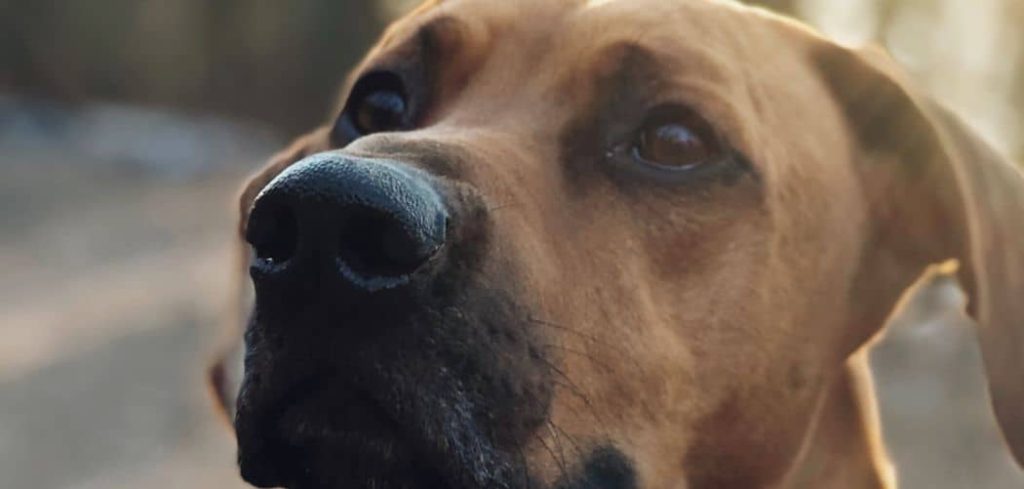
Signs include:
Tilting the head while listening
Responding to familiar words
Looking intently at people
Perking up the ears
Curious expression
Normal walking and balance
Tail wagging
Alert behavior
Dog Tilting Head to One Side When Listening: Common Causes
Normal Curiosity and Attention
The most common reason dogs tilt their heads while listening is simple curiosity.
Dogs often tilt their heads when they hear unfamiliar sounds, exciting words like “walk” or “treat,” or when they are trying to understand what their owner is saying. The movement may help them focus on the sound or gather more information.
Many researchers believe head tilting allows dogs to better interpret human communication by combining what they hear with visual cues such as facial expressions and body language.
If your dog only tilts their head briefly while listening and otherwise behaves normally, this behavior is generally considered completely normal.
Improving Sound Localization
Dogs have remarkable hearing, but tilting the head may help them determine exactly where a sound is coming from.
By changing the position of their ears, dogs may improve their ability to identify the direction and distance of unfamiliar noises.
This behavior is especially common when they hear soft sounds, squeaky toys, unusual voices, or high-pitched noises.
Once the sound has been identified, the head usually returns to its normal position.
Read more: Dog suddenly limping front leg (Causes and treatment)
Seeing Around the Muzzle
Some experts believe head tilting also improves vision. Dogs with longer muzzles may briefly tilt their heads to obtain a clearer view of a person’s face when listening.
This may help them better interpret facial expressions, gestures, and eye contact while processing spoken words.
Although this theory has not been fully proven, many long-nosed breeds appear to tilt their heads more frequently than flat-faced breeds.
Hearing Loss
Dogs with partial hearing loss sometimes tilt their heads to hear better.
As hearing declines with age or because of ear disease, dogs may adjust the position of their heads while listening in an effort to pick up sounds more clearly.
Owners may also notice that their dog no longer responds consistently when called, sleeps more deeply, or startles easily when approached.
Age-related hearing loss usually develops gradually.
Ear Infection
A head tilt that persists beyond listening may indicate an ear infection. Inflammation of the outer, middle, or inner ear can make one ear painful or affect balance.
Dogs may temporarily tilt their heads because moving the ear changes pressure or relieves discomfort.
Additional signs often include head shaking, scratching at the ears, redness, discharge, a foul odor, or pain when the ear is touched.
Ear infections require veterinary treatment and should not be ignored.
Vestibular Disease
Vestibular disease affects the body’s balance system. Unlike a normal listening head tilt, vestibular disease usually causes a constant head tilt that does not disappear after the sound has ended.
Dogs often stumble, lean to one side, walk in circles, or develop rapid eye movements (nystagmus).
Idiopathic vestibular disease is especially common in older dogs and often develops suddenly.
Early veterinary evaluation is needed because other neurological disorders can produce similar symptoms.
Related: Old Dog Vestibular Disease (Signs, causes and treatment)
Neurological Disorders
Less commonly, persistent head tilting may result from problems affecting the brain or nerves.
Brain tumors, inflammatory brain disease, trauma, strokes, or other neurological conditions may interfere with normal head position.
Dogs with neurological disease often develop additional symptoms such as seizures, weakness, behavior changes, circling, vision problems, or loss of coordination.
These conditions require prompt veterinary diagnosis and treatment.
Read more: Dog Leaning to One Side When Walking (Causes and treatment)
Dog Tilting Head to One Side When Listening: What to Do
Observe whether your dog’s head tilt occurs only while listening or remains present all the time.
Monitor for additional signs such as head shaking, scratching at the ears, loss of balance, circling, vomiting, or changes in hearing.
If your dog is otherwise healthy and only briefly tilts their head when listening to interesting sounds, no treatment is usually needed.
Avoid inserting cotton swabs or cleaning solutions into your dog’s ears unless your veterinarian has instructed you to do so.
If possible, record a video of any persistent head tilt to share with your veterinarian.
When to Call or Visit the Vet
Contact your veterinarian if your dog’s head tilt becomes constant or is accompanied by other symptoms.
Schedule an appointment if you notice:
Persistent head tilt
Head shaking
Ear scratching
Ear discharge
Reduced hearing
Pain around the ears
Seek immediate veterinary attention if your dog develops:
Loss of balance
Falling over
Walking in circles
Rapid eye movements
Seizures
Sudden inability to stand
Dog Tilting Head to One Side When Listening: Treatment
Veterinary assessment includes a physical and neurological examination to carefully evaluate your dog’s ears.
Depending on the suspected cause, diagnostic testing may include an ear examination, bloodwork, ear cytology, X-rays, CT scan, MRI, or referral to a veterinary neurologist.
Treatment depends on the underlying cause and may include ear medications for infections, antibiotics, anti-inflammatory medications, treatment for vestibular disease, or therapy for neurological conditions.
Recovery and Monitoring
Dogs that simply tilt their heads while listening require no treatment and continue to live completely normal lives.
Dogs with ear infections often improve within days after appropriate treatment begins, while recovery from vestibular disease or neurological disorders depends on the underlying diagnosis.
Continue monitoring your dog’s balance, hearing, appetite, and overall behavior. If the head tilt becomes constant or new neurological signs develop, schedule a veterinary recheck promptly.
Key Takeaway
A dog that tilts their head to one side while listening is usually displaying a normal and healthy behavior that helps them focus on sounds, facial expressions, or familiar words.
Brief head tilts that occur only during conversations or interesting noises are generally nothing to worry about.
However, if the head tilt becomes constant, is accompanied by ear pain, balance problems, circling, or other neurological symptoms, it may indicate an ear infection, vestibular disease, or another medical condition that requires veterinary evaluation.
Early diagnosis offers the best chance of successful treatment and recovery.


