
If your dog only humps one particular dog, you may wonder why that dog seems to be the only target.
Mounting can be a normal canine behavior, but it does not always mean that your dog is trying to mate.
Dogs may mount other dogs during play, excitement, stress, or other highly stimulating interactions. Sexual motivation can also play a role, particularly in dogs that are not spayed or neutered.
The fact that your dog only humps one dog does not automatically mean there is something wrong with either dog.
Dogs can develop different relationships with individual dogs, and their behavior can vary depending on the circumstances, previous experiences, and level of excitement.
What happens before, during, and after the mounting can provide important information about why your dog repeatedly chooses this particular dog.
Table of Contents
Why Does My Dog Only Hump One Dog?
A dog may only hump one particular dog because that dog triggers a specific social or emotional response. Humping can occur during play, excitement, stress, or social interaction and does not necessarily indicate sexual interest or an attempt to dominate the other dog.
Differences in size, behavior, scent, or how the two dogs interact can make one dog a particular target.
If the other dog consistently tries to escape, growls, snaps, or appears distressed, interrupt the behavior and give both dogs space.
Repeated humping can create tension between dogs even when it begins as playful behavior.
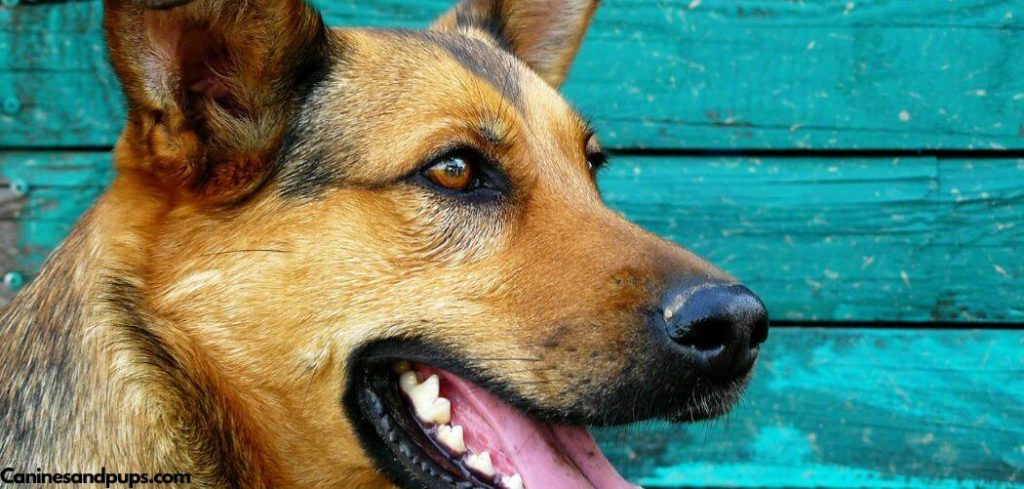
Common Reasons Your Dog Only Humps One Dog
Your Dog Gets Especially Excited Around That Dog
Some dogs become more excited around particular playmates. Your dog may have a particularly energetic relationship with this dog, causing arousal levels to rise more quickly during play.
When dogs become highly aroused, mounting can become part of the interaction. This is particularly common in dogs that become overly excited during play.
You may notice that mounting occurs after chasing, wrestling, running, or another stimulating activity.
Related: Why Does My Dog Only Hump One Stuffed Animal? (Here’s why)
It May Be Part of Their Play
Mounting can occur as part of play between dogs. A dog that becomes highly excited may briefly mount its playmate without the behavior being sexually motivated.
If both dogs remain relaxed and willingly continue interacting, occasional mounting may simply be one component of an otherwise normal social interaction.
However, the other dog may not appreciate being mounted. What begins as play can become a conflict if the mounted dog becomes uncomfortable, tries to escape, growls, snaps, or repeatedly attempts to create distance.
The Other Dog May Trigger a Particular Social Response
Dogs do not necessarily behave the same way with every dog they meet. Individual relationships can develop based on previous experiences, familiarity, communication, and the circumstances in which the dogs interact.
Your dog may respond differently to this particular dog because of its scent, behavior, play style, or the way the two dogs interact.
This does not necessarily mean that your dog is trying to establish a social rank. The idea that mounting is automatically a “dominance” behavior is an oversimplification.
Veterinary behavior sources do not consider dominance a common explanation for mounting.
Related: Why does my dog only hump me? (Here’s why)
Sexual Motivation May Be Involved
Sexual behavior is one possible reason a dog may mount another dog. Hormones can influence mounting and other reproductive behaviors, particularly in intact dogs.
If the other dog is a female in heat, for example, an intact male may show increased interest in her.
However, mounting alone cannot establish that sexual motivation is the reason. Dogs that are spayed or neutered can also mount, and mounting may continue because of excitement, play, stress, or a behavior that has become established over time.
Your Dog May Be Overstimulated
Some dogs have difficulty calming down once play or social interaction becomes intense. Excessive arousal can lead to jumping, barking, nipping, or mounting.
If your dog tends to mount only after several minutes of increasingly energetic play, overstimulation may be an important part of the pattern.
Stress or Anxiety Could Be Contributing
Mounting is not always associated with positive excitement. Some dogs respond to stressful or emotionally intense situations by mounting.
Look at your dog’s overall body language. If mounting occurs alongside pacing, avoidance, whining, excessive panting, difficulty settling, or other signs of discomfort, the behavior may be related to stress rather than simply play.
Your Dog Has Learned to Repeat the Behavior
A behavior that repeatedly occurs in a particular situation can become a habit. If your dog has mounted this particular dog many times and the interaction continues afterward, the mounting may become part of the dog’s established behavior around that dog.
Dogs are strongly influenced by previous experiences and learning, so the circumstances surrounding a behavior can affect whether it is repeated.
This means the original reason the mounting started may not necessarily be the reason it continues.
Related: Why Does My Dog Only Hump My Mom? (Here’s why)
Why Does My Dog Only Hump One Dog Even Though He Is Neutered?
A neutered dog can still hump another dog. Neutering often reduces hormone-driven behaviors such as mounting, but it does not necessarily eliminate mounting altogether.
A neutered dog may continue mounting because the behavior has become learned or because it occurs during excitement, play, stress, or overstimulation.
Therefore, the fact that your dog is neutered does not rule out mounting as a normal behavioral response.
Why Does My Dog Hump the Same Dog Every Time They Meet?
Repeatedly mounting the same dog can happen because the two dogs consistently enter the same emotional or play pattern whenever they meet.
For example, your dog may become excited as soon as it recognizes the other dog, leading to intense play followed by mounting. If the interaction then continues without a problem, the sequence can become predictable.
It can also happen when one dog is particularly stimulating to the other because of its behavior, scent, reproductive status, or previous interactions.
The important question is not simply which dog gets mounted, but what happens immediately before the mounting and how the other dog responds.
When to Call or Visit the Vet
Occasional mounting between familiar dogs is not necessarily a medical problem.
However, veterinary or behavioral advice is appropriate when mounting becomes excessive, suddenly changes, or creates conflict between the dogs.
Contact a veterinarian if:
Your dog’s mounting suddenly becomes much more frequent
Your dog seems unable to stop or disengage from the behavior
The behavior becomes repetitive or compulsive
Mounting is accompanied by aggression, fighting, or significant anxiety
Your dog becomes unusually interested in mating or other reproductive behaviors
There are changes in urination or other signs of genital discomfort
Your dog repeatedly licks the genital area
There is genital swelling, discharge, bleeding, or obvious pain
The behavior is causing repeated conflict or injuries between the dogs
A veterinarian can help rule out medical contributors to a sudden behavior change and can recommend behavioral assessment when the problem is persistent or difficult to manage.
Dog Only Humps One Dog: Treatment
Treatment depends on why your dog is mounting that particular dog. The veterinarian may assess your dog’s general health, reproductive status, behavior, and the circumstances surrounding the mounting, especially if the behavior is new or unusually persistent.
If excitement, stress, or learned behavior is involved, a behavior plan may focus on reducing excessive arousal and encouraging appropriate interactions.
If sexual motivation is contributing, your veterinarian can discuss whether reproductive status or other factors are relevant.
Key Takeaway
If your dog only humps one dog, it does not necessarily mean that your dog is trying to dominate that dog or that something is wrong.
Mounting can occur because of excitement, play, overstimulation, stress, sexual motivation, or a learned pattern.
The fact that your dog repeatedly chooses the same dog is often a clue that something about their particular interaction is triggering the behavior.
Watching what happens immediately before the mounting and how the other dog responds can help explain the pattern.
If the mounting is excessive, difficult to interrupt, associated with aggression or anxiety, or accompanied by physical changes, a veterinarian can help determine whether a medical or behavioral issue is contributing to it.


