
It can be unsettling to notice your senior dog licking excessively at night, especially if this is a new behavior.
A dog that repeatedly licks its paws, legs, lips, bedding, or another part of the body may be trying to respond to discomfort or another change that becomes more noticeable when the house is quiet.
Occasional licking can be normal, but persistent nighttime licking deserves attention in an older dog.
The location of the licking, how often it happens, and whether other symptoms are present can help your veterinarian determine what is causing it.
Table of Contents
Senior Dog Licking Excessively at Night: Why It Happens
A senior dog may lick excessively at night because of skin irritation, allergies, pain, dental or mouth discomfort, nausea, anxiety, or another underlying health problem.
Nighttime can make the behavior more noticeable because there are fewer distractions, although some dogs also experience symptoms that genuinely become worse when they are resting.
The part of the body being licked provides an important clue. Paw licking may point toward skin or foot irritation, while repeated lip licking can occur with nausea or oral discomfort. Licking bedding or surfaces may have different causes.
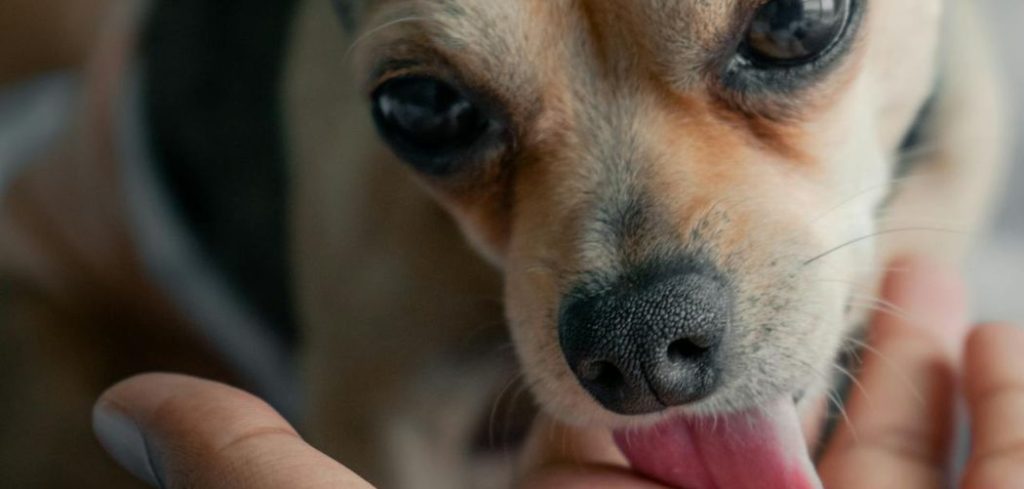
Senior Dog Licking Excessively at Night: Symptoms
Depending on the underlying problem, other symptoms may occur at the same time, including:
Repeated licking of the paws
Licking the legs or other areas of the body
Lip licking or frequent swallowing
Licking bedding or floors
Redness or irritated skin
Hair loss around the repeatedly licked area
Restlessness or difficulty settling
Changes in appetite or behavior
Senior Dog Licking Excessively at Night: Common Causes
Skin Irritation or Allergies
Skin irritation is one of the common reasons dogs repeatedly lick their bodies. Allergies, environmental irritants, parasites, and other skin conditions can cause itching that leads to persistent licking.
A senior dog may focus on its paws, legs, belly, or other areas. You may notice redness, odor, flaky skin, hair loss, or small irritated areas.
If the licking continues, the repeated moisture and friction can further irritate the skin. Persistent itching should be evaluated rather than allowing the cycle to continue.
Related: Dog Licking Excessively at Night (Here’s why)
Pain or Arthritis
Older dogs frequently develop painful joints and other age-related sources of discomfort.
A dog may lick an area that feels painful or uncomfortable, although the exact source of pain is not always obvious.
Nighttime may make discomfort more noticeable because the dog has fewer distractions and spends more time resting.
You may also notice stiffness, difficulty getting up, reluctance to climb stairs, or changes in sleeping position.
If the licking is focused on one leg or joint, tell your veterinarian. The behavior may provide a useful clue about localized discomfort.
Paw or Nail Problems
A cracked nail, irritated paw pad, foreign material, or inflammation between the toes can cause a dog to lick its feet repeatedly.
The behavior may become especially obvious at night when your dog is lying quietly. Examine the paws if your dog allows it, looking for redness, swelling, cuts, damaged nails, or debris between the toes.
Do not force an examination if your dog is painful. A veterinarian should assess persistent paw licking or a paw that appears swollen or injured.
Related: Dog licking paws excessively (Causes and what to do)
Dental or Mouth Discomfort
Repeated lip licking, swallowing, drooling, or licking the air can sometimes be associated with oral discomfort.
Dental disease is particularly common in older dogs and can make the mouth uncomfortable.
A senior dog may also have bad breath, difficulty chewing, dropping food, or changes in eating habits.
If your dog is licking its lips repeatedly at night rather than licking its body, an oral or gastrointestinal cause may need to be considered.
Nausea or Gastrointestinal Discomfort
Dogs experiencing nausea may lick their lips, swallow repeatedly, lick surfaces, or appear restless. Some dogs may also drool or repeatedly change position.
A senior dog with gastrointestinal discomfort may have vomiting, diarrhea, reduced appetite, changes in stool, or increased grass eating.
Nighttime licking that occurs alongside digestive symptoms should not be dismissed as a behavioral habit, particularly in an older dog.
Anxiety or Restlessness
Some senior dogs become more restless or anxious at night. Changes in routine, reduced vision or hearing, cognitive changes, or difficulty settling can contribute to nighttime behaviors.
A dog may lick itself, bedding, or nearby surfaces as part of repetitive or self-soothing behavior.
Other signs may include pacing, staring, vocalizing, repeatedly changing sleeping locations, or appearing confused.
Because anxiety-like behavior can sometimes have a medical cause in older dogs, new nighttime behavior should be discussed with your veterinarian.
Canine Cognitive Dysfunction
Age-related cognitive changes can affect sleep patterns and nighttime behavior. A senior dog may become confused or restless when the environment is dark and quiet.
You may notice nighttime pacing, vocalization, getting stuck in unusual places, staring, changes in interaction, or altered sleeping patterns in addition to excessive licking.
Cognitive dysfunction is a diagnosis that requires consideration of other medical causes first.
A veterinarian can help determine whether cognitive changes may be contributing to the behavior.
Parasites or Skin Infection
Fleas, mites, and some skin infections can cause intense itching and licking. A dog may continue grooming even when parasites are not immediately visible.
Redness, odor, scaling, hair loss, moist skin, or recurring sores may accompany excessive licking.
Some skin infections require specific veterinary treatment, so persistent licking combined with skin changes should be examined.
Related: Old dog licking everything excessively suddenly (What it means)
Senior Dog Licking Excessively at Night: What to Do
Start by observing exactly what your senior dog is licking. Note whether the behavior involves the paws, a particular leg, the skin, lips, bedding, or another surface.
If your dog allows it, gently inspect the paws, nails, and skin for redness, swelling, cuts, odor, parasites, or other visible changes.
Avoid applying creams, essential oils, or human skin medications unless your veterinarian recommends them.
Keep your dog’s sleeping area comfortable and maintain a predictable nighttime routine.
If the behavior appears related to restlessness, a calm environment with easy access to water and a comfortable bed may help.
Make sure your dog has regular opportunities to go outside and use the bathroom before bedtime.
Observe whether nighttime licking occurs alongside changes in urination, bowel movements, appetite, or drinking.
Record a short video of the behavior if possible. This can be especially helpful if the licking is intermittent and does not occur during a veterinary appointment.
Keep a simple diary noting when the licking starts, how long it lasts, what area is involved, and whether anything seems to trigger it.
Do not punish or repeatedly interrupt your dog for licking. Instead, focus on identifying and addressing the reason for the behavior.
When to Call or Visit the Vet
Occasional grooming is normal, but excessive or newly developed nighttime licking in a senior dog should be discussed with a veterinarian if it persists or is accompanied by other changes.
Schedule an appointment if you notice:
Persistent nighttime licking
Redness or sores
Hair loss from repeated licking
Foul odor from the skin or ears
Repeated paw licking
Changes in appetite
Increased thirst or urination
Nighttime restlessness
Stiffness or signs of pain
Repeated lip licking or swallowing
Seek emergency veterinary attention immediately if your dog develops:
Difficulty breathing
Collapse
Severe weakness
Repeated vomiting with marked lethargy
A swollen or painful abdomen
Inability to stand or walk
Sudden severe confusion or abnormal behavior
Pale, white, gray, or bluish gums
Suspected poisoning
Severe pain
Senior Dog Licking Excessively at Night: Treatment
Veterinary treatment for a senior dog that is licking excessively at night starts with a thorough examination of the skin, paws, mouth, joints, and overall health, while also considering behavioral and neurological changes.
The veterinarian may recommend skin testing, blood tests, dental examination, or other diagnostic testing when appropriate.
Treatment may include prescription medication for allergies, infection, pain, or nausea, parasite control, dental treatment, skin care, environmental changes, or other targeted therapy based on the diagnosis.
Key Takeaway
A senior dog licking excessively at night may be experiencing skin irritation, allergies, paw problems, pain, dental discomfort, nausea, anxiety, cognitive changes, parasites, or a skin infection.
The location and pattern of the licking can provide important clues about what is happening.
Pay attention to where your dog licks and look for accompanying changes such as redness, hair loss, stiffness, appetite changes, restlessness, or digestive symptoms.
Avoid human medications and topical products unless your veterinarian recommends them.
If excessive nighttime licking persists or your senior dog develops other changes in health or behavior, arrange a veterinary examination. Identifying the underlying cause can help your dog become more comfortable and settle more peacefully at night.


