
If your old dog’s legs are collapsing, it can be frightening to watch them suddenly struggle to stand or walk normally.
While weakness can develop gradually with age, repeated leg collapse is not simply a normal part of getting older and may indicate arthritis or another underlying condition.
Table of Contents
Old Dog's Legs Collapsing: Why It Happens
An old dog’s legs collapsing may happen because of degenerative myelopathy, arthritis, intervertebral disc disease, hip or spinal problems, muscle weakness, neurological disease, poor circulation, or a systemic illness.
Some senior dogs also develop wobbliness, dragging of the back feet, difficulty getting up, urinary accidents, or an inability to stand.
Some conditions develop slowly, while others can cause sudden weakness or loss of coordination. Sudden collapse or an inability to stand should be treated as an urgent veterinary problem.
Because several serious neurological and orthopedic disorders can look similar at first, a veterinarian should assess repeated or worsening episodes rather than assuming they are simply caused by old age.
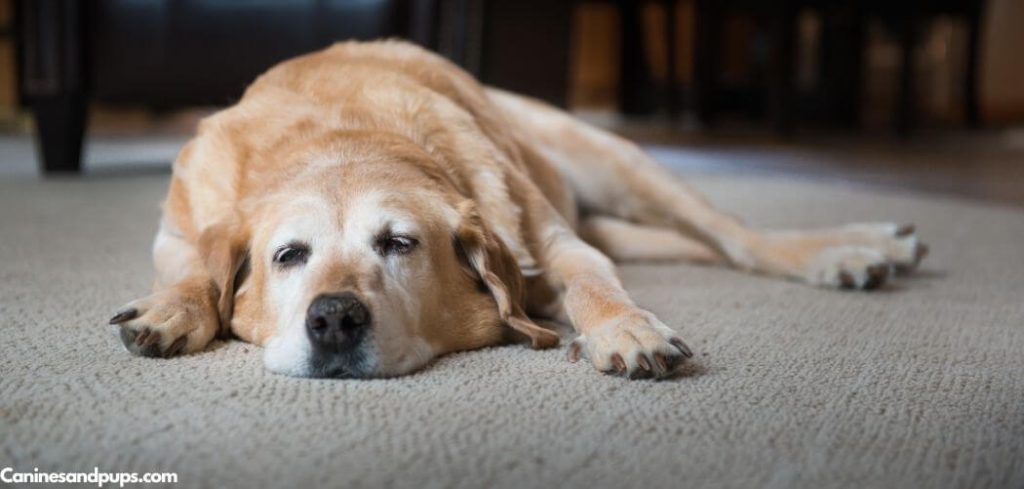
Old Dogs Legs Collapsing: Symptoms
Depending on the underlying cause, other symptoms include:
Back legs giving way.
Difficulty standing up.
Wobbling while walking.
Dragging or scuffing the back feet.
Stiffness after resting.
Muscle loss.
Reluctance to walk.
Urinary or bowel accidents.
Old Dogs Legs Collapsing: Common Causes
Arthritis and Severe Joint Disease
Arthritis is a common cause of weakness and difficulty standing in senior dogs. Pain and inflammation in the hips, knees, or other joints can make it difficult for a dog to push themselves upright or maintain their balance.
You may notice your dog struggling most after lying down for a long time. They may take several attempts to stand, walk stiffly, avoid stairs, or suddenly sit back down because their legs feel painful or unstable.
Although arthritis is common in older dogs, repeated collapse should still be evaluated.
Pain management, controlled exercise, physical rehabilitation, and other veterinary treatments can often improve comfort and mobility.
Read more: Old Dog Suddenly Can’t Use Back Legs (Causes and treatment)
Muscle Loss and Age-Related Weakness
Senior dogs can gradually lose muscle mass, particularly in the hind legs. Reduced activity can accelerate this process, creating a cycle in which weakness makes movement harder and reduced movement causes further muscle loss.
A dog with significant muscle weakness may struggle to rise from the floor, stand for long periods, climb stairs, or walk for more than a short distance.
Your veterinarian can determine whether muscle loss is primarily age-related or whether another disease is contributing to the weakness.
Degenerative Myelopathy
Degenerative myelopathy is a progressive spinal cord disorder that commonly affects middle-aged and older dogs. Weakness and poor coordination often begin in the hind limbs and gradually become more severe.
Early signs can look like arthritis. Your dog may wobble, cross their back feet, drag their toes, or have difficulty getting up.
As the condition progresses, the hind legs may eventually become unable to support the dog’s weight.
Because other spinal disorders can produce similar symptoms, veterinary assessment is important before assuming degenerative myelopathy is responsible.
Intervertebral Disc Disease
Intervertebral disc disease occurs when a spinal disc degenerates or becomes displaced, putting pressure on the spinal cord or nearby nerves. Depending on the location and severity, dogs may develop pain, weakness, an abnormal gait, or paralysis.
A senior dog may initially appear stiff or reluctant to jump before developing more obvious hind-leg weakness.
Some dogs walk with a hunched back, shiver, pant, or show pain when moving.
Sudden worsening, inability to walk, or loss of normal sensation requires urgent veterinary attention.
Hip Dysplasia and Other Orthopedic Problems
Although hip dysplasia often develops earlier in life, its effects can become increasingly apparent as dogs age and develop arthritis in the hips.
Affected dogs may have difficulty standing, walk with an altered gait, avoid stairs, or appear weak in the hind legs.
Other orthopedic conditions, including cruciate ligament disease, chronic joint injuries, and bone disorders, can produce similar signs.
A veterinary orthopedic examination and imaging may be needed to determine whether a painful joint is responsible for the collapsing legs.
Read more: Old front legs collapsing (Here’s why)
Spinal or Nerve Disease
Problems affecting the spine or nerves can interfere with the signals that control the legs. Tumors, spinal inflammation, nerve compression, and lumbosacral disease are among the conditions that can cause weakness or poor coordination.
Some dogs drag their feet, stumble, develop a hunched posture, or have difficulty controlling their bladder or bowel movements.
Neurological problems can progress, so a new or worsening change in your dog’s ability to walk warrants veterinary assessment.
Vestibular or Balance Disorders
Older dogs can develop vestibular disease, which affects balance and coordination. Although it does not necessarily cause true leg weakness, a dog may appear to collapse because they cannot maintain their balance.
You may notice sudden wobbling, falling, circling, a head tilt, or difficulty standing. Older dogs are particularly prone to idiopathic vestibular disease.
Sudden loss of balance should be evaluated promptly because inner-ear disease, neurological disease, and other conditions can produce similar signs.
Read More: Old dog vestibular disease (Signs, causes and treatment)
Heart Disease or Poor Circulation
Heart disease can cause generalized weakness because the body may not receive adequate circulation during activity. An older dog may become tired quickly, struggle to stand after exertion, or appear to collapse.
Other signs can include coughing, rapid or labored breathing, reduced exercise tolerance, or fainting.
Because collapse can have potentially serious cardiovascular causes, a senior dog experiencing unexplained episodes should receive veterinary evaluation.
Metabolic or Systemic Disease
Weakness can also result from conditions affecting the body’s metabolism, blood cells, electrolytes, or major organs. Problems such as anemia, low blood sugar, electrolyte abnormalities, kidney disease, and other systemic illnesses can cause weakness or collapse.
These dogs may also have changes in appetite, thirst, urination, weight, energy, or behavior.
Blood tests and other diagnostic examinations can help identify these underlying problems.
Old Dogs Legs Collapsing: What to Do
Keep your dog on a non-slip surface and prevent access to stairs, slippery floors, and places where a fall could cause injury. Give them a comfortable resting area that is easy to reach, and keep food and water nearby.
Avoid encouraging your dog to walk long distances or exercise through weakness. If they are struggling to stand, use appropriate veterinary-recommended mobility support rather than forcing them to walk.
Watch for changes in walking ability, appetite, breathing, urination, bowel movements, and alertness. If the collapsing is new, repeated, or getting worse, arrange a veterinary examination rather than assuming it is simply old age.
Do not give human pain medication unless a veterinarian specifically prescribes or recommends it for your dog.
When to Call or Visit Your Vet
A senior dog whose legs repeatedly collapse should be assessed by a veterinarian. Veterinary guidance is especially important when the weakness is progressively worsening, occurs in more than one leg, or is accompanied by other changes.
Veterinary evaluation for senior dogs with sudden collapse, bouts of weakness, or persistent mobility problems is necessary.
Schedule an appointment if you notice:
Repeated episodes of the legs giving way
Increasing difficulty standing
Progressive hind-leg weakness
Dragging or scuffing the feet
Muscle loss
Stiffness or painful movement
New urinary or bowel accidents
Reduced activity or exercise tolerance
Seek emergency veterinary attention immediately if your dog develops:
Sudden inability to stand or walk
Complete collapse
Severe or sudden pain
Paralysis or rapidly worsening weakness
Difficulty breathing
Loss of consciousness
Major trauma
A suspected spinal injury
Inability to stand or walk without assistance can require emergency veterinary care, particularly when the weakness is sudden or associated with neurological signs.
Old Dogs Legs Collapsing: Treatment
Veterinary treatment for an old dog whose legs are collapsing begins with a complete physical and neurological examination to determine the severity of the weakness.
The veterinarian may recommend blood and urine tests, X-rays, or advanced imaging to assess the bones, joints, spine, muscles, and nervous system.
Treatment may include prescription pain relief, anti-inflammatory medication, joint medications, physical rehabilitation, or other targeted medication depending on the diagnosis.
Dogs with severe weakness may require supportive care or hospitalization, while certain orthopedic or spinal conditions may require surgery or referral to a specialist.
Alongside veterinary treatment, supportive mobility products can help make everyday movement safer and more comfortable for a senior dog whose legs are collapsing.
A rear support harness can provide assistance with standing and walking, while paw grips may improve traction on slippery floors and an orthopedic bed can provide comfortable support during periods of rest.
Learn more in our guides to the Best Dog Harnesses for Weak Back Legs, Best Paw Grips for Senior Dogs, and Best Orthopedic Beds for Senior Dogs.
You can also explore our Senior Dog Products hub for more expert recommendations designed to support aging dogs.
Recovery and Monitoring
The outlook depends on why your dog’s legs are collapsing. Some causes, such as pain from arthritis or certain treatable medical conditions, can be managed successfully. Other progressive neurological diseases may worsen over time.
Monitor your dog’s ability to stand, walk, eat, drink, urinate, and defecate. Keep their environment safe and minimize slipping or falling while you arrange appropriate veterinary care.
If your dog’s mobility suddenly deteriorates or they can no longer stand, do not wait for the problem to resolve on its own.
Key Takeaway
Old dogs’ legs collapsing can be caused by arthritis, muscle loss, degenerative myelopathy, spinal disease, hip problems, neurological disorders, vestibular disease, heart disease, or metabolic illness.
Although some weakness is common with aging, repeated or worsening leg collapse is not something to dismiss as normal old age.
A veterinary examination can help determine whether the problem is painful, orthopedic, neurological, or related to another underlying illness.
If your old dog suddenly cannot stand, becomes paralyzed, collapses completely, has severe pain, or develops breathing difficulties, seek emergency veterinary care immediately.


