
Seeing an old dog coughing up white foamy mucus can be alarming, especially when the foam appears suddenly or keeps coming back.
White foam may develop when mucus, saliva, and air are mixed during coughing, but the underlying reason can range from irritation of the airways to heart or lung disease.
In senior dogs, a persistent cough deserves particular attention because age-related conditions can affect the heart, lungs, and respiratory tract.
It is also important to determine whether a dog is actually coughing up foam or vomiting it, since these can have very different causes.
Table of Contents
Old Dog Coughing Up White Foamy Mucus: Why It Happens
A dog may cough up white foamy mucus when irritation, inflammation, infection, or disease affects the respiratory tract and causes excess mucus or saliva to be expelled during coughing. In an older dog, possibilities include chronic airway disease, respiratory infections, tracheal irritation, pneumonia, or heart disease.
Some dogs may also bring up white foam after repeated coughing because forceful coughing stimulates saliva production.
The appearance of the foam alone cannot identify the cause. How often the coughing occurs, whether it happens at night or after exercise, and whether your dog has breathing difficulty or other changes can provide important clues.
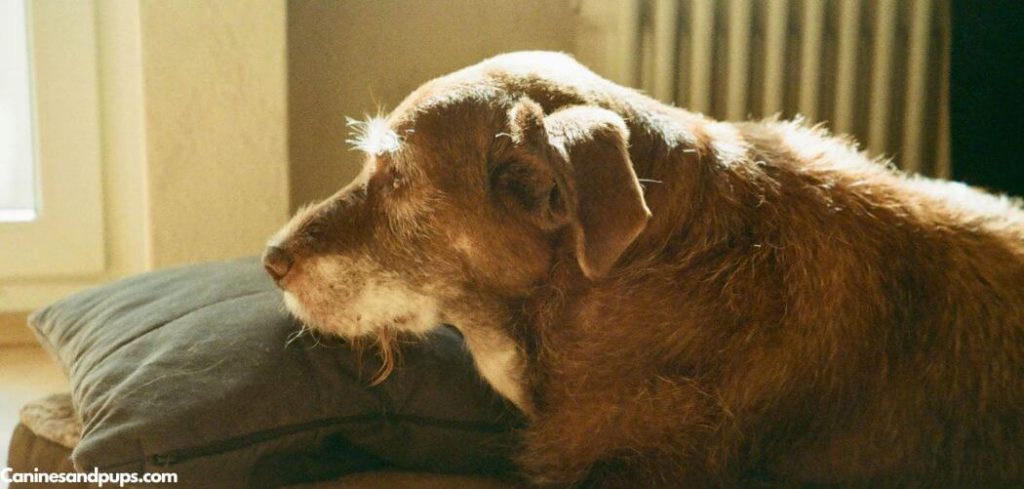
An old dog coughing up white mucus may have other signs depending on the underlying problem:
Repeated coughing or hacking
White or clear foamy mucus around the mouth
Gagging or throat-clearing sounds
Faster or more difficult breathing
Reduced stamina during walks
Tiredness or weakness
Reduced appetite
Fever or feeling unusually warm
Restlessness, especially at night
Coughing Up vs. Vomiting White Foam in an Old Dog
It is important to determine whether an old dog is coughing up white foam or vomiting it, because these are different processes and may require different veterinary evaluations.
When a dog coughs up white, foamy mucus, the material generally originates from the respiratory tract.
The dog will typically cough or hack repeatedly before bringing up a small amount of foam or mucus. You may also notice gagging at the end of the coughing episode.
When a dog is vomiting white foam, the material comes from the stomach or upper digestive tract. Vomiting is usually preceded by nausea, lip licking, drooling, repeated swallowing, abdominal contractions, and retching. The expelled material may contain white foam, mucus, stomach fluid, or partially digested food.
For an older dog, distinguishing between the two is particularly important because persistent coughing or repeated vomiting warrants veterinary assessment.
If possible, recording an episode on your phone can help the veterinarian determine whether the dog is coughing, gagging, regurgitating, or vomiting.
Old Dog Coughing Up White Foamy Mucus: Common Causes
Chronic Bronchitis
Chronic bronchitis is a common respiratory problem in older dogs and involves ongoing inflammation of the bronchial airways.
The irritated airways can produce excess mucus, which may be brought up during coughing.
Dogs with chronic bronchitis often have a persistent dry, harsh, or hacking cough that may become more noticeable with excitement, activity, or changes in breathing pattern.
Some dogs eventually cough up small amounts of clear or white mucus.
The condition may require long-term veterinary management rather than being something that simply goes away on its own.
Your veterinarian can determine whether chronic airway inflammation is contributing to your dog’s cough.
Related: Dog Coughing Only at Night (Why it happens)
Kennel Cough or Other Respiratory Infection
Respiratory infections can cause coughing, gagging, nasal discharge, and mucus production. Although kennel cough is often associated with dogs that have recently been around other dogs, several infectious organisms can cause respiratory illness.
A dog may cough repeatedly and then bring up a small amount of white foam or mucus.
The foam can sometimes be mistaken for vomiting because the dog may gag at the end of a coughing episode.
Older dogs may need closer monitoring when they develop respiratory infections, particularly if they have other health problems.
A cough that becomes more frequent, severe, or associated with breathing changes should be evaluated by a veterinarian.
Related: Dog Coughing Up Phlegm (Causes and what to do)
Tracheal Irritation or Tracheal Collapse
Irritation of the trachea can trigger forceful coughing, and some older dogs are prone to conditions affecting the stability of the windpipe.
Tracheal problems can produce a characteristic hacking or honking cough.
Coughing may become worse when a dog gets excited, pulls against a collar, exercises, or encounters irritants such as smoke or strong fragrances.
Repeated coughing can produce saliva and mucus that appear as white foam.
A veterinarian can listen to the airway and determine whether additional testing is appropriate. Dogs with significant respiratory distress require prompt veterinary attention.
Heart Disease
Heart disease is an important consideration when an older dog develops a new or worsening cough.
Certain heart conditions can contribute to changes in circulation and may eventually affect the lungs, resulting in coughing and breathing difficulties.
A dog with heart disease may also tire more easily, breathe faster while resting, become less interested in exercise, or show weakness.
Some dogs develop coughing that is particularly noticeable when resting or sleeping.
A cough does not automatically mean that an old dog has heart disease. However, persistent coughing in a senior dog warrants veterinary assessment because heart and respiratory conditions can sometimes produce similar signs.
Pneumonia
Pneumonia occurs when the lungs become inflamed, often because of infection or inhalation of material into the respiratory tract. It can cause coughing and mucus production and may make a dog noticeably unwell.
An affected dog may have reduced appetite, lethargy, fever, weakness, or abnormal breathing. Some dogs may cough up mucus or foam after repeated coughing.
Pneumonia can be serious, particularly in an elderly dog or one that is already medically fragile.
A dog with worsening breathing, pronounced weakness, or other signs of serious illness should be assessed promptly.
Inhaled Irritants
Smoke, dust, aerosol sprays, strong fragrances, and other airborne irritants can aggravate a dog’s respiratory tract.
An older dog with sensitive airways may respond with coughing and increased mucus.
If the coughing began after exposure to an obvious irritant and improves after the exposure stops, irritation may be contributing to the problem.
However, persistent coughing should not automatically be attributed to the environment.
Keeping your dog’s living area well ventilated and free from cigarette smoke, excessive dust, and strong chemical fumes can help reduce unnecessary airway irritation.
Foreign Material in the Airway
Occasionally, a piece of food, plant material, or another foreign object can irritate or obstruct part of the respiratory tract.
This may cause sudden coughing, gagging, repeated swallowing, or attempts to clear the throat.
A sudden cough that begins while eating or immediately afterward deserves attention, particularly if your dog continues to struggle with breathing or cannot settle afterward.
Do not attempt to reach deep into your dog’s throat to remove an object that you cannot easily see.
A veterinarian may need to examine the airway and determine the safest way to address the problem.
Lung Disease or Other Serious Respiratory Conditions
Persistent coughing in an elderly dog can occasionally be associated with more serious disease affecting the lungs or respiratory system. Lung problems may cause coughing, mucus production, reduced exercise tolerance, weight loss, or changes in breathing.
These conditions cannot be diagnosed from the appearance of white foam alone.
Diagnostic imaging and other veterinary tests may be necessary to identify what is happening.
This is one reason a recurring cough in an old dog should not simply be dismissed as a normal part of aging.
Related: Old dog vomiting and not eating (Causes and treatment)
Old Dog Coughing Up White Foamy Mucus: What to Do
Start by keeping your dog calm and observing the coughing episodes closely.
Note when they occur, how long they last, whether your dog brings up mucus, and whether anything appears to trigger them.
If possible, record a short video of the coughing. The veterinarian may find the sound and pattern useful when determining whether the episode appears to be coughing, gagging, or vomiting.
Make sure fresh water is available and encourage normal drinking without forcing your dog to drink.
If your dog seems tired or uncomfortable, avoid strenuous exercise until you know what is causing the cough.
Reduce exposure to cigarette smoke, dusty environments, aerosols, perfumes, and other strong airborne irritants.
If your dog normally walks on a collar and coughing seems worse when the neck is under pressure, ask your veterinarian whether a harness would be more appropriate.
Do not give your dog human cough medicine, decongestants, or other medications unless your veterinarian specifically tells you to use them.
Some human medications can be unsafe for dogs, and suppressing a cough may not be appropriate when the cough is helping clear respiratory secretions.
If the coughing continues, becomes more frequent, or is accompanied by other changes, arrange a veterinary examination rather than relying solely on home care.
When to Call or Visit the Vet
A new cough in an elderly dog deserves attention, especially when it persists or is accompanied by other symptoms.
The urgency depends on your dog’s breathing, overall condition, and the pattern of the cough.
Schedule an appointment if you notice:
Coughing that continues for more than a short period
Recurring white or clear foamy mucus
A cough that is gradually becoming more frequent
Reduced stamina or reluctance to exercise
Decreased appetite or unusual tiredness
Coughing that repeatedly occurs during rest or at night
Unexplained weight loss
Nasal discharge or other persistent respiratory symptoms
Seek emergency veterinary attention immediately if your dog develops:
Obvious difficulty breathing
Severe or rapidly worsening breathing changes
Blue, gray, or very pale gums or tongue
Collapse or inability to stand normally
Extreme weakness or distress
Repeated coughing accompanied by significant breathing difficulty
Suspected choking or a serious airway obstruction
Old Dog Coughing Up White Foamy Mucus: Treatment
Veterinary assessment includes a physical examination. Depending on the findings, diagnostic testing may include chest X-rays, blood tests, heart evaluation, or other respiratory investigations.
The appropriate tests depend on your dog’s age, symptoms, examination findings, and medical history.
Treatment varies considerably because coughing is a symptom rather than a diagnosis.
A respiratory infection may require different management from chronic airway disease, while heart disease or pneumonia requires its own specific treatment plan.
Your veterinarian may prescribe medications to address inflammation, infection, heart-related problems, or other underlying conditions when appropriate.
In some cases, supportive care and environmental changes are also part of long-term management.
Recovery and Monitoring
Recovery depends largely on what is causing the cough. A mild respiratory irritation may improve once the trigger is removed, while chronic bronchitis, heart disease, or other long-term conditions may require ongoing management.
Keep track of how frequently your dog coughs and whether the amount or appearance of mucus changes.
It can also be useful to record changes in appetite, energy, exercise tolerance, sleeping behavior, and breathing.
Follow your veterinarian’s treatment instructions carefully, even if your dog appears better. Some chronic respiratory or heart conditions require regular monitoring because symptoms can change gradually.
If your senior dog has already been diagnosed with a chronic condition, ask your veterinarian what changes should prompt an earlier recheck.
Early attention to worsening symptoms can help prevent a manageable problem from becoming more serious.
Key Takeaway
An old dog coughing up white foamy mucus may be experiencing airway irritation, chronic bronchitis, a respiratory infection, tracheal disease, or another condition affecting the heart or lungs.
White foam often consists of saliva and mucus produced during repeated coughing, so its appearance alone does not reveal the underlying cause.
Occasional coughing may not indicate an emergency, but a persistent or worsening cough in a senior dog should not be ignored.
Pay particular attention to changes in breathing, appetite, energy, and exercise tolerance.
If your old dog is struggling to breathe, collapsing, or showing severe distress, seek emergency veterinary care immediately.
Otherwise, arrange a veterinary examination if the coughing keeps returning or does not improve, so the underlying cause can be identified and treated appropriately.


