
It can be concerning when an older dog starts coughing mainly at night, especially if the cough repeatedly interrupts sleep or is becoming more frequent. Nighttime coughing can occur for several reasons, ranging from airway irritation to heart or lung disease.
The timing of the cough can provide useful information, but it does not identify the cause by itself.
A cough that is worse when your dog is resting or lying down deserves particular attention, especially when accompanied by changes in breathing, energy, appetite, or exercise tolerance.
Table of Contents
Old Dog Coughing at Night: Why It Happens
An old dog may cough at night because lying down can make certain airway, heart, or lung problems more noticeable. Environmental irritants in the sleeping area can also trigger coughing, while conditions such as chronic airway disease may produce coughing throughout the day and night.
In some dogs, nighttime coughing is associated with heart disease or changes in the lungs. In others, the cause may be unrelated to the heart.
The duration, character, and frequency of the cough, along with your dog’s other symptoms, can help your veterinarian determine the likely cause.
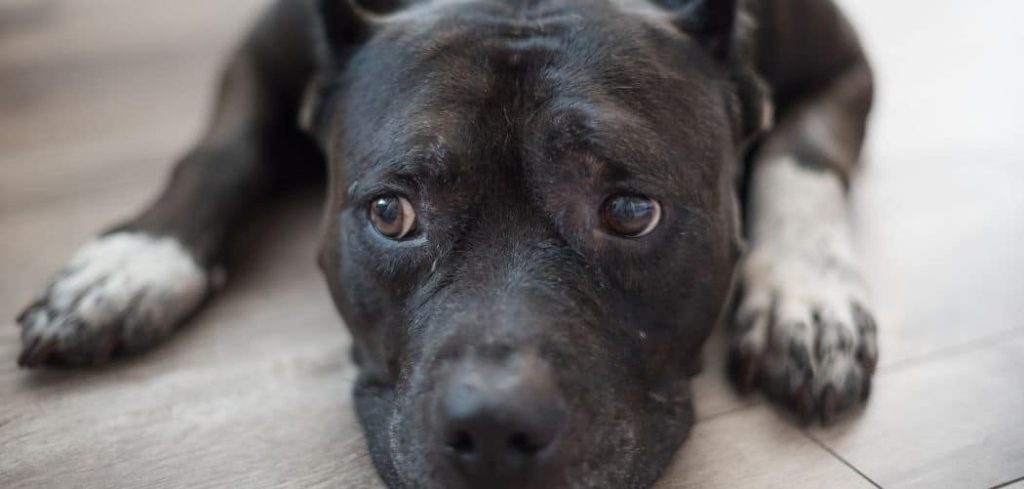
Old Dog Coughing at Night: Common Causes
Heart Disease
Heart disease is an important consideration in an older dog with a persistent cough. Some heart conditions can cause changes in the heart and circulation that contribute to coughing or breathing difficulties.
Dogs with more advanced heart disease may also have faster breathing while resting, reduced exercise tolerance, weakness, or difficulty settling comfortably.
Nighttime coughing does not prove that heart disease is present, but a persistent cough in a senior dog should be evaluated.
Congestive Heart Failure
Congestive heart failure occurs when the heart cannot circulate blood effectively enough and fluid can accumulate in the lungs. This can cause coughing and breathing difficulty.
Some dogs may appear worse when resting or lying down. They may cough repeatedly during the night or have difficulty sleeping comfortably.
If an older dog has nighttime coughing accompanied by rapid or difficult breathing, veterinary assessment is important.
Related: Dog has congestive heart failure and not eating (Why it happens)
Chronic Airway Disease
Chronic inflammatory airway conditions can cause recurrent coughing in older dogs. The cough may be more noticeable at certain times, including when the dog is resting.
Dust, smoke, fragrances, cleaning products, and other airborne irritants can worsen airway inflammation.
The cough may be dry or harsh and may be triggered by excitement, activity, changes in temperature, or pressure on the airway.
Collapsing Trachea
Tracheal collapse occurs when the windpipe becomes less rigid and partially narrows during breathing. It is more common in some small breeds and can cause a characteristic dry, harsh, or honking cough.
Coughing may become more noticeable with excitement, activity, pressure around the neck, or certain body positions.
A veterinarian can determine whether the trachea or another part of the respiratory tract is responsible.
Respiratory Infection
Respiratory infections can cause coughing at any time of day, including during the night. Older dogs may also develop lethargy, nasal discharge, sneezing, reduced appetite, or fever.
The severity varies depending on the infection and your dog’s overall health.
A cough that persists or is accompanied by other signs of illness should be assessed by a veterinarian.
Lung Disease
Lung disease can cause chronic coughing in older dogs. Depending on the condition, the cough may be accompanied by exercise intolerance, breathing changes, weakness, or reduced appetite.
Some lung conditions can progress gradually, making it easy to overlook subtle changes at first.
A veterinary examination and chest imaging may be needed to identify the cause.
Environmental Irritants
Dust, smoke, perfumes, air fresheners, cleaning products, mold, and other airborne irritants can cause or worsen coughing.
If your dog spends most of the night in a particular room, exposure to something in that environment may contribute to the symptoms.
However, an environmental trigger should not be assumed to be the cause when an older dog has a persistent cough. Medical conditions can also produce nighttime symptoms.
Nasal or Throat Problems
Problems involving the nose, throat, or upper airway can cause coughing, gagging, throat clearing, or noisy breathing.
Some dogs may have difficulty swallowing or experience increased secretions that irritate the throat.
If your dog coughs or gags particularly when eating, drinking, or lying down, mention this pattern to your veterinarian.
Acid Reflux or Gastrointestinal Irritation
Some dogs may cough or gag because stomach contents or acid irritate the upper airway. This can sometimes be more noticeable after eating or when lying down.
Other signs may include lip licking, repeated swallowing, drooling, or occasional regurgitation.
If coughing repeatedly occurs after meals or during the night, your veterinarian can help determine whether gastrointestinal irritation is contributing.
Related: Old dog heart murmur life expectancy
When to Call or Visit the Vet
An occasional cough may not be an emergency, but a persistent nighttime cough in an older dog should be evaluated, particularly if it is new or worsening. Contact your veterinarian immediately if you notice:
Coughing that persists or becomes more frequent
Coughing repeatedly while resting or sleeping
Faster breathing while resting
Reduced exercise tolerance or unusual fatigue
Weakness, fainting, or collapse
Reduced appetite or other significant behavior changes
Pale, gray, or bluish gums
Difficulty breathing, severe weakness, collapse, or rapidly worsening symptoms
Old Dog Coughing at Night: Treatment
Veterinary treatment for an old dog coughing at night starts with a thorough examination of the heart, lungs, airway, and overall health.
The veterinarian may recommend chest X-rays to evaluate the heart and lungs, while blood tests, an ECG, an echocardiogram, airway evaluation, or other diagnostic testing may be appropriate depending on the suspected cause.
Treatment may include prescription medication for heart disease, airway inflammation, infection, or another underlying condition, along with management of relevant environmental triggers when appropriate.
Key Takeaway
An old dog coughing at night may have chronic airway disease, heart disease, respiratory infection, lung disease, tracheal problems, environmental irritation, or another condition affecting the respiratory system.
Nighttime coughing can sometimes become more noticeable when a dog is lying down, but the timing of the cough alone cannot determine its cause. A persistent or worsening cough in a senior dog should therefore be evaluated by a veterinarian.
Contact your veterinarian if your old dog’s nighttime cough continues or is becoming more frequent. Seek urgent veterinary care if your dog develops difficulty breathing, pale or bluish gums, collapse, severe weakness, or rapidly worsening symptoms.


