
Dogs may occasionally bite or chew around their rear end and tail as part of normal grooming. Occasional grooming around the areas can be normal, however, when a dog keeps biting his bum and tail, the behavior can become persistent and may indicate that something is bothering the area.
You may notice your dog turning around repeatedly to nibble at the base of his tail, biting near the anus, licking the area, scooting across the floor, or suddenly becoming focused on his hind end.
Understanding the pattern of the behavior, how often it occurs, and whether there are changes to the skin or coat can help determine whether it requires further attention.
In this guide, we explain what persistent biting of the bum and tail may mean and when veterinary care may be needed.
Table of Contents
Dog Keeps Biting His Bum and Tail: What It Means
A dog may keep biting his bum and tail when something around the anus, tail, or surrounding skin is itchy, painful, or irritated. Dogs often respond to discomfort by licking or biting the affected area, which can temporarily soothe the sensation but can also cause additional skin damage.
The problem may be concentrated around the anus, at the base of the tail, or farther along the tail itself.
Anal sac problems, fleas, allergies, skin infections, parasites, wounds, and tail injuries can all make a dog repeatedly chew this area.
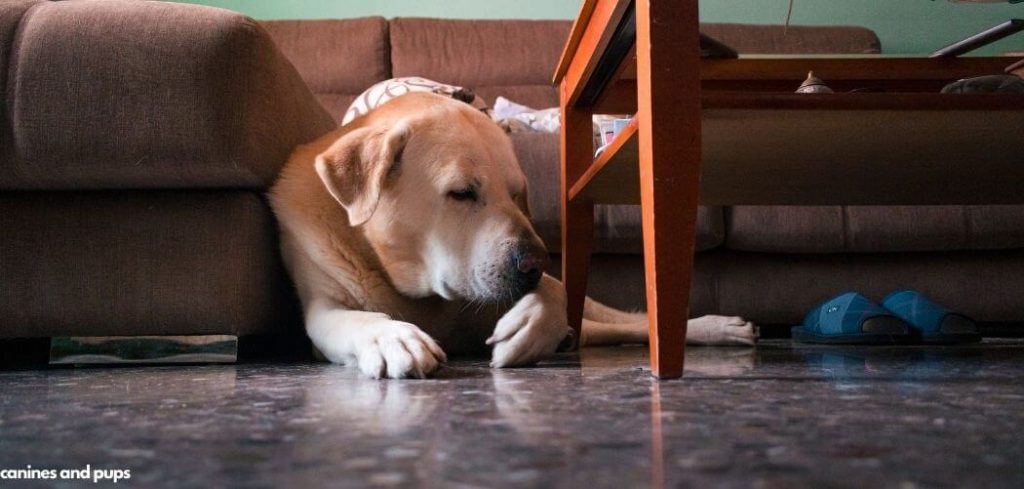
Dog Keeps Biting His Bum and Tail: Common Causes
Anal Sac Problems
Impacted or inflamed anal sacs are one of the important causes to consider when a dog repeatedly bites his rear end.
Dogs have two anal sacs located beside the anus, and problems can develop when these sacs become impacted, inflamed, or infected.
A dog with anal sac disease may scoot, lick or bite around the anus or tail base, seem uncomfortable when sitting, or strain during bowel movements.
If an anal sac becomes infected or forms an abscess, the area may become very painful, swollen, discolored, or begin draining blood or pus.
Related: Dog constantly biting at base of tail (Here’s Why)
Fleas and Flea Allergy
Fleas are another common reason dogs suddenly become interested in their rear end. Flea bites can cause significant itching in sensitive dogs, particularly around the base of the tail and hind legs.
A dog with flea allergy dermatitis may chew, lick, or bite the hindquarters intensely and may develop hair loss, redness, scabs, or open sores.
Importantly, you may not see live fleas because even a single flea bite can trigger itching for several days in an allergic dog.
Allergies
Environmental or food-related allergies can cause itching that affects the hindquarters as well as other parts of the body. A dog may chew the tail and rear because the skin in that area feels itchy.
Allergies become more likely when the biting is accompanied by itching elsewhere, recurrent ear problems, paw licking, redness, or repeated skin infections.
Continued chewing can damage the skin and allow secondary bacterial or yeast infections to develop.
Related: Dog excessively licking base of tail (Causes and what to do)
Skin Infection or Hot Spot
A bacterial or yeast-related skin infection can make the area around the tail or anus itchy and uncomfortable.
Repeated licking and biting can then create a self-trauma cycle in which the skin becomes increasingly irritated.
Hot spots can develop rapidly when a dog repeatedly licks or chews one irritated area. Anal gland inflammation can also contribute to hot spots around or beneath the tail.
Tail Injury
A dog may bite his tail because the tail itself hurts. A small cut, puncture, abrasion, bite wound, or other injury can cause sudden chewing.
Tail injuries can become worse when a dog repeatedly bites the affected area.
More significant wounds may bleed, swell, or become infected, and some tail injuries require veterinary treatment.
Parasites
Some intestinal parasites can cause irritation around the anus. Tapeworm segments, for example, can sometimes be associated with irritation around the rectal area and may contribute to tail-chasing or biting.
External parasites can also cause itching around the hindquarters.
If your dog has persistent rear-end itching, a veterinarian may consider both external and intestinal parasites depending on the other signs present.
Perianal Fistula
Perianal fistulas are painful inflammatory tracts that develop in the tissues surrounding the anus.
They are particularly associated with German Shepherd Dogs but can occur in other dogs as well.
Affected dogs may lick or bite the area, have difficulty or pain when defecating, develop foul-smelling discharge, or show changes in appetite or activity.
Because these lesions can resemble other causes of rear-end irritation, veterinary examination is important.
Tail Skin Problems
Some dogs develop localized skin problems around the tail, including excessive oil production, inflammation, or secondary infection.
Stud tail, for example, affects the oil glands near the base of the tail and can cause greasy fur, hair loss, scaling, crusting, and itchy skin.
A dog with irritated skin around the tail may repeatedly chew or rub the area, especially if inflammation or infection develops.
A Behavioral Habit
Sometimes a dog continues biting his tail after the original irritation or injury has resolved.
Repetitive tail biting can become a learned or compulsive behavior, particularly in dogs that are anxious, frustrated, or easily overstimulated.
However, when tail biting starts suddenly, medical causes should generally be considered before assuming that the behavior is purely behavioral. Dogs may chew at painful areas in an attempt to relieve discomfort.
Related: Old dog holding tail to one side (What it means)
My Dog Keeps Biting His Bum and Tail but Is Acting Normal
A dog that keeps biting his bum and tail while otherwise acting normal may have irritation or itching around the anus, tail, or surrounding skin.
Common causes include anal gland problems, fleas, allergies, skin irritation, parasites, or something stuck in the fur.
Dogs can continue eating, playing, and behaving normally even when a localized problem is bothering them.
If the biting is occasional, checking the area for redness, swelling, fleas, wounds, or fecal material may help identify a simple cause.
Persistent biting, scooting, excessive licking, a strong odor, swelling near the anus, hair loss, or a painful reaction when touched should be evaluated by a veterinarian.
My Dog Keeps Biting His Bum and Tail at Night
Increased biting at night can happen when itching or discomfort becomes more noticeable when the dog is resting and there are fewer distractions.
Fleas, allergies, anal sac irritation, and skin infections can all cause persistent itching.
If nighttime biting repeatedly wakes your dog, prevents him from settling, or causes him to chew the skin raw, the underlying cause should be investigated rather than treating the behavior as a simple habit.
My Dog Keeps Biting His Bum and Tail After Pooping
A dog that repeatedly bites his bum and tail after pooping may be reacting to irritation left around the anus or tail.
Small amounts of stool can remain on the fur, particularly in dogs with long or thick hair, causing itching or discomfort. The act of passing stool can also aggravate already irritated anal glands or inflamed skin.
Other possibilities include anal gland impaction, parasites, allergies, or skin irritation.
If the behavior happens after most bowel movements, check whether the stool is unusually soft, sticky, or difficult to pass and inspect the area for redness or swelling.
Persistent biting, scooting, foul odor, blood, discharge, or difficulty defecating warrants veterinary attention.
When to Call or Visit the Vet
Have your dog evaluated by a veterinarian if he keeps biting his bum and tail and you notice:
Persistent or increasingly intense biting
Red, swollen, or painful skin around the anus or tail
Blood or pus near the anus or tail
A foul odor coming from the rear
A lump or swelling beside the anus
A visible wound or draining area
Hair loss, scabs, or raw skin around the tail base
Repeated scooting
Straining or pain when passing stool
Blood in the stool
Difficulty defecating
Significant tail swelling or bleeding
Severe pain when the tail or rear end is touched
Lethargy, reduced appetite, or other signs of illness
Severe pain, substantial bleeding, rapidly increasing swelling, or an abscess that has opened and is draining should be assessed immediately.
Anal sac infections and abscesses can be very painful and may cause significant damage to the surrounding tissues if left untreated.
My Dog Keeps Biting His Bum and Tail: Treatment
Treatment depends on the underlying cause. The veterinarian may examine the skin, tail, anus, and anal sacs and perform a rectal examination when anal sac disease is suspected.
Additional testing, such as skin cytology, parasite testing, imaging, or other diagnostics, may be recommended depending on the findings.
Impacted anal sacs may require veterinary expression, while infections, allergies, parasites, wounds, or tail injuries require condition-specific treatment..
Key Takeaway
If your dog keeps biting his bum and tail, the behavior usually means that something around the rear end is itchy, irritated, or uncomfortable.
Anal sac problems and flea-related itching are important possibilities, but allergies, skin infections, parasites, wounds, and other tail or perianal problems can cause similar behavior.
Pay particular attention to swelling, redness, wounds, foul odor, discharge, scooting, painful bowel movements, or changes in appetite and behavior.
Persistent biting should be evaluated by a veterinarian so the underlying cause can be identified rather than allowing repeated chewing to further injure the skin.


