
When a dog is standing or walking with a hunched back and the tail tucked between the legs, it leaves owners wondering whether their dog is in pain, unwell, or simply scared.
You may notice that the back looks unusually arched, the abdomen appears tucked upward, and the dog holds the tail close to the body rather than in its normal position.
Table of Contents
Dog's Hunched Back and Tail Between Legs: What It Means
A dog may hunch its back and tuck its tail when pain or discomfort causes it to tense the abdominal and back muscles and adopt a guarded posture.
Spinal conditions, abdominal pain, injuries, and problems affecting the hips or pelvis can make normal standing and walking uncomfortable.
Fear and anxiety can also cause a tucked tail and lowered body posture, although a persistent or sudden combination of these signs should not automatically be attributed to an emotional response.
The location of the discomfort can provide useful clues. A dog with spinal pain may resist bending, jumping, climbing stairs, or turning its head.
A dog with abdominal pain may keep the belly tense, walk slowly, lose interest in food, or repeatedly change resting positions.
A tucked tail can also accompany lower-back or pelvic discomfort because movement of the tail and hindquarters may become painful.
Since several conditions can produce similar postures, a veterinary examination is important to determine whether the problem originates in the spine, abdomen, urinary system, or another area.
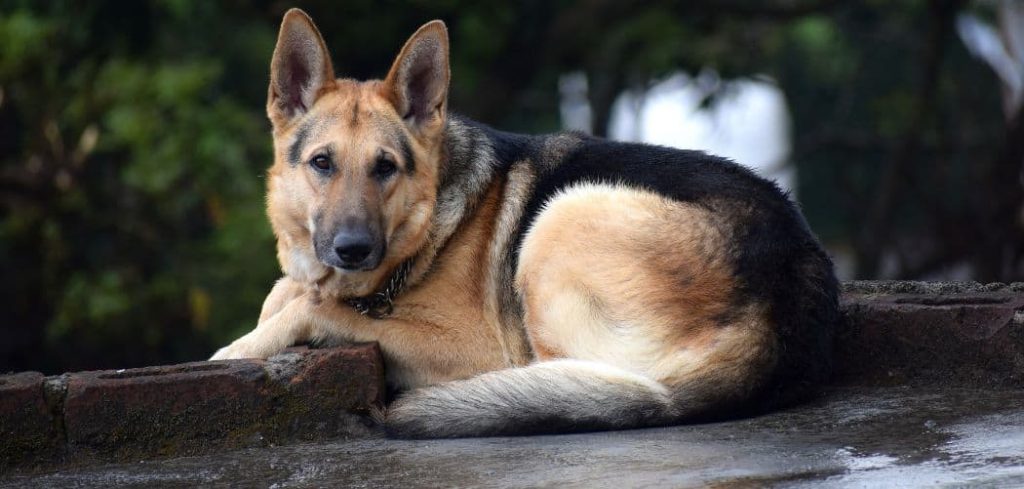
Dog’s Hunched Back and Tail Between the Legs: Causes
1. Intervertebral Disc Disease (IVDD)
IVDD occurs when the cushioning discs between the bones of the spine deteriorate or become displaced, potentially putting pressure on the spinal cord.
It is an important cause of a hunched back in dogs, particularly breeds predisposed to spinal disc problems, such as Dachshunds, French Bulldogs, and Beagles.
A dog with IVDD may arch its back, tuck its tail, lower its head, and become reluctant to move.
Other signs include trembling, crying when picked up, stiffness, difficulty climbing stairs, and reluctance to jump onto furniture.
If the spinal cord becomes significantly compressed, the dog may develop weakness, wobbliness, dragging of the back legs, or paralysis.
Sudden spinal pain or changes in walking require prompt veterinary assessment because IVDD can progress.
Related: Old Dog Has Arched Back (Causes and treatment)
2. Abdominal Pain
Abdominal pain can cause a dog to hunch its back and tuck its tail as it tries to protect the painful area.
Possible causes include digestive inflammation, constipation, intestinal obstruction, and other conditions affecting the abdominal organs.
You may notice that your dog walks slowly, keeps the abdomen tense, avoids being touched around the belly, or struggles to find a comfortable resting position.
Some dogs also lose their appetite, vomit, develop diarrhea, or become unusually quiet.
Abdominal pain should not be dismissed as a simple stomach upset, particularly when it develops suddenly or is accompanied by vomiting or abdominal swelling.
3. Pancreatitis
Pancreatitis is inflammation of the pancreas, an organ involved in digestion and blood sugar regulation.
It can cause significant abdominal discomfort, making a dog stand with an arched back, tucked abdomen, and lowered head.
Some dogs also adopt a posture known as the prayer position, with the front legs stretched forward and the hindquarters raised.
Other symptoms include vomiting, reduced appetite, diarrhea, lethargy, and abdominal tenderness.
Pancreatitis can range from mild to severe and requires veterinary diagnosis and appropriate treatment.
Related: Dog Walking With Arched Back and Shaking (Here’s Why)
4. Back or Muscle Injury
A muscle strain, ligament injury, or other soft-tissue injury can make a dog uncomfortable when standing or walking.
This may happen after running, jumping, playing, slipping, or making an awkward movement.
Your dog may arch its back, hold the tail low, walk stiffly, or avoid activities that involve bending or stretching.
Some dogs also tremble, pant, or become reluctant to be touched around the painful area.
Although a muscle injury is possible, a hunched posture should not automatically be attributed to a strain because spinal conditions can produce similar signs.
5. Hip or Pelvic Problems
Conditions affecting the hips and pelvis can make normal standing, walking, and tail movement uncomfortable.
Hip dysplasia, arthritis, joint inflammation, and injuries may cause a dog to shift its weight forward and hold the hindquarters in a guarded position.
You may notice stiffness when getting up, reluctance to climb stairs, difficulty sitting, or reduced interest in walking.
Some dogs also keep their tails tucked because moving the hindquarters or tail causes discomfort.
6. Urinary Tract Problems
Urinary tract infections, bladder inflammation, and urinary stones can cause pain and discomfort around the lower abdomen and pelvic area.
A dog may hunch its back, tuck its tail, and repeatedly attempt to urinate.
Other signs include frequent urination, passing small amounts of urine, blood in the urine, licking around the genital area, and accidents indoors.
If your dog repeatedly strains but cannot pass urine, seek emergency veterinary care. Urinary obstruction can become life-threatening.
7. Anal Gland Problems
The anal glands are two small sacs located on either side of a dog’s anus.
When these glands become impacted, inflamed, or infected, they can cause pressure and pain around the rear end.
A dog may tuck its tail, hunch its back, scoot across the floor, or repeatedly lick beneath the tail.
Other signs include a strong fishy smell, swelling beside the anus, and discomfort when sitting or passing stool.
An infected or abscessed anal gland can become extremely painful and requires veterinary treatment.
8. Fear, Anxiety, or Stress
A dog may tuck its tail and lower its body when feeling frightened, threatened, or uncomfortable.
This is a common body-language response that can occur during thunderstorms, fireworks, unfamiliar encounters, travel, or stressful interactions.
You may also notice flattened ears, trembling, avoiding eye contact, hiding, or attempting to move away.
However, fear alone does not adequately explain every hunched posture. If your dog has suddenly developed an arched back alongside a tucked tail, physical pain should be ruled out first.
9. Spinal Arthritis and Other Degenerative Conditions
Older dogs may develop arthritis and degenerative changes affecting the spine.
These conditions can cause stiffness and discomfort, particularly when getting up after resting, turning, or climbing stairs.
A dog may gradually develop a hunched posture, carry the tail lower than usual, and become reluctant to jump or walk long distances.
Some spinal disorders also affect the nerves supplying the hind legs and tail, potentially causing weakness or reduced coordination.
New or worsening symptoms in an older dog should be examined rather than automatically attributed to aging.
10. Abdominal or Spinal Infection
Infections affecting the abdominal organs, spinal discs, or surrounding tissues can cause significant pain.
For example, discospondylitis is an infection involving the intervertebral discs and adjacent vertebral bones.
An affected dog may develop a hunched back, reluctance to move, sensitivity when the back is touched, and reduced appetite.
Fever, lethargy, and difficulty walking may also occur.
These conditions require veterinary investigation because they can cause progressive discomfort and, in some cases, neurological complications.
Related: Dog Walking With Arched Back and Stiff Legs: What It Means
Dog’s Hunched Back and Tail Between Legs but Still Walking
A dog that can still walk despite having a hunched back and tucked tail may be experiencing pain that has not yet affected its ability to move.
For example, early IVDD, abdominal discomfort, muscle injuries, and arthritis can cause noticeable posture changes while the dog remains mobile.
You may notice that your dog walks more slowly, avoids jumping, takes shorter steps, or seems uncomfortable when changing positions.
Being able to walk does not rule out a serious spinal or abdominal problem. If the posture is new, arrange a veterinary examination promptly.
Dog’s Hunched Back, Tail Between Legs and Shaking
When a dog develops a hunched back and tucked tail alongside trembling or shaking, pain is an important possibility.
Dogs may tremble when experiencing back pain, abdominal discomfort, injuries, or significant inflammation.
Fear and anxiety can also cause shaking, particularly when the dog is exposed to something frightening.
Other accompanying signs, such as panting, whining, vomiting, reduced appetite, or reluctance to move, may help identify the underlying problem.
If the shaking is persistent or occurs alongside a sudden change in posture, seek veterinary assessment promptly.
Dog’s Hunched Back and Tail Between Legs but Eating Normally
A dog can continue eating normally despite experiencing back pain or an early spinal problem.
Some dogs also maintain their appetite when dealing with mild abdominal discomfort, muscle injuries, or joint problems.
Therefore, normal eating does not rule out pain.
Pay attention to whether your dog is moving normally, wagging the tail, sitting comfortably, and showing interest in usual activities.
A persistent hunched posture with a tucked tail deserves veterinary assessment even if appetite remains unchanged.
Dog Has a Hunched Back and Tail Between the Legs: What to Do
1. Arrange a Veterinary Examination
If your dog has suddenly developed this posture, arrange a veterinary examination promptly.
The veterinarian needs to determine whether the discomfort originates in the spine, abdomen, hips, pelvis, or another area.
Early assessment is particularly important when spinal disease is a possibility.
2. Restrict Movement
Keep your dog quiet and prevent running, jumping, playing, and climbing stairs until the cause is established.
If a spinal problem is suspected, unnecessary movement could worsen the condition.
Allow your dog to rest in a comfortable, confined area.
3. Avoid Pressing or Massaging the Back
Do not press along your dog’s spine, pull the tail, stretch the legs, or attempt to manipulate the back.
These actions may increase discomfort, particularly if there is an injury or spinal disc problem.
4. Make Resting Comfortable
Provide a comfortable bed in a quiet area where your dog can rest without being disturbed.
Keep food and water nearby so your dog does not need to move unnecessarily.
If your dog needs assistance, handle them gently and avoid twisting the back.
5. Observe Urination and Bowel Movements
Notice whether your dog is urinating and passing stool normally.
Straining, frequent attempts to urinate, constipation, or difficulty passing stool may indicate abdominal, urinary, or spinal problems.
If your dog cannot pass urine, seek emergency veterinary care.
6. Avoid Giving Human Painkillers
Do not give human pain medication or leftover prescriptions without veterinary instructions.
Some human medications can be toxic to dogs, and appropriate pain relief depends on the underlying condition.
When to Call or Visit Your Vet
A dog with a hunched back and tail between the legs should be examined immediately, particularly when the posture develops suddenly.
Seek emergency veterinary attention if you notice:
Sudden weakness in one or both back legs.
Dragging the paws or inability to stand.
Loss of bladder or bowel control.
Inability to urinate.
Severe pain, crying, or trembling.
A swollen, hard, or painful abdomen.
Repeated vomiting alongside abdominal pain.
Collapse or difficulty breathing.
A hunched posture following a fall or accident.
These signs may indicate serious spinal, abdominal, or urinary problems that require immediate treatment.
Treatment
Treatment depends on the underlying cause. Your veterinarian will examine your dog’s spine, abdomen, hips, pelvis, and neurological function to identify the source of discomfort.
Blood tests, urine testing, abdominal imaging, or spinal X-rays may be recommended depending on the symptoms.
If IVDD or another spinal disorder is suspected, CT or MRI may be needed to assess the spinal cord and surrounding structures.
Treatment may involve prescribed pain relief, anti-inflammatory medication when appropriate, restricted activity, and rehabilitation.
More serious conditions, including spinal cord compression, urinary obstruction, or certain abdominal disorders, may require hospitalization or surgery.
Treatment should be directed at the actual diagnosis rather than the posture alone.
Key Takeaway
A dog with a hunched back and tail between the legs may be experiencing spinal pain, abdominal discomfort, a muscle injury, urinary problems, or fear and anxiety.
However, when both signs appear suddenly, physical pain should be investigated before assuming the behavior is emotional.
Pay attention to changes in walking, appetite, urination, bowel movements, and willingness to move.
A hunched back with a tucked tail can be an early warning sign of IVDD or another painful condition. Arrange a veterinary examination immediately, and seek emergency care if your dog develops weakness, difficulty walking, inability to urinate, or severe abdominal pain.


