
An arched back paired with a lowered or tucked tail can be a noticeable sign that a dog is not feeling comfortable or secure. When this posture appears during walking, it is important to consider the entire change in body language rather than treating the tail position as an isolated behavior.
Dogs may tuck or lower their tails when they are frightened, anxious, or uncertain. However, a dog may also hold the tail down when movement is painful. An arched or hunched back can occur with discomfort involving the spine, muscles, joints, abdomen, or other parts of the body.
Looking at the entire pattern is important. A dog that briefly lowers its tail during a stressful situation is different from a dog that suddenly walks stiffly with an arched back and keeps its tail tucked while appearing uncomfortable.
Table of Contents
Dog Walking With Arched Back and Tail Down: Why It Happens
A dog may walk with an arched back and its tail down because it is experiencing pain, fear, anxiety, or significant discomfort. An arched posture can occur with abdominal or back pain, while a lowered or tucked tail may accompany pain or emotional distress.
The combination is more concerning when it represents a sudden change from the dog’s normal posture and behavior.
Watching out for other signs such as whining, trembling, vomiting, difficulty in passing stool or urine, reluctance to eat, or avoidance of movement is important.
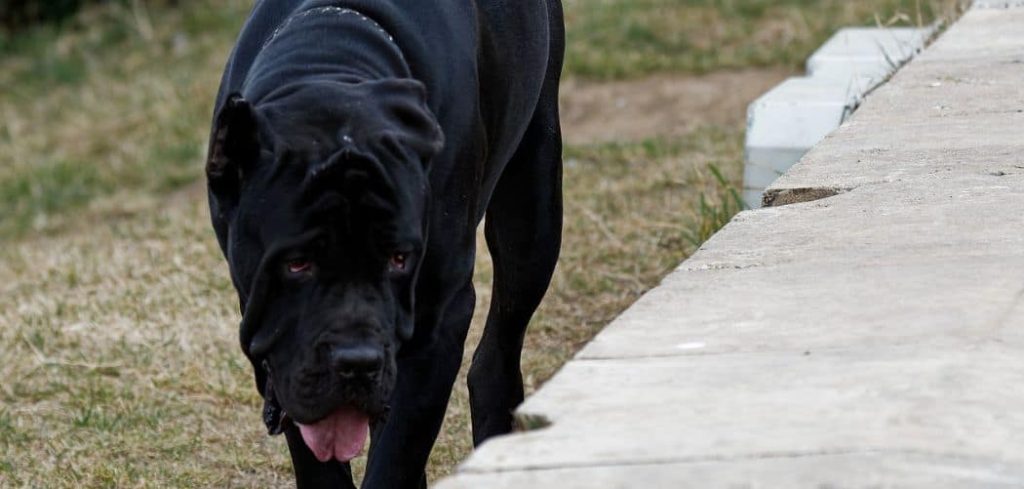
Dog Walking With an Arched Back and Tail Down: Common Causes
Pain or Discomfort
Pain is one of the more important possibilities when a dog suddenly starts walking with an arched back and lowered tail.
A painful dog may change the way they stand and walk to avoid aggravating the uncomfortable area. They may take shorter steps, move more slowly, avoid stairs, or resist being handled.
Pain can come from many different areas, including the back, muscles, joints, abdomen, or limbs.
If the change is sudden and your dog appears uncomfortable, it is better not to assume that they simply pulled a muscle or are feeling anxious without further evaluation.
Related: Dog Walking With Arched Back and Stiff Legs (Here’s why)
Back and Spinal Problems
An arched back can be particularly noticeable when a dog has discomfort involving the spine.
Problems affecting the intervertebral discs, vertebrae, spinal joints, muscles, or surrounding tissues may cause a dog to hold the back differently.
Some spinal conditions can also affect the nerves that control the legs.
Watch for additional signs such as:
Stiff or unusual walking
Reluctance to move
Difficulty jumping
Weakness
Wobbling
Dragging a paw
Difficulty standing
Changes in coordination
Sensitivity when the back is touched
Spinal problems vary considerably in severity, so a veterinary examination is important when an abnormal gait or posture persists.
Related: Dog suddenly not using back legs (Causes and what to do)
Abdominal Pain
An arched back can also be associated with abdominal discomfort.
Dogs with gastrointestinal or other abdominal problems may adopt a hunched posture because standing normally or moving may be uncomfortable.
An arched back is more concerning when it occurs with vomiting, diarrhea, appetite loss, restlessness, abdominal sensitivity, or repeated attempts to change position.
Conditions affecting the gastrointestinal tract and other abdominal organs can have similar outward signs, so the posture itself cannot identify the specific cause.
Muscle Strain or Injury
A dog may develop temporary stiffness after running, jumping, rough play, or another physically demanding activity.
A muscle strain or other soft-tissue injury can make movement uncomfortable and cause your dog to carry their back differently.
They may also keep their tail lower than usual because they are uncomfortable.
Mild soreness may improve, but pronounced pain, worsening stiffness, or difficulty walking should be evaluated rather than automatically attributed to exercise.
Arthritis and Joint Pain
Older dogs may develop joint pain that changes their posture and gait.
Arthritis can affect several joints, including the hips, knees, elbows, and shoulders. A dog with joint pain may walk stiffly, take longer to stand, avoid stairs, or stop jumping onto furniture.
They may also hold their body differently to compensate for painful joints.
An arched back is not specific to arthritis, but chronic joint discomfort can contribute to an overall stiff or guarded posture.
Related: Old dog arched back (Why it happens)
Stress
Stress can affect both posture and tail position. A frightened dog may lower or tuck the tail, crouch, hold the body tensely, and move cautiously.
Other signs may include avoiding eye contact, hiding, trembling, lip licking, yawning, or trying to move away from the stressful situation.
However, stress should not automatically be assumed to be the cause when the posture is new or persistent.
If your dog remains hunched with the tail down after the suspected stressor has passed, or if there are signs of physical discomfort, a medical cause should be considered.
Why Is the Tail Down?
A lowered or tucked tail can have several meanings.
Fear or Anxiety
Dogs commonly lower their tails when they are frightened, nervous, or uncertain. Loud noises, unfamiliar people, new environments, or stressful situations can cause a temporary tucked-tail posture.
If the tail returns to its normal position once the stressful situation ends and your dog otherwise behaves normally, fear may be a more likely explanation.
Pain
Dogs may also lower their tails when they are uncomfortable. This can occur alongside an arched back, stiffness, reluctance to move, or sensitivity to touch.
If your dog suddenly develops both an abnormal back posture and a lowered tail without an obvious emotional trigger, pain should be considered.
Tail or Rear-End Problems
Sometimes the tail itself or the area around its base may be painful.
Tail injuries, inflammation around the tail, anal gland problems, or discomfort involving the hips and lower back can cause a dog to hold the tail differently.
If your dog reacts when the tail or rear end is touched, mention this to your veterinarian.
Arched Back and Tail Down After Eating
If the posture appears after eating, digestive discomfort may be worth considering.
Some dogs develop nausea, stomach irritation, or other gastrointestinal symptoms after eating something unusual or having a sudden dietary change.
They may also lick their lips, swallow repeatedly, drool, vomit, or become restless.
An arched back after eating does not prove that the stomach is the source of the problem. If the behavior repeatedly occurs after meals, especially with vomiting, diarrhea, appetite changes, or abdominal discomfort, tell your veterinarian about the timing.
Arched Back and Tail Down in an Older Dog
An older dog with a new arched back and lowered tail deserves particular attention because several age-related conditions can affect mobility and comfort.
Arthritis, chronic spinal disease, muscle weakness, and other orthopedic problems can alter posture.
Older dogs can also develop medical conditions that cause generalized discomfort or weakness.
A new change in walking pattern should not simply be dismissed as a normal part of aging.
When to Call or Visit the Vet
Contact your veterinarian if your dog continues walking with an arched back and tail down, especially if the change is new or your dog seems uncomfortable.
Seek immediate veterinary care if your dog:
Has sudden or severe pain
Has difficulty standing or walking
Becomes weak or uncoordinated
Drags or knuckles a paw
Cries or reacts strongly when touched or moved
Repeatedly vomits or cannot keep water down
Has significant diarrhea
Refuses food and appears painful
Has a painful or swollen abdomen
Cannot get comfortable or is extremely restless
Develops sudden changes in bladder or bowel control
Becomes unusually lethargic or weak
Has rapidly worsening symptoms
Dog Walking With an Arched Back and Tail Down: Treatment
Treatment may include veterinarian-prescribed pain relief, activity restriction, rehabilitation, dietary or gastrointestinal treatment, or condition-specific care for an orthopedic, spinal, abdominal, or other medical problem.
Key Takeaway
A dog walking with an arched back and tail down may be uncomfortable, but the combination can also occur with fear or anxiety.
A temporary tucked tail during a stressful event may be normal. A new arched back that persists—particularly when accompanied by stiffness, reluctance to move, vomiting, appetite changes, weakness, or sensitivity to touch—is more concerning for an underlying medical problem.
If your dog’s posture or walking pattern has suddenly changed, especially if they appear painful or unwell, veterinary evaluation can help determine whether the cause involves the spine, joints, muscles, abdomen, tail, or another part of the body.


