
It can be frightening to see your dog shaking or crying after receiving vaccinations, especially when they seemed completely fine before the appointment.
Mild changes in behavior can occur after shots, but some reactions require closer monitoring.
Dogs may be tired, sore, or less interested in normal activities for a short period after vaccination.
However, shaking and crying can also indicate significant discomfort or, less commonly, an adverse reaction that needs veterinary attention.
Table of Contents
Dog Shaking and Crying After Shots: Why It Happens
A dog may shake and cry after shots because of temporary soreness, stress from the veterinary visit, fatigue, fever, or discomfort following vaccination.
Some dogs are particularly sensitive to being handled around the injection site and may react when the area is touched or when they move.
Most mild post-vaccination effects are temporary, but the severity of the reaction matters.
A dog that develops significant swelling, breathing problems, repeated vomiting, collapse, or rapidly worsening symptoms needs immediate veterinary attention.
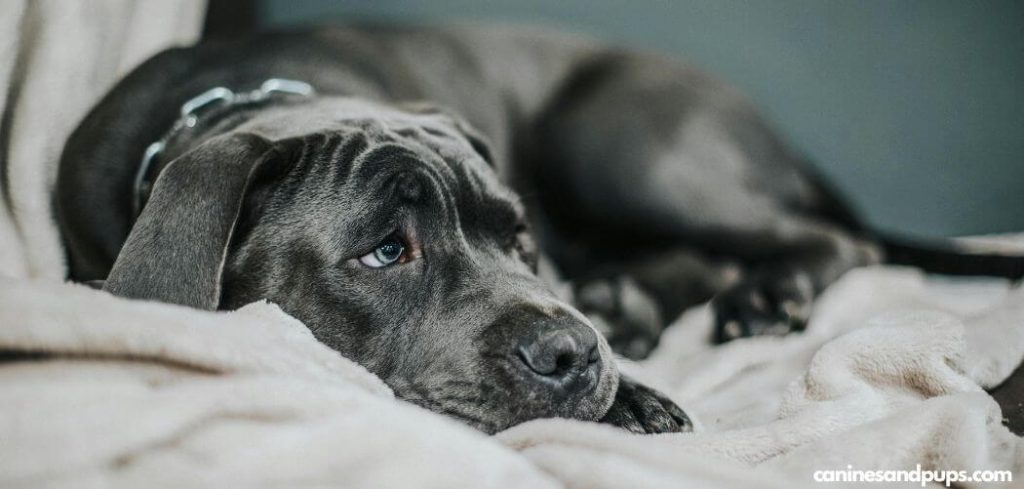
Dog Shaking and Crying After Shots: Common Causes
Injection-Site Soreness
Mild pain or tenderness at the injection site is a common reason a dog may react after vaccination. The muscle or tissue where the vaccine was administered can remain uncomfortable for a short time.
A dog may flinch when the area is touched, move more carefully, or cry when getting up or lying down.
Mild soreness is generally temporary. However, significant pain, rapidly increasing swelling, or worsening discomfort should be discussed with your veterinarian.
Related: Dog side effects after vaccines (What’s normal and when to worry)
Stress From the Veterinary Visit
A veterinary appointment can be stressful for some dogs. Being transported, examined, restrained, and surrounded by unfamiliar people or animals can leave a dog nervous after returning home.
Stress may cause trembling, whining, panting, pacing, hiding, or clinginess.
A dog that gradually relaxes once home and otherwise appears well may simply be recovering from the stressful experience. Continued or worsening symptoms should not automatically be attributed to anxiety.
Temporary Fatigue
Vaccination stimulates the immune system, and some dogs may become tired or less energetic afterward. A tired dog may sleep more, move less, or appear quieter than usual.
Mild fatigue may occur alongside reduced appetite or soreness.
If your dog remains responsive and gradually returns to normal, monitoring may be appropriate. Significant lethargy or a dog that is difficult to rouse requires veterinary assessment.
Related: Dog Shaking and Crying (Causes and when to worry)
Mild Fever
Some dogs can develop a mild increase in body temperature after vaccination. Feeling unwell or feverish may contribute to trembling, reduced appetite, and lower energy.
Your dog may seem quieter, sleep more, or be less interested in normal activities.
Because you cannot reliably determine the severity of a fever just by touching your dog, persistent shaking or other concerning symptoms should be discussed with a veterinarian.
Discomfort From Multiple Vaccinations
Dogs sometimes receive more than one vaccine during the same appointment. This can mean that several injection sites are sore or that the dog experiences more noticeable temporary discomfort afterward.
Your dog may be reluctant to move, cry when handled, or seem unusually quiet.
If the discomfort appears significant or does not improve, contact the veterinary clinic that administered the vaccines for advice.
Vaccine-Related Adverse Reaction
More significant vaccine reactions are less common but can occur. Signs may include facial swelling, hives, vomiting, diarrhea, marked weakness, breathing difficulties, or collapse.
These symptoms can indicate an allergic or other adverse reaction and require prompt veterinary attention.
Do not wait for severe symptoms to resolve on their own if your dog develops breathing difficulty, facial swelling, collapse, or another rapidly progressing reaction.
Pain or Illness Unrelated to the Vaccine
Not every symptom that appears after vaccination is necessarily caused by the vaccine. A dog may have an unrelated illness or painful condition that happens to become noticeable around the same time.
Persistent vomiting, diarrhea, significant weakness, coughing, difficulty walking, or other unusual symptoms should therefore be evaluated based on the entire clinical picture.
Your veterinarian can help determine whether the symptoms are consistent with a post-vaccination reaction or another health problem.
Injection-Site Lump or Inflammation
A small localized reaction can sometimes develop where a vaccine was injected. The area may feel slightly firm or swollen and can be sensitive.
A small lump does not necessarily mean that the vaccine caused a serious problem, but it should be monitored for changes.
A lump that becomes increasingly painful, grows rapidly, develops discharge, or does not resolve should be assessed by a veterinarian.
Read more: Dog Panting and Shaking After Vaccine (Is it normal?)
When to Call or Visit the Vet
Mild soreness, tiredness, or temporary behavioral changes can occur after vaccination, but shaking and crying should be monitored carefully. Contact your veterinarian immediately if you notice:
Persistent or severe shaking or crying
Significant pain or worsening soreness
Marked lethargy or weakness
Repeated vomiting or diarrhea
Facial swelling or widespread hives
Difficulty breathing
Collapse or rapidly worsening symptoms
A rapidly enlarging, painful, or abnormal injection-site swelling
Dog Shaking and Crying After Shots: Treatment
Veterinary treatment for a dog that is shaking and crying after shots starts with a thorough examination and assessment of the timing and severity of the reaction.
The veterinarian may examine the injection sites, check vital signs, and recommend blood tests or other diagnostic testing when appropriate if the symptoms are significant or do not follow the expected course.
Treatment may include prescription pain relief, medication to control an allergic or inflammatory reaction, fluids, or other supportive therapy based on the diagnosis.
Key Takeaway
A dog shaking and crying after shots may be experiencing temporary injection-site soreness, stress, fatigue, or mild post-vaccination discomfort. These effects can occur after vaccines and do not automatically mean that something serious has happened.
However, severe or persistent shaking and crying should not be ignored.
Facial swelling, breathing difficulty, repeated vomiting, collapse, marked weakness, or rapidly worsening symptoms require immediate veterinary attention.
If your dog seems uncomfortable after vaccination, monitor them closely and contact your veterinarian if the symptoms are significant, persistent, or worsening.
Your veterinary team can determine whether the reaction is expected and whether your dog needs additional care.


