
Some dogs treat the backyard like a buffet, and dirt is a frequent menu item. When black stool shows up afterward, it’s natural to connect the two and hope that’s the whole story.
The connection is worth examining, but it shouldn’t be assumed. We explain how dirt-eating relates to dark stool, what other symptoms matter, and the treatment.
Table of Contents
Dog Poop Black From Eating Dirt: Why It Happens
A dog may pass dark stool after eating dirt mixed with dark organic material, but dirt itself does not reliably explain black, tarry poop.
Eating soil can also expose dogs to parasites, contaminated substances, or foreign material that irritates or obstructs the digestive tract.
If the stool is black, sticky, and tar-like, contact a veterinarian immediately because this appearance can indicate digested blood.
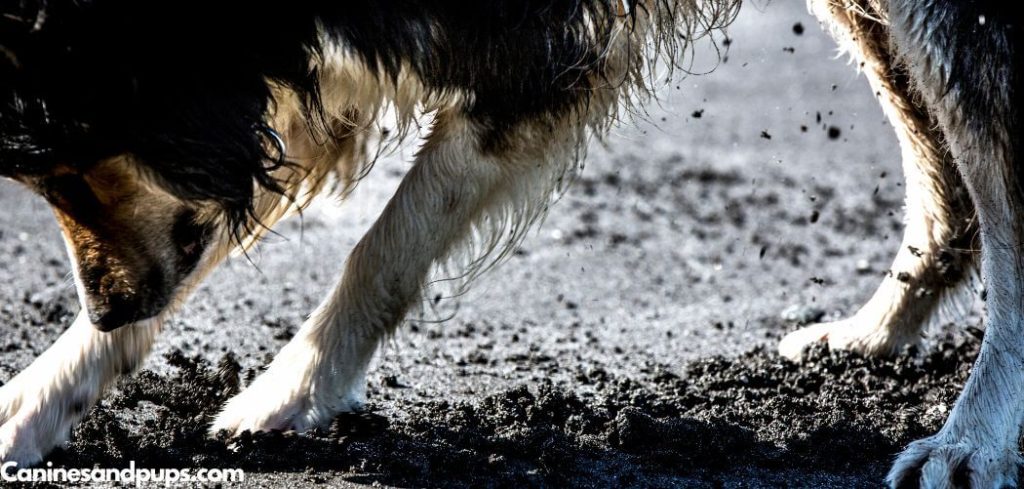
Dirt-Darkened Stool vs. Tarry Black Stool
A dog’s poop may appear darker after eating dirt because soil can mix with the stool and alter its color. If your dog has been digging or eating soil, the stool may look dark brown or contain visible soil particles.
However, genuinely black, sticky, shiny, or tar-like stool can indicate melena, which occurs when digested blood passes through the digestive tract, usually from bleeding in the stomach or upper intestines.
Eating dirt does not rule out this possibility, and contaminated soil may also expose dogs to parasites, harmful substances, or foreign material.
Consider whether the stool is dark brown with visible soil or uniformly black and tar-like. Break a small piece apart with a stick to check for grit and compare the color on a clean surface.
Dog Poop Black From Eating Dirt: Common Causes
Dirt Mixed Into the Stool
Swallowed dirt can pass through the digestive tract and become mixed with feces.
Depending on the type of soil and how much your dog consumed, this may make the stool appear darker or contain visible particles.
A dog that ate only a small amount of ordinary soil may have a temporary change in stool appearance without developing other symptoms.
If your dog remains comfortable and the stool returns to its normal color, the change may have been related to what they swallowed.
Related: Black dog poop (Causes and treatment)
Eating a Large Amount of Dirt
Consuming a significant amount of soil can cause more than a simple color change.
Large quantities may contribute to constipation, diarrhea, vomiting, abdominal discomfort, or changes in normal bowel movements.
Soil can also contain rocks, sticks, plant material, or other substances that may irritate the digestive tract.
The more dirt your dog consumes, the more closely they should be monitored for digestive symptoms.
Related: Dog Pooping Black Bloody Mucus (Causes and treatment)
Soil Containing Organic Material
Not all dirt is the same. Soil may contain decomposing leaves, plant material, animal feces, insects, fertilizer, or other substances. These materials can affect the digestive system and may cause gastrointestinal upset.
If your dog repeatedly eats soil from gardens, compost areas, or places where chemicals or animal waste may be present, the risk is different from simply swallowing a small amount of clean outdoor soil.
Intestinal Parasites
Eating soil can expose dogs to organisms or parasite eggs present in contaminated environments.
Parasite infections can cause changes in bowel movements, diarrhea, mucus, weight loss, poor appetite, or other digestive symptoms.
Some intestinal parasites can also cause gastrointestinal bleeding, which may result in dark or black stool.
If your dog frequently eats dirt, particularly if they also have ongoing digestive problems, parasites may need to be considered.
Gastrointestinal Irritation
Soil and the substances mixed into it can irritate the digestive tract. This may result in softer stools, diarrhea, gas, abdominal discomfort, or increased bowel movements.
The digestive upset may be temporary, particularly after a small amount of ingestion.
Persistent symptoms, however, should not automatically be attributed to dirt eating.
Related: Black Dog poop after changing food (Here’s why)
Gastrointestinal Bleeding
Truly black, tar-like stool can indicate digested blood. When bleeding occurs in the stomach or upper small intestine, the blood may be digested as it passes through the gastrointestinal tract, causing feces to become very dark or black. This appearance is known as melena.
Eating dirt does not rule out gastrointestinal bleeding. If your dog’s stool is sticky, shiny, or tar-like rather than simply dark brown, contact your veterinarian.
A Foreign Material or Intestinal Obstruction
Dirt may be swallowed together with stones, pieces of wood, mulch, or other objects.
Some materials can pass through normally, while others may become lodged in the digestive tract.
An obstruction can cause vomiting, abdominal pain, loss of appetite, constipation, diarrhea, or marked lethargy.
A dog that is repeatedly eating non-food materials and develops significant digestive symptoms should be assessed by a veterinarian.
An Underlying Reason for Eating Dirt
Repeated dirt eating is sometimes called geophagia, and it may occur for a variety of behavioral or medical reasons.
Some dogs eat dirt out of curiosity, boredom, habit, or because they enjoy the texture or smell. In other cases, persistent eating of non-food materials can occur alongside nutritional problems, gastrointestinal disease, or other health issues.
If your dog frequently seeks out and eats dirt, discussing the behavior with your veterinarian can help determine whether further investigation is appropriate.
Related: Dog pooping bloody mucus but acting normal (Here’s why)
Dog Poop Black From Eating Dirt but Acting Normal
If your dog ate a small amount of dirt and is otherwise eating, drinking, playing, and behaving normally, a temporary darker bowel movement may be less concerning.
The stool may simply contain swallowed soil or material from the environment.
Still, look closely at the stool. Dark brown feces are not necessarily the same as truly black, sticky, tar-like stool. If the poop appears genuinely black or the change continues, contact your veterinarian even if your dog currently seems normal.
Dog Poop Black From Eating Dirt and Diarrhea
Dirt eating followed by diarrhea can occur when swallowed soil or contaminated material irritates the digestive tract.
A small amount of temporary loose stool may resolve as the material passes. However, persistent or severe diarrhea can lead to dehydration and may indicate intestinal infection, parasites, dietary indiscretion, or another gastrointestinal problem.
Black, tar-like stool combined with diarrhea deserves particular attention because it may indicate digested blood.
Dog Poop Black From Eating Dirt and Vomiting
Vomiting together with black stool is more concerning than a change in stool color alone.
A dog that swallowed dirt along with rocks, sticks, mulch, or other material may develop gastrointestinal irritation or, in some cases, an obstruction. Black stool may also have a separate explanation such as gastrointestinal bleeding.
Repeated vomiting, abdominal pain, weakness, inability to keep water down, or worsening symptoms need immediate veterinary attention.
Dog Poop Black From Eating Dirt and Not Eating
A dog that eats dirt, passes black poop, and refuses food may have digestive irritation, an intestinal blockage, exposure to contaminated soil, or an underlying illness.
Soil can darken stool, but genuinely black, sticky, or tar-like poop may indicate digested blood from bleeding in the stomach or upper intestines.
Eating dirt may also expose dogs to parasites, pesticides, fertilizers, or other harmful substances that can cause nausea, abdominal discomfort, and loss of appetite.
Contact a veterinarian urgently if your dog has black poop and is not eating, particularly if the stool is tar-like or the cause is uncertain.
Seek emergency care if your dog also has repeated vomiting, weakness, pale gums, abdominal pain, or collapse. If you suspect the soil contained chemicals or other toxins, tell the veterinarian what your dog may have eaten.
Do not induce vomiting or give human medications or home remedies without veterinary guidance.
When to Call or Visit the Vet
Contact your veterinarian if your dog’s poop remains black after eating dirt, particularly if it has a sticky or tar-like appearance.
Veterinary attention is especially important if you notice:
Repeated black or tar-like stools
Vomiting
Persistent or severe diarrhea
Loss of appetite
Marked lethargy or weakness
Pale or unusually light-colored gums
Abdominal pain or swelling
Difficulty passing stool
Signs of dehydration
Blood in the stool
Repeatedly eating large amounts of dirt
Possible ingestion of rocks, mulch, chemicals, fertilizer, or animal waste
Symptoms that are getting worse
Seek urgent veterinary care if your dog becomes severely weak, collapses, repeatedly vomits, develops significant abdominal pain or swelling, or appears seriously ill.
If the soil may contain pesticides, fertilizer, or other chemicals, contact a veterinarian immediately.
Dog Poop Black From Eating Dirt: Treatment
Treatment is directed at the underlying cause and may involve supportive care for gastrointestinal upset or dehydration, dietary management, treatment of parasites or intestinal inflammation, management of gastrointestinal bleeding or ulceration, or treatment for foreign material or obstruction when necessary.
Key Takeaway
Dog poop may become darker after eating dirt because swallowed soil can mix with intestinal contents.
A small amount of ordinary dirt may pass without causing significant problems, particularly when your dog remains comfortable and the stool returns to normal.
However, genuinely black, sticky, or tar-like poop should not automatically be blamed on dirt. It can indicate digested blood, while repeated dirt eating can also expose dogs to parasites, contaminated material, or foreign objects.
If your dog has persistent black stool or develops vomiting, diarrhea, poor appetite, weakness, abdominal pain, pale gums, or other concerning symptoms, contact your veterinarian.
Repeatedly eating dirt also deserves attention, particularly if the behavior is frequent or accompanied by ongoing digestive problems.


