
A dog losing hair on the tips of the ears may develop thinning fur, small bald patches, or hair loss that follows the edge of the ear flap.
The skin may look normal, or it may become dry, flaky, crusty, red, darkened, thickened, or sore. The problem may affect one ear or both ears and may or may not cause itching.
Hair loss around the ear tips can have several possible explanations, and the appearance of the ear alone cannot establish the cause.
Table of Contents
Dog Losing Hair on Tips of Ears: Why It Happens
A dog losing hair on the tips of the ears may have parasites, allergies, fungal infection, irritation, sun damage, or repeated scratching and rubbing. Ear mites or an underlying ear infection can cause enough itching for a dog to scratch around the ears and remove hair.
In some cases, crusting or scaling develops along the ear edges.
Hair loss limited to the ear tips can also occur with certain skin or follicular disorders. If the edges become crusty, thickened, red, ulcerated, or bleed, or if the dog is frequently shaking its head or scratching its ears, veterinary examination is needed.
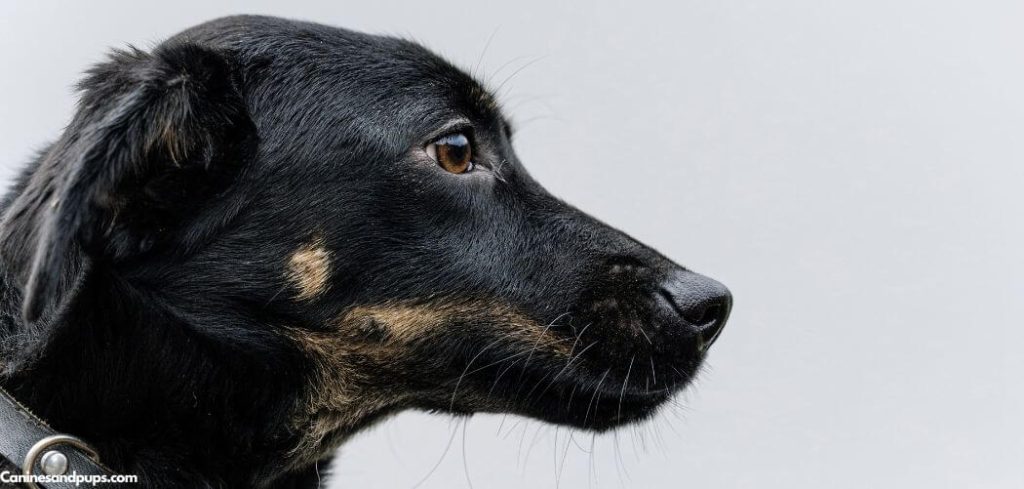
Dog Losing Hair on Tips of Ears: Common Causes
Ear Margin Seborrhea
Ear margin seborrhea is a disorder affecting the edges of the ear flap. It is particularly recognized in Dachshunds and some dogs with pendulous ears.
The ear margins may develop greasy or waxy gray-to-yellow scaling around the hair shafts.
The hairs can become loose and easily removed, leaving areas of thinning or hair loss. More severe cases can cause cracking and swelling of the ear margins.
Because this condition can resemble other disorders that cause crusting and hair loss along the ear edges, veterinarians may need to rule out parasites and infection before making the diagnosis.
Related: Dog losing hair in patches and scabs (What it means)
Mites and Mange
Mites can cause itching, inflammation, crusting, and hair loss involving the ears. Sarcoptic mange can produce particularly intense itching, with scratching and self-trauma contributing to loss of hair around the ear margins.
Ear mites primarily affect the external ear canal but can contribute to significant ear irritation and scratching.
Some mite infestations can also affect the outer ear and produce crusts or hair loss.
If your dog is frequently scratching the ears, shaking the head, or rubbing the ears against surfaces, parasites are among the conditions a veterinarian may investigate.
Allergies
Allergies are a common cause of itchy ear disease in dogs. Environmental allergens and food-related allergies can cause redness and itching of the ear flap and ear canal and may be accompanied by secondary bacterial or yeast infections.
Although allergic disease more commonly affects the inner or concave surface of the pinna, repeated scratching and rubbing can lead to hair loss around other portions of the ear.
Dogs with allergies may also have itchy feet, face, armpits, groin, or other areas of the skin.
Recurrent ear problems can provide an additional clue that an underlying allergic condition may be involved.
Related: Dog losing hair with blacks on the skin (Causes and what to do)
Bacterial or Yeast Infection
Bacterial and yeast infections can cause inflammation of the skin around the ears. The affected skin may become red, irritated, greasy, crusty, or develop an odor.
Hair loss can occur because of inflammation or because the dog repeatedly scratches and rubs the affected area.
Ear infections can also cause substantial discomfort, leading to more scratching and further damage to the ear flap.
If there is discharge from the ear canal, persistent head shaking, or significant sensitivity when the ears are touched, the ear itself should be examined rather than focusing only on the missing hair.
Flea Allergy Dermatitis
Flea allergy can cause intense itching and hair loss, especially around the lower back and tail base, but a dog with generalized allergic skin disease may scratch or chew other areas as well.
Flea-related itching can indirectly cause hair loss on the ears when a dog repeatedly scratches the head or neck. The absence of visible fleas does not necessarily rule out flea exposure.
Because hair loss limited specifically to the ear tips is not the classic pattern for flea allergy, other localized causes should also be considered.
Related: Dog losing hair and itching (Here’s why)
Ringworm
Ringworm is a fungal skin infection that can cause hair loss and changes in the skin. It may produce areas of scaling, crusting, or inflammation and can affect the face and ears.
The appearance can overlap with other causes of alopecia, so a veterinarian may recommend fungal testing rather than diagnosing ringworm from the shape of a bald area alone.
Repeated Scratching or Rubbing
Sometimes the hair is lost because the dog repeatedly traumatizes the ear rather than because the hair follicles are the original problem.
Itching from allergies, mites, infection, or another skin disorder can lead to scratching and rubbing.
Repeated mechanical trauma can break the hairs and irritate the skin, making the bald area progressively more noticeable.
If the dog is constantly scratching the ears, identifying and treating the source of the irritation is important because the self-trauma can continue even after the initial skin problem begins to improve.
Ear-Tip Trauma
The tips of the ears can be vulnerable to localized trauma. Scratching, rubbing, rough contact with objects, or an injury can damage the skin and cause temporary hair loss.
If only one ear tip is affected and the hair loss appeared after an obvious injury, trauma may be more likely than a generalized skin or hormonal condition.
Persistent swelling, bleeding, an open wound, or a painful ear tip should be evaluated by a veterinarian.
Pinnal Alopecia
Pinnal alopecia refers to certain noninflammatory disorders that specifically cause hair loss on the pinnae, or outer ear flaps.
Some forms produce symmetrical hair loss without itching, redness, or other obvious signs of illness.
Periodic pinnal alopecia, for example, can cause progressive hair loss on both ears, with some dogs later experiencing spontaneous regrowth. Certain forms of pattern baldness also have breed associations.
This type of hair loss is different from alopecia caused by scratching or infection because the skin may remain relatively normal.
Pattern Baldness
Certain inherited patterns of baldness can affect the outer ears. Dachshunds, Chihuahuas, Italian Greyhounds, and Whippets are among the breeds in which pattern baldness of the pinnae has been described. It can begin at a young age and gradually become more pronounced.
Other areas, including parts of the neck, chest, or thighs, may also be affected depending on the pattern.
This possibility becomes more relevant when the hair loss is symmetrical, longstanding, nonitchy, and not associated with inflammation.
Sebaceous Adenitis
Sebaceous adenitis is an uncommon inflammatory condition affecting the sebaceous glands. It can cause hair loss and scaling involving the ear flap as well as other parts of the body.
The skin may have adherent scales around the hairs, and secondary infection can sometimes contribute to itching.
Diagnosis may require a skin biopsy because several other disorders can produce similar hair and skin changes.
Immune-Mediated Skin Disease
Less commonly, immune-mediated disorders can affect the outer ear. Conditions involving inflammation of the skin or blood vessels can produce crusting, ulcers, discoloration, or tissue damage in addition to hair loss.
These disorders are uncommon, but they become more concerning when the ear tips develop painful sores, significant crusting, dark or damaged tissue, or similar lesions on other parts of the body. Diagnosis may require a biopsy and additional testing.
Vascular Disease Affecting the Ear Tips
Rarely, disorders affecting blood flow to the ear flap can begin around the ear tip and cause hair loss followed by more obvious skin damage.
Proliferative thrombovascular necrosis of the pinna is one uncommon condition in which vascular changes affect the ear tip.
It can cause darkening, thickening, ulceration, or tissue damage rather than simple cosmetic hair thinning.
This is not a likely explanation for every bald ear tip, but painful or progressively damaged ear margins should be examined immediately.
Related: Dog Losing on Top of Head (Causes and treatment)
Dog Losing Hair on Tips of Ears but Not Itching
A dog losing hair on the tips of the ears without itching may have a noninflammatory condition such as pinnal alopecia or a hereditary pattern of baldness.
Symmetrical hair loss with relatively normal-looking skin is particularly different from hair loss caused by mites, allergies, or infection, which more often produce itching or other evidence of inflammation.
However, the absence of itching does not completely rule out a skin disorder.
A veterinarian may examine the hairs and skin closely to determine whether the hairs are breaking, being pulled out, or failing to grow normally.
Dog Losing Hair on Tips of Ears With Crusts
Crusting around the ear tips can occur with ear-margin seborrhea, mites, infection, trauma, or other inflammatory skin disorders.
If the crusts are thick, spreading, painful, or accompanied by bleeding, swelling, sores, or significant itching, veterinary examination is important.
Skin scrapings, cytology, fungal testing, or other diagnostics may be used to distinguish among these conditions.
Dog Losing Hair on Tips of Ears and Scratching
When hair loss occurs together with frequent scratching, an irritating skin problem becomes more likely.
Mites, allergies, ear infection, and secondary bacterial or yeast infections can all cause itching around the ears.
Repeated scratching can itself worsen the hair loss, so the underlying cause needs to be addressed rather than treating the missing hair as an isolated cosmetic problem.
When to Call or Visit the Vet
Veterinary evaluation is appropriate when hair loss around the ear tips persists, spreads, or is accompanied by skin changes or discomfort.
Contact a veterinarian if your dog has:
Rapidly worsening or spreading hair loss
Persistent scratching, head shaking, or rubbing
Red, swollen, painful, or thickened ear margins
Crusting, scaling, sores, or bleeding
Darkening or unusual discoloration of the ear tips
Discharge or a strong odor from the ears
Significant sensitivity when the ears are touched
Hair loss affecting other areas of the body
Recurrent ear or skin problems
A known injury to the ear
Changes in appetite, energy, or general health
Ear-tip lesions that do not heal or keep returning
Painful, ulcerated, bleeding, or darkened tissue at the ear tips deserves prompt veterinary assessment because some less common conditions can affect the blood supply or deeper tissues of the pinna.
Dog Losing Hair on Tips of Ears: Treatment
Treatment depends on the underlying cause. The veterinarian considers whether the hair is being lost because of itching or inflammation, whether the ear margins are unusually scaly or greasy, and whether the pattern is symmetrical or associated with changes elsewhere on the body.
Treatment is then directed at the diagnosis, such as appropriate parasite control, management of allergies, treatment of infection, care of an injured ear, or management of a specific hair-growth disorder.
Key Takeaway
A dog losing hair on the tips of the ears can have a relatively mild, noninflammatory hair-growth disorder, but it can also result from mites, allergies, infection, repeated scratching, trauma, or an ear-margin skin disorder.
Symmetrical hair loss without itching or inflammation can point toward pinnal or pattern alopecia, while itching, crusting, redness, or discharge makes an inflammatory or infectious problem more likely.
If the ear tips become painful, swollen, crusted, ulcerated, darkened, or increasingly bald, a veterinarian should examine them.
Determining whether the hair is being damaged by inflammation and self-trauma or is failing to grow normally is an important part of choosing the right treatment.


