
A dog limping after laying down may appear stiff or uncomfortable when first getting up, then begin walking more normally after a few steps.
Some dogs may favor one leg, take shorter steps, hesitate before standing, or need extra time to get moving.
The timing of the limp matters. A dog that repeatedly limps after resting may have a problem affecting a joint, muscle, ligament, tendon, paw, or another part of the limb.
In some dogs, the limp is most noticeable immediately after getting up and becomes less obvious once they have been moving for a while.
Persistent or recurring lameness should not automatically be dismissed as normal aging.
Table of Contents
Dog Limping After Laying Down: Why It Happens
A dog limping after laying down may have joint stiffness, arthritis, muscle soreness, or an injury that becomes more noticeable when the dog first gets up. After resting, an affected joint or muscle may feel stiff, causing the dog to limp for a short time before moving more normally.
Older dogs commonly develop this pattern with arthritis, but younger dogs can also experience it after exercise or a minor injury.
If the limping repeatedly occurs after resting, becomes more pronounced, or lasts longer as the dog moves around, a veterinary examination can help identify the cause.
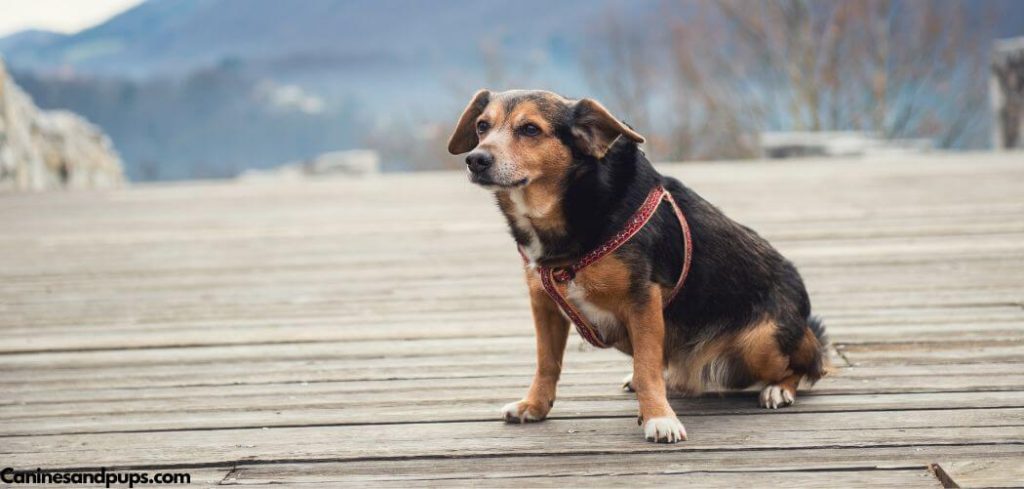
Dog Limping After Laying Down: Common Causes
Osteoarthritis and joint stiffness
Osteoarthritis is one of the important causes of limping that becomes noticeable after rest.
Dogs with arthritis may be slow or stiff when getting up after sleeping or lying down for an extended period. The limp may become less obvious after the dog has walked around for a while.
Other signs can include difficulty climbing stairs, jumping, running, or getting into a car.
Although arthritis is more common in older dogs, joint disease is not limited to seniors.
Related: Dog suddenly limping front leg (What it means)
Previous joint injury
A previous injury can leave a joint vulnerable to intermittent pain and stiffness.
Damage to a ligament, cartilage, or other joint structure may cause a dog to limp more noticeably after resting or after increased activity.
Some dogs appear relatively comfortable most of the time but develop recurring lameness after certain movements.
Related: Dog excessively licking paw and limping (Causes and what to do)
Muscle or soft-tissue strain
A strained muscle or other soft-tissue injury can cause a dog to limp after getting up.
The problem may follow running, jumping, rough play, slipping, or an unusual amount of exercise. Soft-tissue injuries may not produce obvious swelling or another visible sign, even though the dog is uncomfortable.
Cruciate ligament disease
Problems involving the cranial cruciate ligament are an important cause of hind-leg lameness in dogs.
A partial or complete ligament injury can produce intermittent or persistent limping, difficulty rising, reluctance to jump, and changes in how a dog bears weight.
Joint instability can also contribute to arthritis over time.
A dog does not necessarily need to have experienced a major accident for a cruciate problem to develop.
Hip problems
Hip disease can cause stiffness and lameness, particularly after rest.
Dogs with hip dysplasia may develop lameness that becomes more apparent after exercise or, when osteoarthritis has developed, shortly after resting.
Some dogs may also have difficulty rising, climbing stairs, or exercising normally.
Knee or kneecap problems
Knee problems can cause intermittent limping, particularly when a dog first gets up or changes direction.
A luxating patella, for example, can cause a dog to temporarily hold up a hind leg and then return to more normal walking once the kneecap moves back into position. Some dogs develop recurring episodes rather than a constant limp.
Paw or nail problems
Not every limp that appears after resting originates in a joint.
A broken nail, sore paw pad, foreign material between the toes, skin irritation, or an infection can make weight-bearing painful. Some of these problems may be difficult to notice without closely examining the paw.
Lameness can originate from the skin and feet as well as deeper structures such as joints, muscles, tendons, and ligaments.
Spinal or nerve problems
A dog may appear to limp because a problem involving the spine or nerves is affecting movement.
Neurologic disease can produce weakness, abnormal limb placement, or changes in coordination that may look similar to orthopedic lameness.
If a dog is dragging a paw, knuckling over, stumbling, or showing weakness in multiple legs, a neurologic cause may need to be investigated.
Bone or joint disease
Bone and joint disorders can cause intermittent or persistent lameness.
Fractures, inflammation, developmental abnormalities, joint instability, and other orthopedic conditions can produce pain when the dog begins moving.
Some problems are more obvious during activity, while others become noticeable when the dog first rises from a resting position.
Related: Dog limping and not eating (Here’s why)
Age-related changes
A dog that begins limping after resting may be developing an orthopedic condition associated with aging, but limping should not simply be considered a normal part of getting older.
Senior dogs commonly develop osteoarthritis and other painful conditions, and difficulty rising or limping can be signs of pain that deserve evaluation.
Dog Limping After Laying Down but Walking Normally Later
A dog that limps for the first few steps and then walks normally may still have an underlying orthopedic problem.
Improvement after movement can occur with joint stiffness, including osteoarthritis, but it does not prove that arthritis is the cause. Other joint, ligament, muscle, or soft-tissue problems can also produce intermittent lameness.
If the same pattern happens repeatedly—particularly every time your dog gets up after a nap or overnight—it is worth mentioning to your veterinarian.
Dog Limping After Sleeping at Night
A dog limping after sleeping at night may be experiencing stiffness or discomfort that is more noticeable after several hours of inactivity.
Arthritis, joint inflammation, hip or knee problems, and previous injuries can cause a dog to limp when first getting up. The limp may improve after the dog takes a few steps and the joints begin moving again.
A recurring limp should not simply be attributed to aging.
Monitor which leg is affected, how long the limp lasts, and whether the dog has difficulty climbing stairs, jumping, or getting up.
Persistent or worsening limping should be evaluated by a veterinarian.
Dog Limping After Laying Down but Not Crying
A dog can limp after laying down without crying because pain does not always cause vocalization.
Joint stiffness, arthritis, muscle strain, ligament problems, and other orthopedic conditions can produce a noticeable change in gait without causing the dog to whine or otherwise appear distressed.
The absence of crying does not rule out discomfort or injury.
If the limp repeatedly appears after resting, persists during normal walking, or is accompanied by swelling, reluctance to bear weight, stiffness, or difficulty getting up, veterinary assessment is appropriate.
Sudden inability to put weight on a leg or severe swelling warrants prompt attention.
Related: Dog limping after playing too hard (Here’s why)
Dog Limping After Laying Down: What to Do
If a dog is limping after laying down, restrict strenuous activity and give the dog a chance to rest while you monitor the limp.
Avoid running, jumping, long walks, and stairs, especially if the limp is caused by joint stiffness, muscle soreness, or a minor injury.
Check the paw and between the toes for an obvious thorn, cut, swelling, or other source of irritation, but avoid forcefully bending or manipulating the leg.
If the limp improves after a few steps but repeatedly returns after resting, arrange a veterinary examination because arthritis, joint disease, ligament problems, or an underlying injury may be responsible.
Seek immediate veterinary care if the dog cannot bear weight, has severe pain or swelling, suddenly becomes unable to walk, or the limp follows significant trauma.
When to Call or Visit the Vet
A mild limp that disappears quickly may sometimes be monitored initially, but recurring or persistent limping should be evaluated.
Contact a veterinarian if your dog:
Continues limping after getting up
Develops a limp repeatedly after naps or overnight rest
Becomes increasingly stiff or reluctant to move
Has difficulty getting up or lying down
Avoids stairs, jumping, or normal activities
Shows swelling around a joint or limb
Reacts painfully when a limb is touched or moved
Starts limping after exercise or becomes progressively worse
Drags a paw, knuckles over, or appears neurologically uncoordinated
Has a known orthopedic problem that is becoming worse
More urgent assessment is appropriate if your dog suddenly stops using a limb, cannot stand or walk without assistance, has severe pain, or has suffered significant trauma.
Dog Limping After Laying Down: Treatment
Veterinary assessment includes observation of a dog’s gait and examination of the limbs, joints, muscles, and soft tissues, with assessment of the dog both at rest and while getting up and walking.
A neurologic examination may also be performed when weakness or abnormal coordination is suspected. X-rays and, when appropriate, ultrasound or more advanced imaging such as CT or MRI may be used to investigate persistent or unexplained lameness.
Treatment may include veterinary-directed pain management, activity modification, rehabilitation, or specific medical or surgical treatment depending on the diagnosis.
Key Takeaway
Dog limping after lying down can happen when a painful joint, ligament, muscle, tendon, paw, or other limb structure becomes stiff or uncomfortable after rest.
Arthritis is an important possibility, particularly when a dog is slow or stiff when first getting up, but it is not the only explanation.
A limp that improves after a few steps can still indicate an underlying problem.
Pay attention to how often it happens, which leg is affected, whether your dog has difficulty rising, and whether exercise makes the limp better or worse.
If the limp keeps returning after rest, becomes more noticeable, or is accompanied by pain, swelling, difficulty walking, or other changes in mobility, a veterinary examination can help identify the cause before the problem progresses.


