
A dog licking its paws while repeatedly rubbing its face may be experiencing itching or irritation affecting more than one area of the body.
This combination can be particularly noticeable when a dog licks its feet, then rubs its muzzle, cheeks, eyes, or ears against furniture, the floor, or its paws.
The behavior may be occasional or frequent, and the skin may initially look normal or may become red, irritated, or hairless over time.
These behaviors may seem unrelated at first, but noticing them together—especially when they become frequent or interfere with rest—warrants a closer look at your dog’s skin, paws, and facial area.
The pattern, duration, and accompanying symptoms help determine whether the problem is likely to involve the skin, ears, eyes, or another part of the body.
Table of Contents
Dog Licking Paws and Rubbing Face: Why It Happens
A dog may lick its paws and rub its face because allergies or other forms of itching are irritating the skin. Environmental or food-related allergies can affect the paws, face, ears, and other areas of the body.
Dogs may lick their feet, rub their faces against furniture or the floor, scratch, or develop red and irritated skin.
Other possibilities include fleas or other parasites, yeast or bacterial infections, contact irritation, or a foreign object affecting the paws or face.
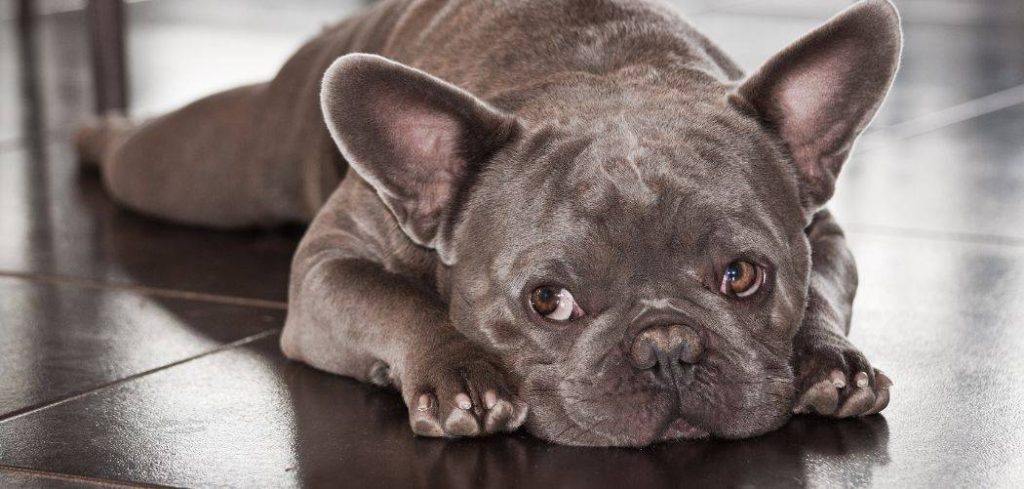
Dog Licking Paws and Rubbing Face: Common Causes
Allergies
Allergies are one of the more important causes to consider when a dog repeatedly licks its paws and rubs its face.
Environmental allergies can cause itchy, inflamed skin, with the feet and facial areas commonly affected. Potential allergens include pollens, molds, and dust mites.
Food allergies can also cause itchy skin and may involve the feet, face, ears, and other areas. Recurrent skin or ear problems can sometimes occur alongside food-related allergic disease.
The timing can provide clues. Some dogs have symptoms that become more noticeable during particular seasons, while others have problems throughout the year.
Related: Dog Licking Paws and Rubbing Eyes (Here’s why)
Secondary Yeast or Bacterial Skin Infection
A dog with allergies or another itchy skin disorder may develop a secondary bacterial or yeast infection.
Once the skin barrier is damaged by licking, scratching, or rubbing, microorganisms can contribute to additional inflammation and itching.
Signs may include redness, hair loss, scaling, crusts, moist skin, or an unusual odor. The infection itself can then contribute to more paw licking and face rubbing, creating a cycle of irritation.
Flea Allergy
Flea allergy dermatitis can cause intense itching, licking, chewing, and rubbing. Dogs that are allergic to flea saliva can react strongly even when owners do not notice many fleas on the body.
The hindquarters and tail base are classic locations, but allergic flea reactions can become more widespread. In more extensive cases, the face and ears can also become involved.
Environmental Irritation
A dog may rub its face after coming into contact with an irritating substance such as dust, plant material, cleaning products, or another environmental irritant.
The paws may also become irritated after walking through or contacting something that bothers the skin.
In this situation, paw licking and face rubbing may occur because multiple areas have been exposed to the same irritant.
Related: Dog excessively licking paws and limping (Causes and what to do)
Ear Disease
Ear problems can cause a dog to rub or scratch around its face and ears. Ear infections commonly cause discomfort, redness, odor, discharge, and head shaking.
Allergic skin disease can also affect the ears and predispose dogs to secondary bacterial or yeast ear infections.
A dog that licks its paws while frequently scratching its ears, shaking its head, or rubbing its face may therefore have an underlying allergic or ear-related problem.
Eye Irritation or Eye Disease
Face rubbing can originate from discomfort involving the eyes rather than the skin. Conjunctivitis, eyelid inflammation, foreign material, and other eye problems may cause rubbing, squinting, excessive blinking, redness, or discharge.
If face rubbing is concentrated around one eye, particularly if the dog is holding the eye partly or completely closed, an eye examination is important.
Parasites
Parasites can cause significant itching and may lead dogs to lick, scratch, chew, and rub their skin. Fleas are one possibility, but other parasites can also cause skin irritation.
Because parasites can resemble allergic skin disease, a veterinarian may check for them before concluding that allergies are responsible.
Paw Problems
Not every dog licking its paws has a generalized skin disorder. A localized paw problem can cause persistent licking of the feet.
Possible problems include a damaged nail, small wound, foreign material between the toes, inflamed skin between the toes, or an interdigital lesion.
Some painful interdigital conditions can cause dogs to lick and bite at the affected feet and may also cause lameness.
If one paw is affected much more than the others, a local problem deserves particular attention.
Contact Dermatitis
Contact with an irritating or allergenic substance can produce inflammation where the substance touches the skin. Depending on exposure, this can affect the paws, face, or other areas.
Contact-related irritation may occur after exposure to certain plants, cleaning substances, grooming products, or other materials.
The distribution of the skin changes and the timing of the symptoms can help a veterinarian investigate this possibility.
Read more: Dog licking paws excessively (Should you worry?)
Dog Licking Paws and Rubbing Face but No Redness
A dog can begin licking its paws and rubbing its face before obvious skin changes develop. Itching may initially be subtle, and repeated licking or rubbing may eventually create redness, hair loss, or sores.
However, normal-looking skin does not prove that allergies are responsible. Parasites, early infections, eye or ear problems, and localized irritation can also begin without dramatic visible changes.
If the behavior is persistent or increasing, especially when it is focused on particular areas, veterinary assessment can help identify the cause.
Dog Licking Paws and Rubbing Face at Night
Some dogs may appear to lick and rub more at night because there are fewer distractions and the behavior becomes more noticeable during quiet periods.
Nighttime symptoms can occur with allergies and itchy skin disease, but they are not specific to allergies.
Ear discomfort, eye irritation, pain, anxiety, and other conditions can also cause repetitive nighttime behaviors.
A new pattern of frequent nighttime licking and face rubbing is worth discussing with a veterinarian if it continues or interferes with sleep.
Dog Licking Paws and Rubbing Face but Acting Normal
A dog may continue eating, playing, and interacting normally while licking its paws and rubbing its face. This can happen with mild or early skin irritation, allergies, or other problems that have not yet caused obvious illness.
Normal behavior is reassuring, but it does not identify the cause. Dogs with itchy skin may continue behaving normally while repeatedly grooming or rubbing affected areas.
The frequency of the behavior and whether it is increasing are therefore important. Occasional grooming is different from persistent licking and rubbing that repeatedly interrupts normal activities.
Dog Licking Paws and Rubbing Face With Hair Loss
Repeated licking and rubbing can damage hair and skin, eventually causing thinning fur or bald areas. Allergic and infectious skin conditions can also contribute to hair loss.
Hair loss around the paws, muzzle, eyes, or other areas accompanied by redness, crusting, odor, or sores suggests that the skin should be examined rather than assuming the behavior is simply a habit.
When to Call or Visit the Vet
Veterinary evaluation is appropriate when paw licking and face rubbing are persistent, worsening, or causing visible irritation.
Contact your veterinarian if your dog has:
Frequent or intense paw licking
Repeated face rubbing against furniture, flooring, or other objects
Red, swollen, painful, or irritated skin
Hair loss or bald patches
Scabs, crusts, sores, or bleeding
Moist skin or an unusual odor
Swollen or painful paws
Limping or reluctance to use a paw
Persistent scratching or chewing
Ear odor, discharge, redness, or frequent head shaking
Squinting, excessive blinking, eye redness, or eye discharge
A problem that is concentrated on one paw, ear, or eye
Symptoms that keep returning after treatment
Licking or rubbing that interferes with sleep or normal activity
Immediate veterinary attention is especially important if a dog is holding an eye closed, has a painful or cloudy eye, develops significant facial swelling, has severe pain, cannot use a limb normally, or develops sudden worsening symptoms.
Dog Licking Paws and Rubbing Face: Treatment
Treatment depends on what is causing the paw licking and face rubbing. The veterinarian may examine the paws, skin, ears, eyes, and other affected areas and may perform skin cytology, skin scrapings, parasite testing, fungal testing, or other diagnostics when appropriate.
Eye or ear-specific testing may be needed when those areas are involved. If allergies are suspected, the veterinarian may investigate environmental, flea, or food-related causes while also checking for secondary infections.
Treatment is then directed at the underlying problem and may include parasite control, management of infection, allergy treatment, or other diagnosis-specific care.
Key Takeaway
Dog licking paws and rubbing face often points to itching or irritation affecting the feet and facial area.
Allergies are an important possibility, particularly when the behavior affects multiple areas and occurs with recurrent skin or ear problems, but allergies are not the only explanation.
Parasites, bacterial or yeast infections, paw problems, ear disease, eye irritation, and contact irritation can produce similar signs.
If the licking and rubbing are persistent, increasing, or accompanied by redness, hair loss, sores, odor, limping, ear problems, or eye changes, a veterinary examination can help determine the underlying cause and appropriate treatment.