
A dog may lick its paws, legs, body, or other surfaces when it has little to do, but boredom should not automatically be assumed to be the reason for persistent licking.
Licking is a normal canine behavior used for grooming and other purposes, yet repetitive licking can become excessive when it occurs much more often or for much longer than normal.
Boredom-related licking may be more noticeable when a dog spends long periods without enough appropriate activity or interaction. However, frequent licking can also be caused by allergies or other medical problems.
Determining whether boredom is actually involved therefore depends on the pattern of licking and whether there are other changes in the dog’s health or behavior.
Table of Contents
Dog Licking Due to Boredom: Why It Happens
A dog may lick itself because boredom, insufficient mental stimulation, or lack of activity has allowed licking to become a repetitive behavior.
Dogs that spend long periods alone or have few opportunities for exercise and enrichment may develop repetitive licking, chewing, pacing, or other behaviors.
However, boredom should not be assumed to be the cause of persistent licking. Allergies, parasites, infection, pain, and other medical conditions can produce similar behavior.
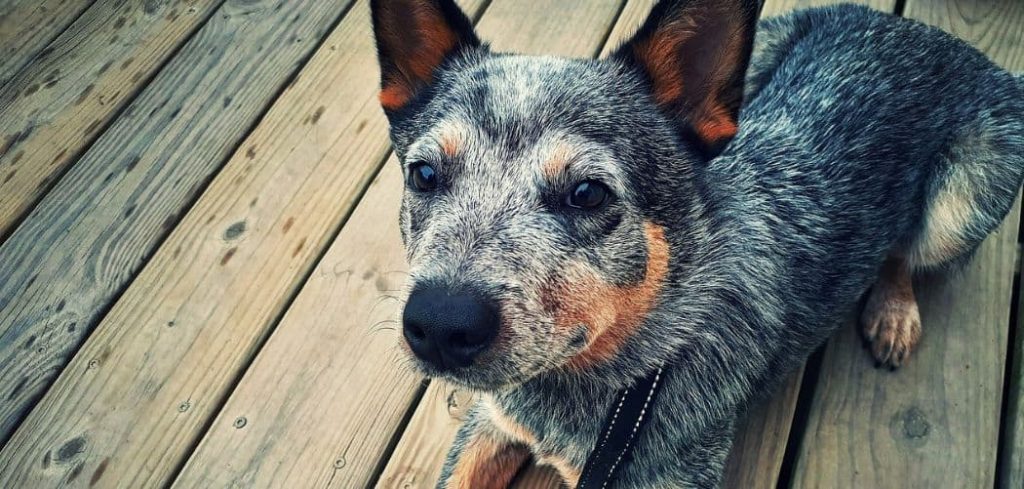
Dog Licking Due to Boredom: Common Causes
Not Enough Mental Stimulation
Dogs need opportunities to investigate their environment, use their senses, learn, and interact with their surroundings.
When these opportunities are limited, some dogs may develop repetitive behaviors.
A dog that spends much of the day with little interaction or activity may begin licking itself or nearby surfaces simply because the behavior provides something to do.
This does not mean every bored dog will lick excessively, and the behavior varies between individual dogs.
Related: Dog licking due to stress (Why it happens)
Not Enough Physical Activity
Insufficient physical activity can contribute to restlessness and other unwanted behaviors.
A dog that has energy left over at the end of the day may be more likely to seek out repetitive or attention-getting activities.
However, a sudden increase in licking should not automatically be attributed to having too much energy.
A medical problem can begin at any time, including in a dog whose daily routine has not changed.
Long Periods Alone
Some dogs may lick more when they spend extended periods alone or when their usual interaction with people changes.
Being alone is not necessarily harmful, and many dogs rest comfortably while their owners are away.
But a dog that becomes restless or repeatedly engages in unusual behaviors when left alone may be experiencing boredom, frustration, anxiety, or another behavioral issue.
Related: Dog excessively licking paws and legs (Here’s Why)
Licking as a Self-Soothing or Repetitive Behavior
Licking can become repetitive and may sometimes appear to help a dog settle or occupy itself.
Veterinary behavior specialists describe repetitive behaviors that arise during stress, frustration, or conflict and can eventually become compulsive in some dogs.
This means that what begins as an occasional activity during boredom does not necessarily remain a simple boredom behavior.
If the licking becomes intense, frequent, difficult to interrupt, or disruptive to normal activities, a broader behavioral assessment may be needed.
Attention-Seeking
In some situations, a dog may learn that licking results in interaction from its owner. Even telling a dog to stop, repeatedly redirecting it, or giving attention whenever the behavior starts can potentially make the behavior more rewarding.
That does not mean a dog is deliberately being difficult. Learned behaviors can become part of a dog’s normal routine, especially when they reliably produce a response from people.
Environmental Frustration
A dog may become frustrated when it can see, hear, or smell something it cannot reach or interact with.
Frustration can contribute to displacement or repetitive behaviors in some dogs.
For example, a dog may become more restless when confined for long periods or when an expected activity is unavailable.
Repetitive licking can occur as part of this broader pattern of arousal or frustration.
Related: Dog licking paws excessively (Causes and when to worry)
Dog Licking Due to Boredom but No Skin Problems
If a dog licks occasionally and its skin, coat, paws, and nails appear normal, boredom or habit may be one possible explanation. The behavior may also occur simply as part of normal grooming.
However, the absence of visible skin changes does not completely rule out a medical cause.
Itching can occur without dramatic skin abnormalities, and some medical problems are initially subtle. Veterinary evaluation is particularly important when licking is new, increasing, or strongly focused on one location.
Dog Licking Due to Boredom at Night
Some owners notice increased licking during quiet periods at night. When the household becomes less active, a dog may have fewer distractions and may return to a repetitive behavior.
Nighttime licking can therefore occur with boredom or habit, but it can also be associated with itching, pain, anxiety, gastrointestinal discomfort, or another medical problem.
If the behavior repeatedly interrupts sleep or is becoming more intense, it is worth investigating rather than assuming boredom is responsible.
Dog Licking Paws Due to Boredom
Paw licking can sometimes become a repetitive behavior, but it is particularly important not to assume that boredom is the cause.
Paw licking is commonly associated with itchiness, and allergies, parasites, and infections are important medical possibilities.
A dog that repeatedly licks its paws should therefore be checked for redness, swelling, hair loss, sores, discharge, odor, damaged nails, or material caught between the toes.
If the paws look normal and the dog mainly licks them during periods of inactivity, a behavioral component may be more likely, although it still cannot be confirmed from the licking pattern alone.
Dog Licking Due to Boredom but Acting Normal
A dog can appear completely normal while engaging in repetitive licking. Eating normally, playing, greeting family members, and having normal energy are reassuring signs, but they do not prove that the licking is behavioral.
Some skin conditions, pain, or other medical problems can initially produce only subtle changes.
A persistent new behavior deserves attention even when the dog otherwise seems well.
When to Call or Visit the Vet
Veterinary evaluation is appropriate when licking is frequent, persistent, focused on one area, or causing skin damage.
Contact your veterinarian if your dog has:
Licking that is becoming increasingly frequent or intense
Hair loss or bald patches
Red, swollen, painful, or thickened skin
Sores, scabs, crusting, or bleeding
Moist skin, discharge, or an unusual odor
Persistent paw licking or chewing
Limping or sensitivity when an area is touched
Recurrent ear or skin problems
Licking that suddenly appears without an obvious change in routine
Other signs of itching, pain, or physical discomfort
Changes in appetite, energy, sleep, or normal behavior
Licking that interferes with eating, sleeping, playing, or other normal activities
Repetitive behavior that seems difficult to interrupt
If the licking is accompanied by significant pain, weakness, difficulty walking, major swelling, breathing difficulty, collapse, or another sudden serious change, seek veterinary attention immediately.
Dog Licking Due to Boredom: Treatment
Treatment for dog licking due to boredom depends first on confirming that a behavioral cause is actually involved.
The veterinarian may examine the skin, paws, ears, joints, and other relevant areas and may recommend tests such as skin scrapings, cytology, parasite evaluation, or other diagnostics when a medical cause is possible.
If physical causes are excluded, the dog’s daily routine, environment, activity level, social interaction, and pattern of licking can be evaluated to determine whether boredom, frustration, anxiety, or a repetitive behavior is contributing.
Key Takeaway
Dog licking due to boredom is possible, particularly when licking occurs mainly during periods of inactivity and there are no signs of skin disease, pain, or other illness. Licking can be a normal behavior, but excessive or repetitive licking can sometimes develop into a behavioral problem.
The important distinction is that boredom should be considered only after medical causes have been taken seriously.
Allergies, parasites, infections, pain, and other conditions can all cause increased licking.
If the behavior is persistent, worsening, focused on one area, or causing skin damage, a veterinarian can help determine whether the problem is behavioral, medical, or a combination of both.