
A dog licking its paws, legs, belly, or other areas of the body repeatedly may be experiencing an itchy skin problem, and allergies are one possible reason.
Unlike people, dogs with allergies often show their discomfort through licking, chewing, scratching, or rubbing their skin rather than developing obvious respiratory symptoms.
Allergy-related licking can be occasional or persistent. Some dogs develop redness, hair loss, odor, scabs, or recurrent ear problems as the irritation continues, while others may initially show little more than increased licking.
The significance of the behavior depends on where the dog is licking, how often it occurs, whether the skin has changed, and whether other symptoms are present.
Table of Contents
Dog Licking Due to Allergies: Why It Happens
Dog licking due to allergies happens because an allergic reaction can trigger inflammation and itching in the skin. The resulting itch may cause a dog to lick, chew, scratch, or rub the affected area repeatedly.
Allergic skin disease can involve the paws, ears, face, belly, legs, or other parts of the body.
Repeated licking can then damage the skin and make it easier for secondary bacterial or yeast infections to develop, which can make the itching even worse.
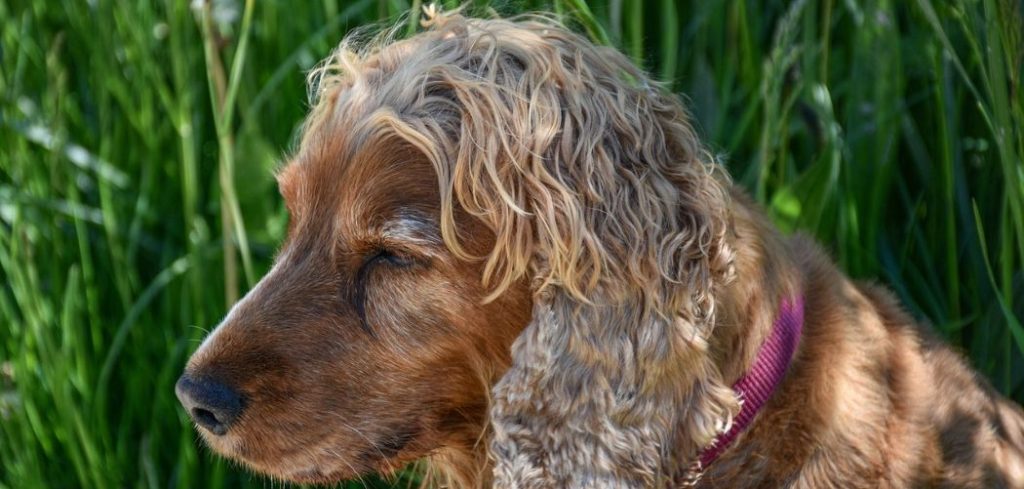
Dog Licking Due to Allergies: Common Causes
Environmental Allergies
Environmental allergies, sometimes called atopic dermatitis, are a common reason dogs develop itchy skin.
Possible allergens include pollens, molds, dust mites, and other environmental substances.
A dog may respond to these allergens with persistent itching and licking rather than the sneezing and watery eyes that people often associate with allergies. The paws, ears, face, and other areas of the skin may become affected.
Some dogs experience symptoms seasonally, while others may have problems throughout the year. Repeated licking of the paws or legs can be one of the first things an owner notices.
Related: Dog licking due to stress (Why it happens)
Food Allergy
Food allergies can also cause itchy skin and excessive licking. In dogs, food-related allergic skin disease may affect the feet, ears, underside of the body, and other areas. Recurrent ear or skin infections can occur as well.
A food allergy cannot be reliably confirmed simply because a dog improves after eating a different food for a short period.
Veterinary diagnosis generally involves a carefully controlled elimination diet followed by a dietary challenge to determine whether the suspected food is responsible.
Flea Allergy
Flea allergy dermatitis is another important cause of allergy-related licking. Dogs with flea allergy become unusually sensitive to substances in flea saliva, so even a small number of flea bites can trigger significant itching.
Licking or chewing may be especially noticeable around the hindquarters, tail base, and back legs. Hair loss, redness, scabs, and irritated skin can develop when the problem continues.
Importantly, owners may not see fleas on the dog even when flea allergy is involved. A dog can react strongly to flea bites without having an obvious visible infestation.
Related: Dog licking due to pain (Why it happens)
Allergies With Secondary Yeast or Bacterial Infection
Allergies can damage the skin barrier and create conditions that allow bacteria or yeast to multiply. These secondary infections can cause additional itching, redness, odor, scaling, discharge, or changes in the skin.
This can create a cycle in which the original allergy causes itching, the dog licks the skin, the skin becomes damaged, and infection develops, leading to even more irritation and licking.
For this reason, persistent licking does not necessarily mean the allergy itself is the only problem.
Allergies Affecting the Paws
Some dogs with allergies concentrate their licking on their feet. The spaces between the toes or the skin around the paw pads may become irritated from repeated licking.
Paw licking is commonly associated with itchiness, and allergies and parasites are among the important causes. Secondary bacterial or yeast infections can further increase the urge to lick.
If a dog persistently licks one paw rather than several paws, however, a local problem such as an injury, foreign material, nail problem, or other painful condition should also be considered.
Related: Dog licking paws excessively (Causes and when to worry)
Dog Licking Due to Allergies but No Red Skin
A dog can have an itchy allergic skin condition before obvious redness or other visible changes become apparent. Licking itself may also alter the appearance of the skin over time.
However, licking without visible skin changes does not prove that allergies are responsible. Parasites, localized irritation, pain, behavioral factors, and other skin disorders can also lead to licking.
If the licking is frequent, persistent, or becoming more intense, a veterinary examination can help determine whether the problem is actually allergic.
Dog Licking Due to Allergies and Hair Loss
Repeated licking and chewing can break or remove hair, producing thinning or bald areas. Allergic skin disease can also cause inflammation that contributes to changes in the coat.
Hair loss accompanied by redness, scaling, crusting, odor, or moist skin is more suggestive of an active skin problem that needs evaluation.
If hair loss continues despite attempts to control the itching, the veterinarian may need to investigate infections, parasites, hormonal disorders, or other causes rather than assuming allergies are responsible.
Dog Licking Due to Allergies and Ear Problems
Allergic skin disease can affect the ears as well as the skin elsewhere on the body. Dogs with allergies may develop inflammation of the ear canal and can be predisposed to secondary bacterial or yeast ear infections.
A dog that licks its paws while also scratching its ears, shaking its head, or developing recurrent ear infections may therefore have an underlying allergic skin condition.
Ear odor, discharge, redness, pain, or frequent head shaking should be evaluated rather than attributed to allergies alone.
When to Call or Visit the Vet
Veterinary evaluation is appropriate when licking is frequent, persistent, worsening, or causing damage to the skin. Contact your veterinarian if your dog has:
Persistent licking or chewing that interferes with normal activity
Red, swollen, painful, or thickened skin
Hair loss or bald patches
Scabs, crusts, sores, or open areas
Moist or oozing skin
A strong skin odor
Recurrent yeast or bacterial skin infections
Ear redness, odor, discharge, or frequent head shaking
Licking that is focused intensely on one paw or one specific area
Limping or apparent pain along with licking
Significant itching that is getting worse
Symptoms that repeatedly return despite previous treatment
Low energy, reduced appetite, or other signs of illness
Sudden facial swelling, breathing difficulty, collapse, or other signs of a severe allergic reaction require prompt veterinary attention.
Dog Licking Due to Allergies: Treatment
Treatment for dog licking due to allergies depends on identifying the underlying cause and checking for complications such as bacterial or yeast infection.
The veterinarian will usually take a detailed history and examine the skin, paws, ears, and distribution of the itching.
Skin cytology, skin scrapings, parasite evaluation, fungal testing, or other tests may be appropriate when infection or parasites are suspected.
If food allergy is being considered, a carefully controlled elimination diet may be used.
Treatment may involve allergen avoidance, parasite control, treatment of secondary infections, and veterinary-prescribed therapies to control itching and inflammation.
Key Takeaway
Dog licking due to allergies is possible because allergic skin disease can cause significant itching, leading dogs to lick, chew, scratch, or rub affected areas.
Environmental allergies, food allergies, and flea allergy are among the possibilities, but licking alone cannot establish that allergies are the cause.
Persistent licking deserves attention, particularly when it is accompanied by redness, hair loss, odor, sores, ear problems, pain, or worsening itchiness.
A veterinarian can determine whether allergies, infection, parasites, injury, or another condition is responsible and develop treatment based on the underlying problem.