
Seeing your dog excessively drooling and licking their lips can be alarming, especially if the behavior starts suddenly.
While a little drooling before meals or after exercise is perfectly normal for many dogs, excessive saliva combined with constant lip licking often signals that your dog is uncomfortable or feeling nauseous. In some cases, it may even indicate a medical emergency.
Knowing the reasons for a dog excessively drooling and licking their lips and what to watch for can help you determine whether your dog can be monitored at home or needs immediate veterinary care.
Table of Contents
Dog Excessively Drooling and Licking Lips: Why It Happens
A dog may excessively drool and lick their lips because of nausea, mouth pain, dental disease, irritation, stomach problems, toxins, pain, neurological conditions or an underlying illness stimulates increased saliva production or causes discomfort in the mouth or stomach.
Some causes are mild and temporary, while others require urgent treatment. Because excessive drooling is often your dog’s way of signaling that something is wrong, it should never be ignored if it persists or occurs alongside other symptoms.
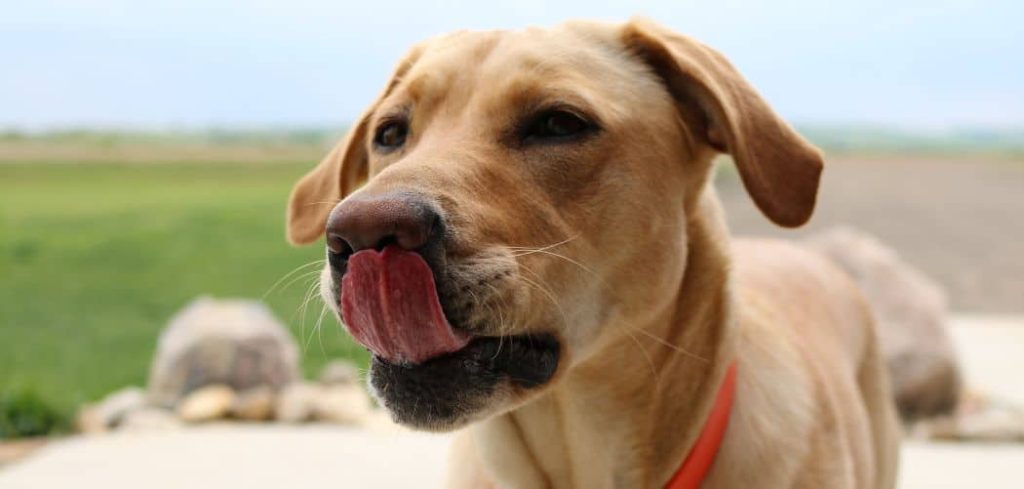
Dog Excessively Drooling and Licking Lips: Signs
Dogs experiencing excessive drooling and lip licking often display additional signs depending on the underlying cause.
Common signs include:
Thick or excessive saliva
Frequent lip licking or smacking
Repeated swallowing
Pawing at the mouth
Bad breath
Loss of appetite
Vomiting or dry heaving
Restlessness or signs of discomfort
Read more: Dog Excessively Drooling Suddenly (Why it happens)
Dog Excessively Drooling and Licking Lips: Common Causes
Nausea or Upset Stomach
One of the most common causes of excessive drooling and lip licking is nausea. Dogs often produce extra saliva before vomiting or when they have stomach irritation.
Other signs may include eating grass, swallowing repeatedly, refusing food, vomiting, diarrhea, or appearing restless.
Mild stomach upset may improve with supportive care, but persistent vomiting or severe nausea requires veterinary evaluation.
Dental Disease
Painful teeth or infected gums frequently cause dogs to drool more than usual while constantly licking their lips.
Other symptoms often include bad breath, difficulty chewing, dropping food, bleeding gums, facial swelling, or pawing at the mouth.
Dental disease becomes increasingly common as dogs age and usually requires professional veterinary treatment.
Read more: Dog Panting and Excessively Drooling (What it means)
Something Stuck in the Mouth
Grass awns, sticks, bone fragments, string, or pieces of toys can become lodged between the teeth, under the tongue, or in the roof of the mouth.
Dogs often drool excessively, paw at their face, gag, or repeatedly lick their lips in an attempt to remove the object. Veterinary examination is recommended if you cannot safely identify the cause.
Exposure to Irritating or Bitter Substances
Dogs sometimes drool heavily after licking household cleaners, certain plants, insecticides, medications, or other unpleasant-tasting substances. Even some harmless products can trigger excessive salivation because of their bitter taste.
If you suspect your dog has been exposed to a toxic substance, contact your veterinarian or an animal poison hotline immediately, even if other symptoms have not yet appeared.
Oral Injuries
Cuts, burns, bee stings, or other injuries affecting the mouth can make swallowing painful and stimulate increased saliva production.
Dogs may resist having their mouth examined, paw at the affected area, or cry while eating. Veterinary treatment may be needed depending on the severity of the injury.
Motion Sickness
Many dogs drool excessively and repeatedly lick their lips when they become motion sick during car rides.
Yawning, whining, trembling, vomiting, and refusing treats are other common signs. Your veterinarian can recommend strategies or medications to help dogs prone to travel sickness.
Heatstroke
Excessive drooling may occur when dogs become overheated. As body temperature rises, dogs often pant heavily while producing large amounts of saliva.
Additional symptoms include bright red gums, weakness, vomiting, collapse, confusion, or difficulty walking. Heatstroke is a medical emergency requiring immediate veterinary treatment.
Neurological Disorders or Seizures
Less commonly, excessive drooling and lip licking may result from neurological disease or focal seizures affecting the muscles of the face and mouth.
Dogs may also stare into space, appear confused, snap at imaginary objects, lose coordination, or experience other unusual behaviors. These conditions require prompt veterinary assessment.
Dog Excessively Drooling and Licking Lips: What to Do
Begin by observing your dog’s overall behavior. If the drooling started suddenly, try to determine whether they may have eaten something unusual, chewed on a plant, or been exposed to household chemicals or medications.
Carefully look inside your dog’s mouth only if they are calm and willing to cooperate. Check for obvious objects lodged between the teeth, bleeding, swelling, broken teeth, or visible injuries. Never force your dog’s mouth open if they seem painful or frightened, as this could result in injury to both you and your dog.
Offer fresh water and monitor whether your dog is able to swallow comfortably. If nausea seems likely, avoid offering large meals until you have spoken with your veterinarian, particularly if vomiting is occurring.
Keep a record of when the drooling began, whether vomiting, diarrhea, coughing, or appetite loss developed, and whether the behavior occurs continuously or only during certain situations, such as car rides. Videos can be especially helpful if the episodes are brief or seem related to abnormal movements.
Do not give human medications, mouth rinses, or home remedies without veterinary guidance. Some products that are safe for people can be toxic to dogs.
When to Call or Visit the Vet
Occasional drooling may not be serious, but persistent or excessive drooling should always be evaluated, especially when accompanied by other symptoms.
Schedule an appointment if you notice:
Excessive drooling lasting more than a few hours
Persistent lip licking
Bad breath
Difficulty chewing food
Mild swelling around the mouth
Reduced appetite
Vomiting that resolves quickly but recurs
Signs of dental disease
Seek emergency veterinary attention immediately if your dog develops:
Difficulty breathing
Collapse or severe weakness
Suspected poisoning
Heatstroke symptoms
Continuous vomiting
Inability to swallow
Severe facial swelling
Seizures or loss of consciousness
Dog Excessively Drooling and Licking Lips: Treatment
Your veterinarian will begin by asking when the drooling started, whether your dog has vomited, eaten anything unusual, or been exposed to potential toxins. Information about recent travel, medications, and changes in appetite can also help narrow the diagnosis.
A complete physical examination will include a thorough inspection of the mouth, teeth, gums, tongue, and throat. Blood work, urinalysis, dental X-rays, abdominal imaging, or neurological testing may be recommended depending on your dog’s symptoms.
Treatment depends on the underlying cause. Dental disease may require professional cleaning or tooth extractions. Nausea may be treated with anti-nausea medications and supportive care. Foreign objects lodged in the mouth must be removed safely, while toxin exposure may require hospitalization and emergency treatment.
Dogs with heatstroke, neurological disease, or severe illness often require more intensive care, including intravenous fluids, medications, and close monitoring.
Recovery and Monitoring
Recovery varies depending on what caused the excessive drooling and lip licking. Mild stomach upset or exposure to a bitter but non-toxic substance may resolve within hours once the irritation passes.
Dogs treated for dental disease, oral injuries, or infections often improve quickly once the source of discomfort has been addressed. More serious conditions such as poisoning, heatstroke, or neurological disease may require longer recovery periods and ongoing monitoring.
Continue observing your dog’s appetite, water intake, drooling, swallowing, and overall behavior after treatment. Follow all medication instructions carefully and attend any recommended follow-up appointments.
If excessive drooling returns, worsens, or new symptoms develop, contact your veterinarian promptly.
Key Takeaway
A dog excessively drooling and licking lips is often trying to tell you that something is causing discomfort in the mouth, stomach, or elsewhere in the body. Nausea, dental disease, foreign objects, oral injuries, toxin exposure, motion sickness, heatstroke, and neurological disorders are among the most common causes.
While some cases are mild and temporary, excessive drooling accompanied by vomiting, difficulty swallowing, breathing problems, collapse, or suspected poisoning should always be treated as an emergency. Early veterinary evaluation can identify the underlying cause and help your dog recover more quickly.
If your dog’s excessive drooling and lip licking persist, worsen, or occur alongside other concerning symptoms, don’t wait to seek veterinary advice. Prompt care can make a significant difference in your dog’s comfort and overall health.


