
A dog chewing on nails can be easy to overlook, especially if it happens occasionally during grooming or after a walk. Some dogs may nibble at one nail, while others repeatedly chew several nails or lick and bite at an entire paw.
The behavior can be harmless when it is brief, but persistent chewing often means something around the nail, toe, or paw is bothering the dog.
Nails can become painful when they are too long, cracked, torn, infected, or otherwise abnormal. Problems affecting the skin between the toes can also cause a dog to chew at the nails or surrounding paw.
In some cases, especially when several nails become abnormal or break repeatedly, an underlying nail disorder may need to be investigated.
Table of Contents
Dog Chewing on Nails: Why It Happens
A dog may chew on its nails in response to irritation, discomfort, itching, or pain around the nail or paw. A nail may have become damaged, caught on something, grown too long, or developed an infection.
The chewing itself can then make the problem worse by irritating already-sensitive tissue. Because dogs can have more than one reason for chewing their paws, the location, appearance of the nails, and presence of other symptoms help determine what may be happening.
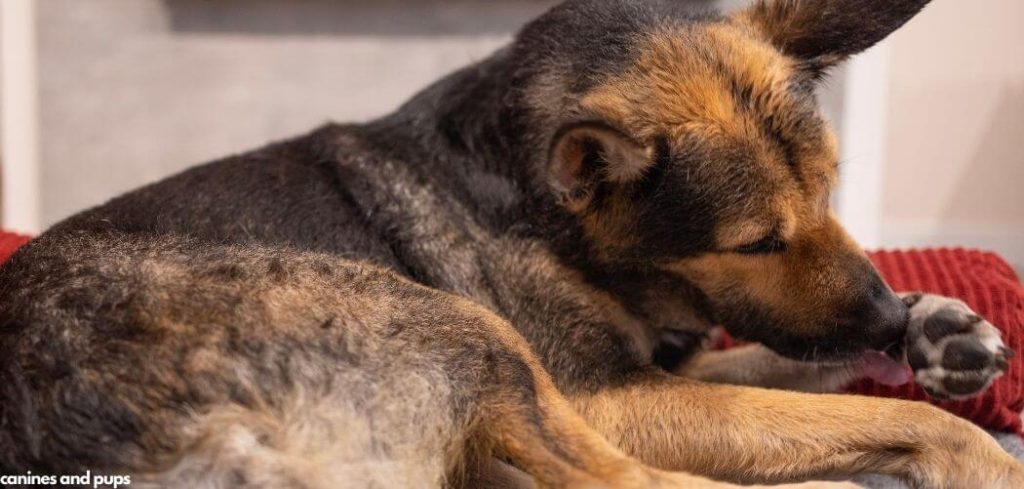
Dog Chewing on Nails: Common Causes
Overgrown Nails
Long nails can interfere with normal foot placement and are more likely to catch on carpets, grass, or other surfaces. As nails become longer, they can also become easier to break or tear.
A dog may chew at an overgrown nail because it feels uncomfortable or because the nail has caught on something.
Regular nail care can reduce the risk of excessive nail length and related injuries.
Related: Dog excessively licking paws and legs (Why it happens)
Broken or Cracked Nail
A cracked or partially broken nail can cause considerable discomfort. Dogs may chew at the affected nail, lick the paw, limp, or hold the foot up.
The sensitive inner portion of the nail contains blood vessels and nerves, so damage that exposes or irritates this area can be painful and may cause bleeding.
A torn nail can also become contaminated and develop a secondary infection.
Nail or Nail-Bed Infection
Infection around a nail can cause redness, swelling, tenderness, discharge, or an unpleasant odor.
A dog may repeatedly chew or lick the affected nail because the area is painful or irritated.
Infection can sometimes develop after a nail injury, particularly when damaged tissue allows bacteria to enter. Persistent swelling, discharge, or pain around a nail should be evaluated by a veterinarian.
Related: Dog excessively licking front legs (Here’s why)
Irritation Between the Toes
The problem may not actually originate from the nail. Irritated or infected skin between the toes can make a dog lick and chew at the entire paw, including the nails.
Interdigital furuncles, for example, are painful inflammatory lesions that occur between the toes.
Dogs may lick or bite at affected areas and may become lame when the lesions are painful.
Foreign material such as a splinter or burr can also become embedded and trigger inflammation.
Allergies and Itchy Paws
Dogs with allergies may repeatedly lick, chew, or bite their feet. The nails may become involved simply because they are part of the area the dog is grooming.
Chronic licking can damage the skin and create a moist environment that encourages secondary bacterial or yeast infections.
If chewing affects several paws and is accompanied by redness, recurrent ear problems, or generalized itching, an underlying skin condition may need to be considered.
Something Is Stuck Around the Nail or Paw
Grass awns, burrs, splinters, and other small foreign materials can become lodged around the toes or nail area.
The dog may suddenly begin chewing at one particular nail or paw.
A foreign object can cause localized inflammation and, if it remains embedded, may lead to infection. Interdigital infections caused by foreign material are often localized to one foot.
Pain From a Toe or Foot Injury
A dog may chew at a nail when the actual problem is deeper in the toe or paw. A minor injury, bruising, soft-tissue problem, or another painful condition can cause licking and chewing around the affected area.
This is particularly worth considering when chewing starts suddenly and the dog is also limping, reluctant to put weight on the foot, or protective when the paw is handled.
Multiple Abnormal Nails
If several nails are breaking, splitting, growing abnormally, or falling off without an obvious injury, a simple behavioral habit may not explain the problem.
One uncommon condition is symmetric lupoid onychodystrophy (SLO), a disorder associated with abnormal nail growth, breakage, and loss.
It typically affects multiple or all nails rather than just one.
Nail Disorders or Skin Disease
Certain diseases can affect the claws or surrounding skin and cause repeated chewing.
Fungal infections can involve the claws, while inflammatory or immune-related nail disorders can cause abnormal growth and breakage.
When nail problems keep returning despite routine nail care, a veterinarian may need to examine the nails closely and determine whether skin, infection, immune-related disease, or another condition is involved.
Related: Dog excessively licking belly (Here’s why)
Dog Chewing on Nails but Not Limping
A dog does not necessarily limp when a nail or paw is irritated. Dogs can continue walking normally despite discomfort, particularly when the problem is mild or affects only part of the nail.
If the chewing is occasional and there is no redness, swelling, bleeding, broken nail, discharge, or change in walking, it may be reasonable to monitor the behavior.
However, persistent chewing deserves closer attention because dogs may hide signs of pain, particularly with some dental and nail-related problems.
Dog Chewing on Nails and Licking Paws
Chewing on nails together with frequent paw licking often suggests that the discomfort involves more than the nail itself.
Allergies, irritated skin, interdigital inflammation, infection, or a foreign object can all cause a dog to repeatedly groom the paw.
If several paws are affected, a skin problem becomes more important to consider. If only one paw or one nail is being targeted, a localized injury, broken nail, or foreign object may be more likely.
Dog Chewing on Nails and Bleeding
A dog chewing on its nails and bleeding may have an injured or infected nail, a cracked nail, an exposed quick, or irritation around the nail bed.
Dogs may chew because the nail is painful, loose, broken, or uncomfortable. Allergies and skin inflammation can also cause persistent licking and chewing of the paws and nails, which may eventually damage the tissue and cause bleeding.
If the nail is actively bleeding, apply gentle pressure with clean gauze or a clean cloth for several minutes.
Prevent the dog from continuing to chew or lick the area, and keep the paw clean.
A broken nail that is split deeply, bleeding repeatedly, swollen, producing discharge, or causing significant limping should be examined by a veterinarian because the nail bed can become infected.
Dog Chewing on Nails on Multiple Paws
When a dog chews at several nails or repeatedly targets multiple paws, the cause may be different from a single broken nail.
Allergies, generalized skin irritation, infection, and certain nail disorders can affect multiple feet. SLO, for example, commonly causes abnormality, breakage, or loss involving multiple or all nails.
When to Call or Visit the Vet
Arrange a veterinary examination if your dog is chewing on nails and has any of the following:
A broken, split, or partially torn nail
Bleeding that continues or repeatedly returns
Swelling or redness around a nail
Pus, discharge, or an unpleasant odor
Significant tenderness when the paw is touched
Limping or reluctance to put weight on the foot
A nail that has changed color, shape, or texture
Several nails breaking or falling off
Persistent licking or chewing despite routine nail care
Swelling, bumps, or sores between the toes
A suspected splinter, burr, or other foreign object
Repeated paw problems that keep returning
Loss of appetite, lethargy, or other signs of illness accompanying the paw problem
Sudden severe pain, substantial bleeding, marked swelling, or an obvious deeply embedded foreign object warrants prompt veterinary attention.
Dog Chewing on Nails: Treatment
Treatment for a dog chewing on nails depends on what is causing the discomfort.
The veterinarian may examine the nails, nail beds, toes, and skin between the toes and may recommend tests such as cytology, fungal testing, bacterial culture, or other diagnostics when infection or an underlying nail disorder is suspected.
A damaged nail may need veterinary trimming or removal of the damaged portion, while infections, allergies, foreign bodies, or inflammatory nail diseases require treatment directed at the underlying problem.
Key Takeaway
Dog chewing on nails is often a sign that something around the nail, toe, or paw is irritating or hurting the dog.
Overgrown or broken nails are common possibilities, but allergies, infections, foreign objects, and other nail disorders can also cause persistent chewing.
Occasional chewing without any other abnormalities may not indicate a serious problem.
However, repeated chewing, bleeding, swelling, broken nails, limping, discharge, or several abnormal nails should prompt a veterinary examination so the underlying cause can be identified and treated.


