
Many dog owners notice their dog suddenly sniffing directly into their mouth or face and wonder what is causing the behavior.
While it can feel strange or even embarrassing, dogs usually smell human breath because it provides valuable information about health, emotions, food, and familiarity.
Table of Contents
Why Does My Dog Smell My Breath?: Why It Happens
Dogs rely heavily on scent to understand the world, and human breath contains strong smells that naturally attract their attention. Your breath can reveal what you recently ate, how you are feeling emotionally, and even subtle changes in your body chemistry.
Some dogs smell breath out of curiosity, while others do it as part of affection, routine, or food-seeking behavior. In most cases, this habit is completely normal and harmless.
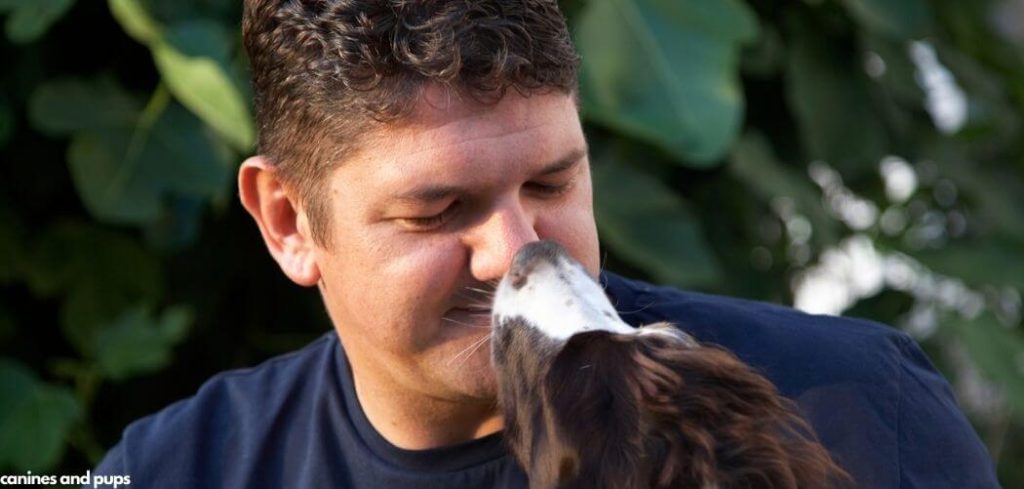
Is It Normal for Dogs to Smell Human Breath?
Yes, this behavior is usually completely normal. Dogs naturally use scent to gather information, communicate, and bond with people. Smelling breath is often a harmless curiosity combined with social interaction.
Most dogs occasionally sniff faces and mouths without any underlying behavioral or medical issue.
Reasons Your Dog Smells Your Breath
Your Dog Is Using Their Powerful Sense of Smell
Dogs experience life through scent far more than humans do. A dog’s nose contains millions more scent receptors than a human nose, allowing dogs to detect odors at extremely low levels.
When your dog smells your breath, they are gathering information in the same way humans might look at facial expressions or listen to the tone of voice.
Human breath changes throughout the day depending on food, hydration, stress, hormones, and even sleep quality. Your dog naturally notices these changes and may investigate because the scent provides new information every time.
For dogs, smelling breath is not considered rude or unusual. It is simply part of how they explore their environment and communicate with the people around them.
Related: Why Does My Dog Smell My Breath Every Morning?
Your Breath Smells Interesting Because of Food
One of the most common reasons dogs smell human breath is leftover food odor. Even hours after eating, tiny scent particles remain in the mouth and breath that dogs can easily detect.
Foods with strong smells such as meat, dairy, peanut butter, garlic, fish, or snacks, are especially noticeable to dogs. Your dog may sniff your breath because they recognize something tasty or familiar.
Some dogs also become interested after their owners brush their teeth. Mint toothpaste, fruity toothpaste, or flavored mouth products may smell unusual and appealing to curious dogs.
Food-driven dogs are particularly likely to investigate mouths because they naturally associate the face area with possible food opportunities.
Your Dog Is Showing Affection and Bonding
Dogs often use scent as part of social bonding. Smelling your breath may simply be your dog’s way of feeling close to you and reconnecting socially.
Your personal scent is comforting and familiar to your dog. Breath carries a concentrated version of that scent, making it especially interesting during cuddling, waking up, or quiet moments together.
Some dogs combine breath sniffing with licking, leaning, tail wagging, or resting near their owner’s face. In these situations, the behavior is usually affectionate rather than problematic.
Dogs that are closely bonded with their owners may sniff faces frequently because they enjoy the closeness and familiarity.
Your Dog Is Checking Your Mood or Emotional State
Dogs are highly sensitive to human emotions. Research suggests dogs can detect emotional changes through body language, tone, and scent. Stress hormones and emotional shifts can slightly alter body odor and breath composition.
If you are anxious, upset, excited, or stressed, your dog may sniff your breath more closely to understand how you are feeling. Dogs often pay extra attention when something about their owner seems different.
This behavior may become especially noticeable during stressful times, illness, emotional events, or changes in routine.
Some dogs appear to “check in” with their owners by smelling their faces and breath when they sense tension or sadness.
Your Dog Is Curious About Changes in Your Health
Dogs can sometimes detect subtle health-related scent changes in humans. While they cannot diagnose medical problems, they may notice unusual odors caused by illness, medications, blood sugar changes, or infections.
Conditions that may slightly alter breath odor include:
Dental disease
Diabetes
Acid reflux
Illness
Certain diets
Dehydration
Medication use
Your dog may become more focused on your breath if it suddenly smells different than usual.
However, occasional breath sniffing does not automatically mean something is medically wrong. Most dogs simply investigate because human breath naturally changes often.
Your Dog Wants Attention
Some dogs quickly learn that sniffing their owner’s face gets a response. If you laugh, talk, pet them, or react strongly, your dog may repeat the behavior because it successfully gains attention.
Dogs naturally repeat behaviors that lead to interaction. Even telling your dog to stop can still feel rewarding if your dog enjoys engagement.
Attention-seeking sniffing is especially common in highly social dogs that love close contact with their owners.
Your Dog Is Following Natural Pack Behavior
Dogs naturally investigate the faces and mouths of other dogs as part of social communication. In the wild, wolves and dogs often sniff around the mouth area to gather information about food, identity, and social interaction.
Your dog may treat you similarly because they see you as part of their social group. Smelling your breath can therefore be a completely instinctive behavior rooted in canine communication patterns.
Puppies especially tend to investigate mouths because young dogs naturally explore using scent and close physical interaction.
Your Dog May Like Strong or Unusual Smells
Humans and dogs experience odors very differently. Smells that humans dislike may actually seem fascinating to dogs. Morning breath, coffee breath, spicy food smells, or strong dental products may all attract your dog simply because they are intense or unusual.
Some dogs are naturally more scent-focused than others. Breeds developed for tracking and scent work often show a stronger interest in investigating smells around the face and mouth.
For these dogs, breath sniffing may simply be mentally stimulating and enjoyable.
How to Stop Your Dog From Smelling Your Breath
Redirect the Behavior
If you dislike the behavior, calmly redirect your dog toward another activity rather than scolding them. Offering a toy, asking for a sit, or shifting attention elsewhere can help.
Avoid Rewarding the Habit
Strong reactions may unintentionally encourage the behavior. If your dog receives attention every time they sniff your breath, they may continue doing it more often.
Give Your Dog Mental Enrichment
Dogs that love smelling things often benefit from scent games, puzzle toys, sniff walks, and training activities. These outlets help satisfy natural investigative instincts.
Maintain Consistent Boundaries
If you do not want your dog near your face, consistently reinforce personal space boundaries gently and calmly. Mixed reactions can confuse dogs and make the behavior continue.
When to Be Concerned
While breath sniffing is usually harmless, contact your veterinarian if your dog suddenly becomes obsessive about smelling your face or shows additional symptoms such as:
Anxiety
Restlessness
Excessive licking
Sudden clinginess
Aggression
Confusion
Major behavioral changes
Loss of appetite
You should also consider seeing a doctor or dentist if your dog reacts strongly to a new, persistent breath odor combined with symptoms like fatigue, mouth pain, or unusual tastes.
Key Takeaway
Dogs smell human breath because it provides valuable information about food, emotions, health, and familiarity. Your dog’s powerful sense of smell makes your breath naturally interesting, and the behavior is often linked to curiosity, bonding, and routine social interaction.
In most cases, this habit is completely normal and simply reflects your dog’s instinctive way of understanding the people they love.


