
A split nail on a dog can happen suddenly during a walk, while playing, or after a nail catches on carpet or another surface.
A split nail can look like a minor flaw, but for a dog it is often surprisingly painful. Nails have a sensitive core of nerves and blood vessels, so a crack or split that reaches deep can cause limping, licking at the paw, and bleeding that seems out of proportion to the size of the damage.
We’ll explain what a split nail looks like, which signs call for a vet visit, what you can do while you arrange care, how vets treat the injury, how long healing takes, and how to keep your dog’s nails strong.
Table of Contents
Split Nail on a Dog: Why It Happens
A dog’s nail can split when it catches on an object, bends under pressure, becomes overgrown, or develops weakness that makes the nail more likely to crack.
A shallow split may affect only the hard outer nail, but a deeper break can expose the quick, which contains blood vessels and nerves. This can cause significant pain and bleeding, while damage to the nail bed may increase the risk of infection.
Repeated splitting or several affected nails can also indicate an underlying nail disorder rather than a simple accident.
The severity depends on where the nail has split, whether it is still attached, and whether the sensitive tissue underneath is exposed. A dog may walk almost normally with a minor crack but limp or repeatedly lick the paw if the split is deeper.
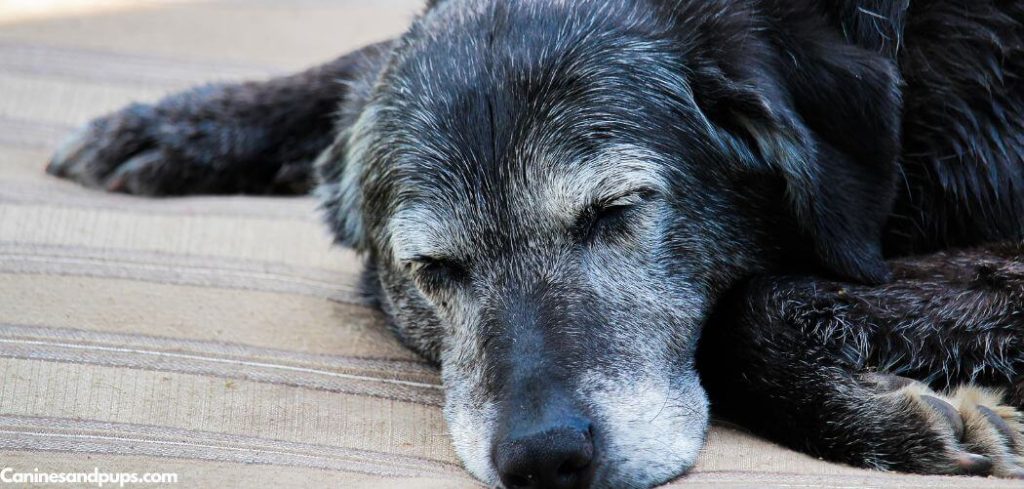
Signs of a Split Nail on a Dog
The signs depend on how deeply the nail has cracked and whether the quick or surrounding tissue has been injured.
Common signs include:
A visible crack or split: The nail may have a lengthwise crack, a broken tip, or a partially detached section.
Bleeding: Blood may appear if the split reaches the quick.
Limping: Your dog may lift the affected paw or avoid putting weight on it.
Licking or chewing: Repeated attention to one nail may indicate pain or irritation.
Sensitivity: Your dog may pull away, whine, or resist when the paw is approached.
Swelling or redness: These may indicate inflammation or infection around the nail bed.
Discharge or an unpleasant smell: These are concerning signs that warrant veterinary assessment.
A minor crack limited to the hard outer nail may cause little discomfort. A deep split, exposed quick, or dangling piece of nail is more painful and may need professional treatment.
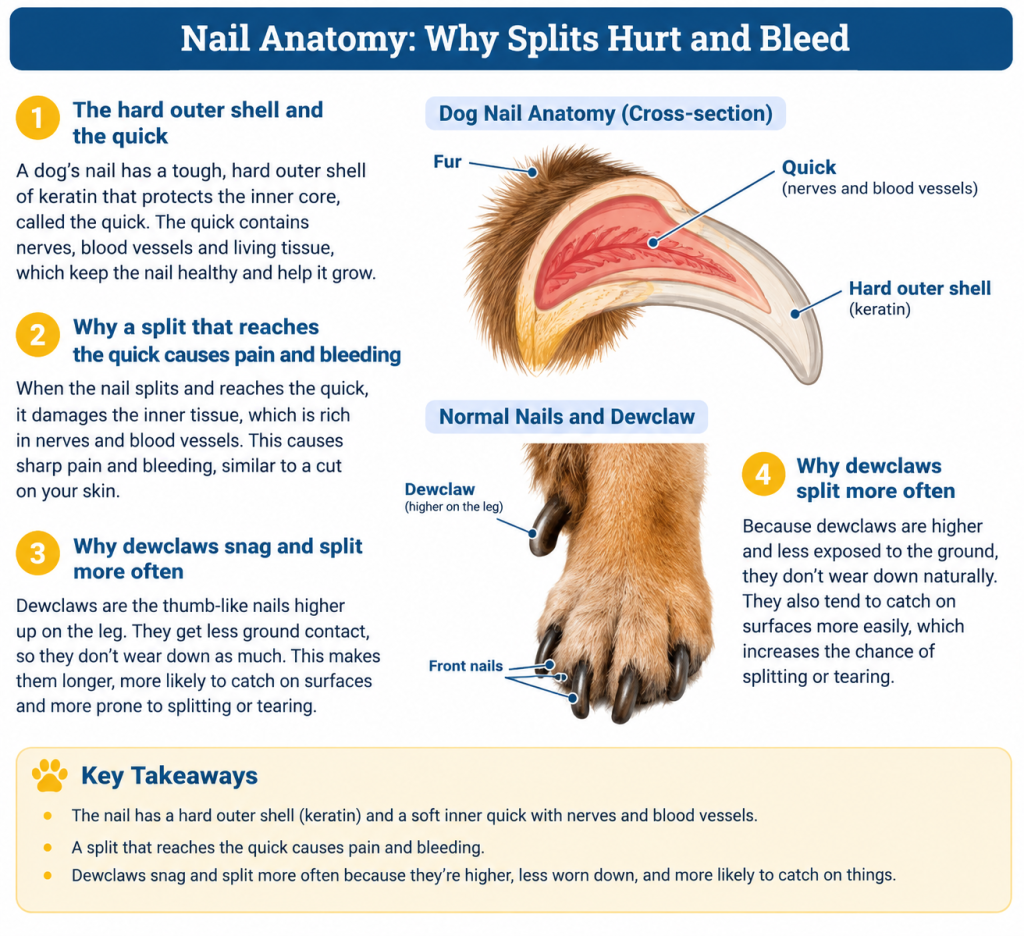
Nail Anatomy: Why Splits Hurt and Bleed
A dog’s nail has a hard outer shell made of keratin, the same protein found in human fingernails, and an inner core called the quick. The quick contains blood vessels and sensitive nerves that supply the nail and help it grow.
In dogs with light-colored nails, the quick often appears as a pink area inside the nail. In dark nails, it is harder to see.
When a nail splits only at its outer tip, the injury may cause little discomfort. However, if the crack extends into the quick, it can expose sensitive tissue, causing pain and bleeding.
A deep split may make walking uncomfortable, and the dog may lick or guard the injured paw. Damage to the quick also increases the risk of infection, particularly if the nail remains cracked or partially detached.
Dewclaws—the thumb-like nails positioned higher on the inside of a dog’s front legs and sometimes the hind legs—are more prone to snagging because they often do not touch the ground enough to wear down naturally.
Their position also makes them more likely to catch on blankets, carpets, vegetation, or other objects, potentially causing a painful split or tear.
The diagram below illustrates the hard outer shell, the sensitive quick, and the position of the dewclaw. A split that reaches the quick can be painful and may bleed significantly, so avoid pulling off a loose section of nail yourself.
Types of Split Nails in Dogs
A dog’s split nail can range from a small crack at the tip to a severe break that exposes the quick or tears the nail away from its base.
The depth, location, pain, and amount of bleeding help determine how serious the injury is and whether veterinary care is needed.
Superficial Crack at the Tip
A superficial crack affects only the hard outer part of the nail, usually near the tip. The dog may walk normally without pain or bleeding, and the quick remains intact.
Minor cracks may grow out naturally, but monitor the nail to ensure the split does not extend farther. Avoid pulling or cutting off a loose section if doing so could deepen the crack.
Vertical Split Running Up the Nail
A vertical split runs lengthwise along the nail, from the tip toward its base. It may look like a narrow line or a nail that has separated into two sections.
A shallow split may cause little discomfort, but a deeper crack can expose the quick, making the nail painful and prone to bleeding. Have a veterinarian assess a deep, widening, or painful split.
Split Reaching the Quick
When a split reaches the quick, the sensitive tissue containing nerves and blood vessels becomes exposed or damaged.
The dog may limp, lick the paw, pull away when the nail is touched, or bleed from the injured area.
This type of split is painful and should be assessed by a veterinarian, particularly if bleeding continues, the nail is loose, or the dog cannot bear weight comfortably.
Partially Torn or Hanging Nail
A partially torn nail may hang at an unusual angle, flap when the dog walks, or remain attached by a small piece of nail or tissue.
It can catch on carpets, bedding, or other surfaces, worsening the injury and causing sudden pain or bleeding. Do not pull the nail off or attempt to remove a firmly attached section.
Seek veterinary care, as the damaged portion may need to be trimmed or removed safely.
Fully Broken or Avulsed Nail
A fully broken nail may be missing, broken close to the base, or torn away from its attachment.
The exposed nail bed or quick can bleed and become contaminated, and the dog may show significant pain or refuse to put weight on the paw. This injury requires immediate veterinary attention.
If bleeding occurs, apply gentle, continuous pressure with clean gauze while arranging care. Seek emergency help if the bleeding is heavy or does not stop.
Types of Split Nails: Signs and When to See a Vet:
Type of split nail | Typical signs | Does it need a vet? |
|---|---|---|
Superficial crack | Small tip crack, no pain or bleeding | Usually can be monitored if it remains shallow |
Vertical split | Lengthwise crack, possibly widening | Yes, if deep, worsening, or painful |
Split reaching the quick | Pain, licking, limping, or bleeding | Yes; seek immediate assessment |
Partially torn or hanging nail | Loose flap, abnormal angle, tenderness | Yes; do not pull it off |
Fully broken or avulsed nail | Missing nail, exposed tissue, pain or bleeding | Yes, immediately; emergency care for uncontrolled bleeding or severe pain |
The key distinction: a shallow crack limited to the hard nail may be minor, while a split that reaches the quick, leaves the nail hanging, or tears it away from the base needs veterinary assessment. If you are unsure how deep the split goes, avoid trimming it yourself.
Dog Split Nail: Common Causes
1. The Nail Catches on Something
One of the most common causes of a split nail is catching it on carpet, upholstery, grass roots, or another surface.
When the dog pulls its paw free, the nail may crack, tear sideways, or break partially away from the nail bed.
This type of injury can happen during ordinary activities, including running, digging, jumping, and playing. If the split reaches the quick, your dog may suddenly yelp, lift its paw, or begin limping.
Related: Old dog nails falling off (Causes and treatment)
2. Overgrown Dog Nails
Long nails are more likely to catch on objects and bend under pressure. Over time, repeated pressure can make a nail more vulnerable to splitting or breaking.
You may notice that your dog’s nails click against hard floors, curve excessively, or snag during walks.
Overgrown dew claws can be particularly vulnerable because they do not always wear down naturally through walking.
Regular nail care can help reduce the risk of future injuries. If a nail is already split, however, avoid trimming it close to the damaged area yourself.
3. Rough Play, Running, or Jumping
A dog may split a nail while running over uneven ground, digging, jumping down from furniture, or landing awkwardly on a paw.
The nail can bend sharply against a hard surface or become caught during movement.
If the injury happens during exercise, your dog may suddenly stop playing, lick one paw, or avoid putting weight on the affected leg.
Check the paw gently if your dog allows it, but do not force an examination if the dog is in pain. A deep split or a nail that is hanging loose should be assessed by a veterinarian.
4. Cutting the Nail Too Short
A nail may become painful and bleed if it is cut into the quick during trimming.
Although this is technically a trimming injury rather than a spontaneous split, damage to the nail can leave the sensitive tissue exposed and vulnerable to further irritation.
If you notice bleeding immediately after trimming, apply gentle, steady pressure with clean gauze. Avoid cutting the nail further to try to even it out.
If bleeding continues, the nail is badly damaged, or your dog is very uncomfortable, contact your veterinarian.
5. Brittle or Weak Nails
Some dogs develop nails that crack, chip, or split more easily than usual. Nail brittleness can sometimes be associated with repeated trauma, infection, or an underlying health problem.
If only one nail splits after an obvious accident, an injury is a likely explanation. However, if several nails are splitting, breaking, becoming misshapen, or falling off, your veterinarian should investigate possible underlying causes.
Do not start supplements or make major dietary changes without veterinary advice. The appropriate treatment depends on why the nails are becoming weak.
6. Nail Bed Infection
An infection around the nail bed can cause inflammation and damage that makes the nail appear abnormal or more fragile.
Signs may include redness, swelling, discharge, crusting, discoloration, and persistent licking or chewing.
Sometimes the nail itself is the initial problem: a split exposes sensitive tissue, allowing bacteria to enter the damaged area.
If the skin around the nail becomes swollen or painful, or you notice pus or an unpleasant smell, arrange a veterinary examination.
An infection near the nail bed should not be ignored because the nail is closely associated with the underlying toe structures.
Related: Dog chewing on nails (Here’s why)
Split Nail on a Dog but Not Bleeding
A split nail does not always bleed. If the crack affects only the outer portion of the nail and does not reach the quick, there may be no visible blood.
However, the absence of bleeding does not necessarily mean the injury is minor. A nail can be split deeply without obvious blood, particularly if the damaged section remains attached.
Look for limping, repeated licking, tenderness, or a loose piece of nail. If the split extends toward the base, the nail is unstable, or your dog appears uncomfortable, contact your veterinarian.
Split Nail on a Dog That Is Limping
Limping after a nail splits often indicates pain, especially if your dog suddenly starts holding up one paw or refuses to walk normally.
The split may have reached the quick, pulled on the nail bed, or injured the surrounding toe. Sometimes, the same accident that damaged the nail also injures the toe itself.
Restrict activity and arrange a veterinary assessment if your dog is limping, particularly when the nail is deeply split or partly detached.
If your dog cannot bear weight, has severe pain, or the toe is significantly swollen, seek prompt veterinary care.
Dog Nail Split in Half
A dog nail split in half may have a lengthwise crack that separates the nail into two sections or a break that extends across part of its width. If the split affects only the hard outer tip and causes no pain or bleeding, it may be minor.
However, if the crack reaches the quick, the sensitive tissue containing nerves and blood vessels, it can cause significant pain and bleeding.
Avoid pulling the nail apart or trimming deeply into the split.
Have a veterinarian assess a deep, painful, or unstable crack to determine whether the damaged portion needs to be removed safely.
Dog Nail Broken but Still Attached
A dog nail that is broken but still attached may hang at an unusual angle, move when the dog walks, or catch on carpets and bedding.
Even if the nail remains partly connected, the damaged section can expose the quick and cause pain or bleeding.
Do not pull it off or attempt to cut away a firmly attached piece, as this can worsen the injury.
Keep your dog calm and limit activity while arranging veterinary care, preferably the same day if the nail is loose, painful, or bleeding.
Dog Nail Splitting From the Quick
When a dog’s nail splits from the quick, the crack may extend from the sensitive inner tissue toward the tip, or the quick may become exposed as the nail breaks.
The injury can cause bleeding, limping, paw licking, and sensitivity when the foot is touched. Because the quick contains nerves and blood vessels, damage to this area is painful and may require veterinary treatment.
Apply gentle, continuous pressure with clean gauze if the nail is bleeding, and seek immediate veterinary assessment. If bleeding is heavy or does not stop, seek urgent care.
My Dog’s Nails Keep Splitting
If your dog’s nails keep splitting, the problem may be related to repeated trauma, overgrown nails catching on surfaces, rough terrain, or naturally brittle nails.
Recurrent splitting can sometimes be associated with nutritional problems, inflammation, infection, or other underlying health conditions.
Keep the nails trimmed appropriately, smooth rough edges, check the dewclaws, and inspect the paws after walks. Feed a complete and balanced diet, and avoid giving supplements without veterinary advice.
If several nails repeatedly crack or break without an obvious injury, arrange a veterinary examination to investigate the cause rather than treating each split as an isolated problem.
What to Do If Your Dog Has a Split Nail
1. Check the Nail Without Forcing the Paw
Keep your dog calm and look at the affected nail only if it is safe to do so. Check whether the crack is limited to the tip, extends toward the base, or involves a loose piece of nail.
Dogs in pain may react unexpectedly, even if they are usually gentle. Do not force the paw open or continue examining it if your dog becomes distressed.
2. Control Any Bleeding
If the nail is bleeding, apply gentle, steady pressure with clean gauze or a clean cloth. Keep the dog quiet while allowing time for the bleeding to stop.
A pet-safe styptic product may help with bleeding from the nail tip if used according to its instructions. If bleeding is heavy or does not stop after several minutes of firm, steady pressure, seek veterinary care.
3. Keep the Paw Clean
If the nail is dirty, gently rinse the area with clean lukewarm water or sterile saline. Avoid scrubbing the split or applying alcohol, hydrogen peroxide, essential oils, or unapproved creams.
Keep the paw clean and dry while arranging veterinary advice. Do not soak a deep or painful injury unless your veterinarian specifically recommends it.
4. Do Not Pull or Cut Off a Firmly Attached Nail
It may be tempting to remove a broken piece so it cannot catch on something. However, pulling or cutting a deeply split nail can tear the quick, worsen the pain, and cause additional bleeding.
A veterinarian can determine whether the damaged section needs trimming or removal and provide appropriate pain relief if necessary.
5. Prevent Licking and Limit Activity
Repeated licking can irritate the damaged nail and introduce bacteria. A protective cone may help prevent your dog from chewing the area.
Keep walks short and avoid running, jumping, digging, and rough play until the injury has been assessed or is healing appropriately.
If the nail is deeply split, dangling, or painful, arrange a veterinary appointment rather than relying on home care alone.
Can Dog Split Nails Wait? (and for How Long)
A small, superficial crack at the tip of a dog’s nail may be monitored at home if there is no pain, bleeding, or looseness.
Check the nail daily and prevent it from catching on carpets or bedding. If the damaged tip can be trimmed safely without reaching the quick, it may be possible to manage it at home.
If the crack deepens or you are unsure how far it extends, consult a veterinarian.
A split nail that is painful, bleeding, or loose should be assessed by a veterinarian the same day or within 24 hours. A nail that is hanging, torn near the base, or exposing the quick may need prompt treatment to relieve pain and prevent further damage.
Seek urgent veterinary care if bleeding will not stop, the pain is severe, or your dog cannot bear weight on the paw.
Waiting too long can allow the split to extend as the dog walks or the nail catches on surfaces, causing further tearing and bleeding.
Damaged tissue can also become contaminated with dirt and bacteria, increasing the risk of infection. Repeated licking and pressure on the injured nail may worsen irritation and delay healing.
Until your dog is examined, keep the paw clean and dry, limit strenuous activity, and avoid pulling off loose nail sections or applying human medications.
When It’s an Emergency
Some minor cracks can be monitored with appropriate protection, but deeper splits often require veterinary treatment.
Contact your veterinarian immediately if:
- The nail is split down to its base or is partly hanging off.
- Bleeding that doesn’t stop after 10 to 15 minutes of pressure.
The quick is exposed, or the nail is bleeding.
Your dog is limping, repeatedly licking the paw, or showing significant pain.
The nail bed is swollen, red, or producing discharge.
The nail looks misshapen, or several nails are splitting repeatedly.
Seek urgent care if bleeding will not stop, your dog has severe pain, or it cannot bear weight on the affected leg.
Do not wait for signs of infection to develop if the nail is deeply split or unstable. Early assessment can help prevent further damage and relieve discomfort.
Split Nail on a Dog: Treatment
Your veterinarian will examine the nail and surrounding toe to determine how far the split extends and whether the quick, nail bed, or underlying bone may be affected.
Depending on the injury, treatment may involve trimming or removing the damaged portion under appropriate pain control, cleaning and protecting the nail bed, and prescribing pain medication.
Antibiotics may be needed if an infection is present or suspected, while X-rays may be recommended if a deeper injury is possible.
If several nails are repeatedly affected, further testing may be needed to investigate an underlying nail disorder. Follow-up care helps ensure the nail heals properly.
Home Care and Recovery for a Dog With a Split Nail
Keeping the Bandage Clean and Dry
If your veterinarian has bandaged the injured nail, keep the bandage clean and dry, and change it only as directed.
A wet, dirty, or tight bandage can irritate the skin and increase the risk of infection or restrict circulation.
Contact your veterinarian if the bandage slips, becomes soaked, develops an unpleasant smell, or causes swelling around the toes. Do not rebandage the nail tightly yourself.
Using a Cone or Sock to Stop Licking
A protective cone can prevent your dog from licking, chewing, or biting the injured nail. Licking introduces bacteria and can reopen healing tissue.
A sock may provide temporary protection under supervision, but it should not trap moisture or rub against the wound.
If your veterinarian has applied a bandage, do not cover it with a sock unless advised.
Limiting Rough Play and Walking on Hard Surfaces
Restrict running, jumping, rough play, and long walks while the nail heals. Take your dog out for short, controlled toilet breaks and avoid rough ground that could catch or press against the damaged nail.
Keep the paw clean and dry after outings, following your veterinarian’s wound-care instructions.
Gradually return to normal activity once your dog is comfortable and the injured area has healed.
Typical Healing Time
A minor crack may settle within several days, while a deeper split involving the quick can take several weeks to heal.
If part or all of the nail has been lost, full nail regrowth can take several weeks to a few months, depending on the extent of the injury and your dog’s nail growth rate. The nail may initially grow back unevenly.
Follow your veterinarian’s advice on when normal activity can resume.
Signs of Infection to Watch For
Watch for increasing redness, swelling, warmth, discharge, an unpleasant smell, or worsening tenderness around the nail.
Your dog may also lick the paw repeatedly, limp more, or become reluctant to let you examine it.
These signs need immediate veterinary attention. Seek urgent care if your dog develops marked swelling, severe pain, fever, or becomes unusually weak or lethargic.
When to Book a Recheck
Arrange a recheck at the time recommended by your veterinarian, particularly if the nail was deeply split, partially torn off, or treated with a bandage.
Contact the clinic sooner if bleeding returns, the bandage becomes problematic, pain worsens, or there are signs of infection.
If the nail is not improving over the expected period or regrows abnormally, a veterinary examination can help identify complications and determine whether further treatment is needed.
How to Prevent Split Nails in Dogs
Regular Trimming, Ideally Every Few Weeks
Trim your dog’s nails regularly, often every three to four weeks, depending on how quickly they grow and how much they wear down naturally.
Overgrown nails can catch on carpets and other surfaces, increasing the risk of splitting or tearing.
Trim small amounts at a time and avoid cutting into the quick, which contains nerves and blood vessels.
If you are unsure how to trim your dog’s nails safely, ask a veterinarian or groomer for help.
Filing Sharp Edges After Trimming
File your dog’s nails after trimming to smooth rough edges and reduce the chance of snagging on blankets, carpets, or other materials.
Use a dog nail file or suitable pet nail grinder, taking care not to generate excessive heat or shorten the nail too much. Smooth edges can help prevent minor cracks from developing into larger splits.
Checking for Snag Hazards at Home
Inspect areas where your dog spends time for materials that could catch a nail, such as loose carpet fibers, frayed rugs, damaged bedding, and exposed mesh.
Dogs can split or tear their nails when they suddenly pull away from something that has caught a nail.
Repairing or removing these hazards can reduce the risk of accidental injuries.
Keeping Dewclaws Trimmed
Dewclaws sit higher on the inside of the legs and often do not touch the ground enough to wear down naturally.
As a result, they can become overgrown, curl, or catch on objects more easily than other nails. Check them regularly and trim them as needed, paying particular attention to the quick.
Keeping dewclaws short and smooth helps lower the risk of painful splits and tears.
Supporting Nail Health With a Good Diet
Feed your dog a complete and balanced diet appropriate for its age and health needs.
Proper nutrition supports normal nail growth, although split nails are not necessarily caused by a nutritional deficiency.
If the nails are repeatedly brittle, cracking, or breaking without an obvious injury, consult your veterinarian before adding supplements.
They can assess whether an underlying health problem or dietary issue needs attention.
Paw Checks After Walks
Check your dog’s paws after walks, especially after running through rough terrain, thick vegetation, gravel, or areas with debris
. Look for cracks, sharp edges, loose nail fragments, bleeding, swelling, or tenderness around the nail. Early detection allows you to address minor damage before it worsens.
If a nail is deeply split, loose, painful, or bleeding, seek veterinary advice rather than attempting to pull or cut away the damaged portion.
Key Takeaway
A split nail on a dog can result from catching the nail on an object, overgrown nails, rough activity, or an underlying nail problem. Even when there is no bleeding, a deep split can be painful and may require veterinary treatment.
If your dog’s nail is only slightly chipped and your dog is comfortable, keep the paw clean, prevent excessive licking, and monitor it closely.
Do not pull off a damaged nail or trim deeply into the split.
If the crack reaches the base, the nail is hanging loose, your dog is limping, or you notice swelling or discharge, contact your veterinarian.
Immediate treatment can reduce pain, protect the nail bed, and help the nail heal.


