
An ear infection in an old dog can cause discomfort, head shaking, scratching, odor, or discharge.
Because senior dogs may have underlying conditions that make ear problems more likely—or harder to resolve—persistent symptoms should be checked by a veterinarian.
Table of Contents
Old Dog Ear Infection: Why It Happens
An old dog may develop an ear infection when inflammation, moisture, allergies, or changes in the ear canal allow yeast or bacteria to multiply.
The infection may affect the outer ear canal, but some dogs develop problems deeper in the ear, where symptoms can be more serious.
In senior dogs, recurring infections may also be linked to allergies, skin disease, growths, or other health conditions.
Ear discomfort can have causes other than infection, too. Wax buildup, a foreign object, or a mass in the ear canal may produce similar signs, so a veterinary examination is important before treating the ear.
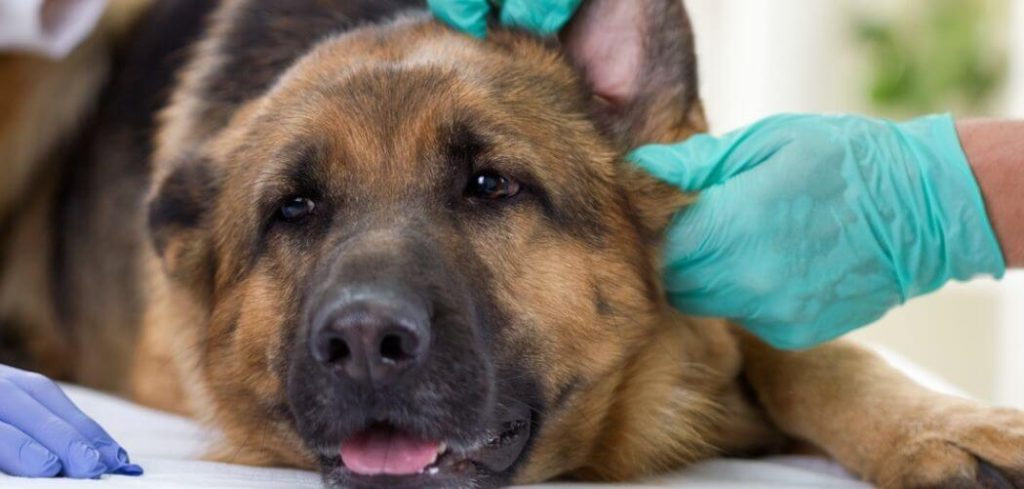
Signs of an Ear Infection in an Old Dog
An old dog with an ear infection may show one or more of the following signs:
Frequent head shaking or scratching at the ear
Redness, swelling, or sensitivity around the ear
An unpleasant smell
Discharge that may be waxy, dark, yellowish, or otherwise unusual
Pain when the ear or head is touched
Holding the head to one side
Reduced hearing or seeming less responsive
Changes in balance, walking, or coordination
These signs do not confirm an infection by themselves. Ear pain, a foreign object, a growth, or another condition may cause similar symptoms.
Old Dog Ear Infection: Causes
Yeast or Bacterial Overgrowth
Yeast and bacteria can normally be present in small amounts in a dog’s ears.
When the ear canal becomes inflamed or its environment changes, these organisms may overgrow and cause infection.
Signs can include redness, itching, discharge, and an unpleasant smell. Some infections involve both yeast and bacteria.
Related: Dog Excessively Scratching Ear (Here’s Why)
Allergies
Environmental or food-related allergies can cause inflammation of the skin, including the skin inside the ears.
An old dog with allergies may have recurring ear infections, itchy paws, or other skin irritation.
Treating only the ear infection may not prevent it from returning if the underlying allergy remains uncontrolled.
Moisture in the Ear
Water trapped in the ear after bathing or swimming can create conditions that encourage microbial growth, especially when the ear is already irritated.
Dogs with floppy ears or narrow ear canals may be more prone to moisture being retained.
Avoid putting water or cleaning solutions into an inflamed ear unless your veterinarian recommends them.
Related: Dog Itching Ears And Biting Paws (Causes Explained)
Ear Mites or Other Parasites
Ear mites are more common in puppies and younger animals, but they can still affect dogs of different ages. They may cause intense itching and dark, crumbly discharge.
Because mites, yeast, and bacterial infections can look similar, a veterinarian should identify the cause rather than relying on appearance alone.
Growths or Changes in the Ear Canal
Older dogs may develop growths or other changes in the ear canal that interfere with normal airflow or drainage.
These can contribute to irritation, trapped debris, or repeated infections.
A persistent problem affecting one ear, especially with bleeding or unusual discharge, needs veterinary attention.
Underlying Skin or Health Conditions
Some skin disorders and health conditions can make ear inflammation more likely or interfere with recovery.
If infections keep returning, your veterinarian may consider whether another condition is contributing.
Repeatedly treating the symptoms without addressing the underlying problem may lead to continued discomfort.
Infection Deeper in the Ear
An infection can sometimes extend beyond the outer ear canal into the middle or inner ear.
These cases may cause pain, changes in balance, a head tilt, or other neurological signs.
A deeper infection requires prompt veterinary assessment and may need a different treatment approach from a routine outer-ear infection.
Related: Old Dog Vestibular Disease: Symptoms, Causes, and Treatment
Can an Old Dog’s Ear Infection Go Away on Its Own?
A mild irritation may improve when its cause is removed, but a true infection often needs appropriate treatment.
Waiting can allow inflammation and discomfort to worsen, and some infections can spread deeper into the ear.
If your old dog has discharge, a strong odor, repeated head shaking, or ear pain, arrange a veterinary visit rather than assuming the problem will clear up.
Old Dog Ear Infection: What to Do
Keep your dog comfortable and prevent further irritation. If your dog is scratching, try to limit the behavior safely; ask your veterinarian whether an appropriately fitted protective collar would help. Do not force your dog’s ear open or handle it if doing so causes pain.
Keep the ear dry until your veterinarian advises otherwise. Avoid swimming and take care during bathing so water does not enter the ear.
Do not insert cotton swabs, fingers, or other objects into the ear canal, as this can push debris deeper or injure sensitive tissue.
Do not use leftover ear drops, human ear products, vinegar, alcohol, peroxide, oils, or other home remedies.
Some products can irritate an inflamed ear, and certain medications may be unsafe if the eardrum is damaged.
Use only a cleaner or medication recommended for your dog after the ear has been assessed.
If your dog is otherwise comfortable and has only mild signs, contact your veterinarian for advice and an appointment. Seek care sooner if the symptoms are painful, worsening, or recurring.
When to Call or Visit Your Vet
Arrange a veterinary appointment if your old dog has ear discharge, odor, redness, persistent scratching, head shaking, or discomfort.
Senior dogs with repeated ear problems should be examined to identify the cause and help prevent recurrence.
Seek urgent veterinary care if your dog has a pronounced head tilt, loss of balance, difficulty walking, unusual eye movements, severe pain, sudden hearing changes, facial weakness, or seems very unwell.
These signs may indicate a deeper ear problem or another condition that needs prompt attention.
Old Dog Ear Infection: Treatment
Treatment depends on what is causing the ear problem and which part of the ear is affected.
The veterinarian may prescribe ear medication to control yeast, bacteria, inflammation, or parasites, and may recommend a suitable ear-cleaning routine.
If an underlying allergy, skin condition, growth, or deeper infection is involved, that problem will also need appropriate treatment.
Follow the prescribed instructions and contact your veterinarian if symptoms do not improve or return.
Key Takeaway
An old dog ear infection can cause significant discomfort, but the right treatment depends on identifying its cause.
Allergies, moisture, microbial overgrowth, parasites, growths, and deeper ear disease can produce overlapping symptoms.
If your senior dog is shaking their head, scratching, has an unpleasant ear odor, or shows discharge or pain, arrange a veterinary examination.
Avoid home remedies and unprescribed ear drops, and seek urgent care for balance problems, a head tilt, or severe pain.


