
Seeing your dog suddenly sore, stiff, or crying in pain after a vaccination can be alarming, especially when they were acting normal just hours earlier.
While mild discomfort is common, ongoing or worsening pain can signal that the immune system or tissues are reacting more strongly than expected.
In this guide, we explain why this possible vaccine reaction happens, what to do and when to contact your veterinarian.
Dog In Pain After Vaccine
Dog pain after a vaccine usually happens because the immune system creates inflammation at the injection site or throughout the body as it responds to the vaccine. This inflammation can cause muscle soreness, nerve sensitivity, joint stiffness, or full-body achiness similar to flu symptoms in people.
Some dogs develop localized swelling, while others feel widespread discomfort that affects their movement and appetite.
Most reactions are mild and short-lived, but persistent pain may indicate a more serious immune response.
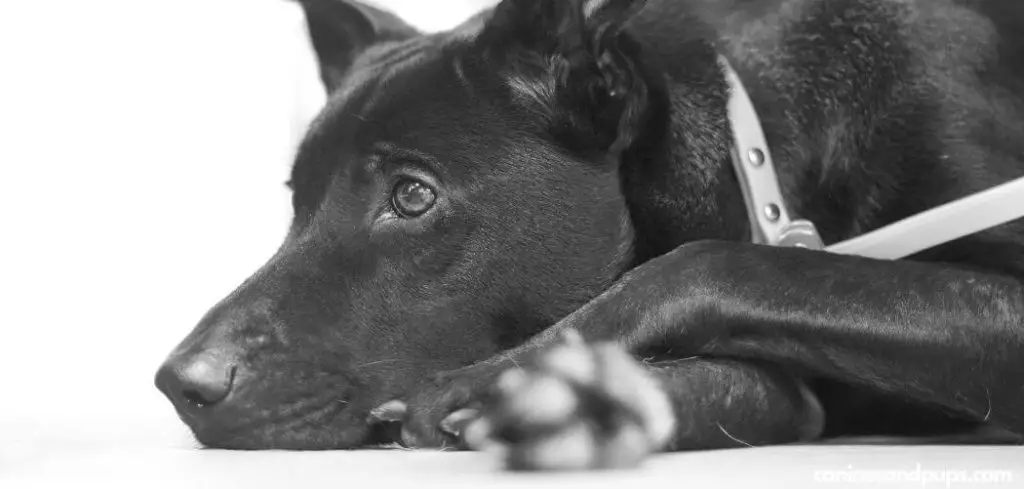
Dog In Pain After Vaccine: Common Causes
Injection Site Inflammation
The most common cause of pain after vaccination is inflammation where the needle entered the muscle or skin.
The immune system sends white blood cells to the area, causing swelling, warmth, and tenderness. This can make your dog flinch when touched, avoid lying on that side, or limp if the injection was given in a leg.
While mild soreness is normal, severe pain, redness, or a hard lump that keeps growing should be evaluated.
Related: Dog diarrhea after vaccines (Why it happens)
Systemic Immune Response
Vaccines activate the immune system throughout the body, not just at the injection site.
Some dogs develop whole-body inflammation that leads to muscle aches, joint stiffness, and fatigue. This can make them move slowly, refuse stairs, or cry when standing up.
This type of pain is similar to how people feel achy after a flu shot and usually resolves within a few days.
Allergic or Hypersensitivity Reaction
Some dogs have heightened sensitivity to vaccine components such as proteins, preservatives, or adjuvants.
This can cause pain along with facial swelling, itching, hives, or difficulty breathing. The immune system releases histamine, which increases inflammation and nerve sensitivity.
Pain from allergic reactions can be sudden and intense and should never be ignored.
Joint and Muscle Inflammation
Vaccination can temporarily worsen inflammation in dogs with arthritis, hip dysplasia, or joint disease.
The immune system’s response may flare existing pain, making your dog suddenly reluctant to walk, jump, or be touched.
This is especially common in older dogs or those with underlying orthopedic problems.
Neurological Irritation
In rare cases, a vaccine can irritate nearby nerves or trigger immune-mediated nerve inflammation.
This leads to sharp pain, weakness, or unusual posture such as arching the back or avoiding movement.
Dogs may yelp when handled or appear unusually sensitive to touch.
Underlying Illness Revealed by Vaccination
Vaccines don’t cause disease, but they can stress the immune system enough to reveal a problem that was already developing.
Dogs with infections, autoimmune disease, or hidden injuries may suddenly appear painful after vaccination.
This timing makes it seem vaccine-related when the real issue was already present.
What to Do If Your Dog Is In Pain After Vaccine
Give your dog a quiet, comfortable place to rest and limit activity for 24 to 48 hours after vaccination so the immune system can recover.
Avoid touching or massaging the injection site, as this can worsen soreness.
Offer food and water but do not force eating if mild nausea is present.
Use a warm compress on stiff muscles only if your veterinarian has approved it.
Monitor pain levels closely, especially if your dog refuses to walk, eat, or be touched.
Related: Swelling on Dog After Vaccine (What it means)
When to Call or Visit Your Vet
Call your vet immediately if your dog has swelling of the face, vomiting, hives, or trouble breathing.
Seek care if pain lasts more than two days, gets worse, or causes limping or crying.
Dogs that cannot get up, appear paralyzed, or have extreme sensitivity need urgent evaluation.
Persistent pain after vaccination should always be investigated to rule out serious reactions.
Read more: Dog side effects after vaccines (Possible reactions explained)
Key Takeaway
Dog pain after a vaccine is usually caused by inflammation from the immune response, but severe or lasting pain is not normal and should be checked by a veterinarian.
Prompt attention keeps minor reactions from becoming major problems and helps your dog recover safely and comfortably.