
When your dog has yellow poop and constipation, you may notice that the stool looks lighter than usual while your dog struggles to pass a bowel movement.
A dog might squat repeatedly, strain for several minutes, pass only a few small, hard pieces of poop, or go longer than usual without defecating.
The combination of yellow stool and difficulty pooping deserves attention because color and consistency can reflect different aspects of digestive health.
Yellow stool does not automatically mean something is seriously wrong, but persistent constipation, painful straining, or an inability to pass stool may indicate a problem that needs veterinary assessment.
Table of Contents
Yellow Dog Poop and Constipation: Why It Happens
Yellow dog poop and constipation may occur together when changes in diet, water intake, digestion, or intestinal function affect the appearance and movement of stool.
Possible explanations include dietary changes, inadequate water intake, eating bones or other indigestible materials, certain medications, and underlying digestive disorders.
Yellow coloring may also reflect changes in how bile pigments are processed as food moves through the intestines.
Constipation occurs when stool remains in the colon for too long, allowing more water to be absorbed and making the stool dry and difficult to pass. Yellow coloring alone does not explain why a dog is constipated, and the two symptoms may have separate causes.
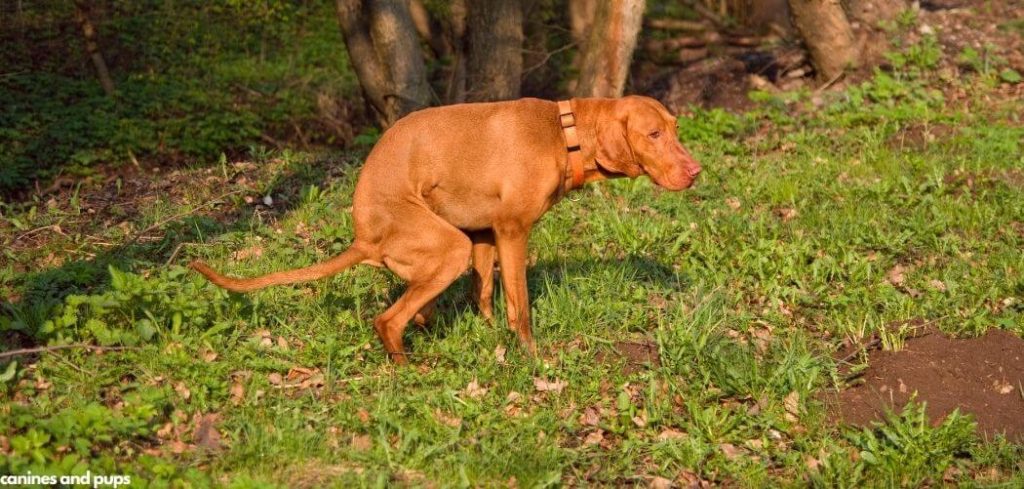
Yellow Dog Poop and Constipation: Common Causes
Dehydration and Inadequate Water Intake
When a dog does not drink enough water, the colon continues absorbing water from the stool. This can leave the feces dry, hard, and difficult to pass.
Dehydration may occur because of limited access to water, reduced drinking, illness, or fluid loss.
Yellow stool may occur at the same time, but dehydration alone does not reliably explain the color change.
If your dog is straining or passing very little stool, pay attention to water intake and seek veterinary advice if the problem persists.
Related: Yellow dog poop and vomiting (Causes and treatment)
Dietary Changes or Insufficient Fiber
A sudden change in food or a diet that produces relatively little stool may contribute to changes in bowel habits.
Some dietary changes can also alter stool color, including making it appear lighter or yellowish.
Fiber helps regulate bowel movements, but the appropriate amount depends on the dog’s condition.
Adding large amounts of fiber without understanding the cause of constipation may not help and can be unsuitable for some dogs, particularly if an obstruction is possible.
Related: Yellow Watery Poop in Dogs (Causes and when to worry)
Eating Bones or Indigestible Materials
Dogs that eat bones, hair, pieces of toys, or other indigestible materials may develop constipation because these substances can mix with stool or obstruct its passage.
You may notice repeated straining, small amounts of stool, or no bowel movement at all. Some dogs develop abdominal discomfort or vomiting.
If you suspect your dog has swallowed a bone or foreign object, contact a veterinarian promptly instead of trying to force a bowel movement at home.
Sudden Food Changes or Food Intolerance
Changing your dog’s food can affect both stool color and bowel habits. A new diet may alter the amount of fiber, fat, and other ingredients your dog consumes, leading to changes in the consistency and appearance of the poop.
Some dogs develop yellowish stool after a dietary change, while constipation may occur if the new diet changes stool volume or moisture.
However, these symptoms do not prove that a food intolerance is responsible. If the problem continues, discuss a suitable feeding plan with your veterinarian rather than repeatedly switching foods.
Reduced Exercise or Difficulty Squatting
Physical activity helps support normal bowel movements. Dogs that are less active than usual may experience changes in their bowel habits, although reduced exercise is not the only possible explanation for constipation.
Arthritis, back pain, or other mobility problems can also make squatting uncomfortable, particularly in senior dogs.
A dog that repeatedly attempts to poop but appears painful may need assessment for a physical problem rather than simply more exercise.
Intestinal Obstruction
An intestinal obstruction occurs when something prevents material from moving normally through the digestive tract.
Swallowed objects, compacted material, or other physical problems can interfere with the passage of stool.
Affected dogs may strain without producing poop, vomit, lose their appetite, or develop abdominal pain.
Yellow stool does not diagnose an obstruction, but constipation accompanied by vomiting, a swollen abdomen, or significant discomfort requires urgent veterinary care.
Medication Side Effects
Certain medications can slow intestinal movement or contribute to constipation. Other medications, supplements, or dietary products may affect stool color independently.
If your dog’s symptoms began after starting a medication or changing its dose, tell your veterinarian.
Do not stop prescribed treatment or give laxatives without veterinary guidance, because the appropriate response depends on the medication and the underlying reason for constipation.
Underlying Digestive or Medical Conditions
Persistent constipation can sometimes be associated with problems affecting the colon, pelvic area, nervous system, or other organs.
For example, an enlarged prostate in an intact male dog or a narrowed pelvic passage may make defecation difficult.
Some digestive conditions can also change stool color or consistency.
If yellow poop and constipation continue to recur, a veterinarian should investigate both the bowel difficulty and the unusual color rather than assuming that they have the same cause.
Related: Dog pooping yellow mucus (Causes and what to do)
Dog Pooping Yellow but Straining to Poop
When a dog passes yellow stool but strains repeatedly, the difficulty passing feces is an important concern regardless of the color. The dog may be constipated, experiencing discomfort around the rectum, or having another problem that makes defecation difficult.
Notice whether your dog passes hard, dry pieces, produces only a small amount of stool, or repeatedly tries without producing anything.
Contact your veterinarian if the straining persists or seems painful. If your dog is vomiting, has a swollen abdomen, or cannot pass stool, seek urgent veterinary care.
Old Dog Has Yellow Poop and Constipation
An older dog with yellow poop and constipation may be experiencing reduced water intake, changes in activity, medication effects, or an underlying medical problem.
Arthritis and other mobility issues can make it difficult to squat comfortably, while some senior dogs have conditions that affect normal intestinal function.
Do not assume that constipation is simply a consequence of aging. If your older dog repeatedly strains, passes very little stool, or has a persistent change in stool color, arrange veterinary assessment.
Vomiting, abdominal pain, weakness, or an inability to defecate requires more urgent attention.
What to Do If Your Dog Has Yellow Poop and Constipation
If your dog has mild constipation but is otherwise comfortable and passing some stool, you can take a few sensible steps while monitoring the situation. However, home care is not appropriate when an obstruction or another serious problem is suspected.
Make sure your dog has easy access to fresh water. If your dog is drinking normally, encourage regular access to water throughout the day, but do not force them to drink.
Provide normal opportunities for gentle walks if your dog is comfortable moving. Avoid strenuous activity if your dog seems painful, weak, or unwell.
Review any recent changes in food, treats, or medication. Avoid feeding bones, table scraps, or unfamiliar foods, and do not repeatedly switch diets to try to correct the yellow color.
Do not give human laxatives, enemas, mineral oil, or other constipation remedies without veterinary guidance. These can be inappropriate or dangerous, especially if an obstruction is present.
Keep track of your dog’s last bowel movement, the amount and consistency of stool passed, and how frequently your dog strains.
If the constipation persists, keeps returning, or is accompanied by other symptoms, contact your veterinarian rather than continuing home treatment.
When to Call or Visit the Vet
Contact your veterinarian if your dog’s constipation persists, repeatedly returns, or involves noticeable discomfort.
A dog that has not passed stool for 48 hours should receive veterinary assessment, and you should seek advice sooner if your dog is straining repeatedly or producing very little stool.
Seek urgent veterinary care if your dog has any of the following signs:
Repeated attempts to poop without producing stool.
Vomiting alongside constipation.
A swollen or painful abdomen.
Significant weakness, lethargy, or refusal to eat.
Blood in the stool or severe discomfort while straining.
Suspected ingestion of bones, toys, or another foreign object.
Difficulty urinating or an inability to pass urine.
Difficulty urinating can sometimes be mistaken for constipation and may be a medical emergency. If you are unsure whether your dog is trying to poop or pee, contact a veterinarian immediately.
Persistent yellow stool accompanied by yellowing of the eyes or gums, dark urine, or unexplained weight loss also warrants prompt veterinary attention.
Yellow Dog Poop and Constipation: Treatment
Treatment depends on the cause of the constipation and the reason for the yellow stool.
A veterinarian may recommend dietary adjustments, appropriate fiber supplementation, or prescribed stool softeners or laxatives when suitable.
If stool has become severely impacted, treatment may require veterinary enemas or removal of retained feces under sedation or anesthesia.
An intestinal obstruction may require surgery, while an underlying medical condition will need specific treatment.
The goal is to restore comfortable bowel movements while addressing the cause of the abnormal stool color.
Key Takeaway
Yellow dog poop and constipation can occur together after dietary changes or because of changes in hydration and bowel function. However, yellow stool does not identify the cause of constipation, and persistent difficulty passing stool should not be ignored.
Make fresh water available, monitor your dog’s bowel movements, and avoid unapproved constipation remedies.
If your dog repeatedly strains, passes very little stool, or has an ongoing change in stool color, arrange veterinary assessment.
If your dog cannot pass stool, is vomiting, or has a painful or swollen abdomen, seek urgent veterinary care.
Identifying the cause early can help prevent constipation from becoming more severe and ensure that any underlying digestive problem is treated appropriately.


