
A puppy that has bloody stool but is acting normal can be especially confusing. A puppy may still be energetic, eating normally, drinking, and wanting to play even though you notice bright red blood in the stool.
A small streak of blood can sometimes occur with irritation of the lower digestive tract, but blood in a puppy’s stool should not automatically be dismissed because the puppy seems fine.
Table of Contents
Puppy Has Bloody Stool but Acting Normal: Here's Why
A puppy can have bloody stool while still appearing completely normal, particularly when the amount of blood is small and the underlying problem is mild or just beginning.
Bright red blood often comes from irritation or inflammation in the lower digestive tract, while parasites, dietary changes, eating something inappropriate, or stress can also cause blood in the stool. Dark, black, or tarry stool is different and can indicate digested blood from farther up the gastrointestinal tract.
However, puppies can deteriorate quickly, and appearing normal does not rule out a significant problem.
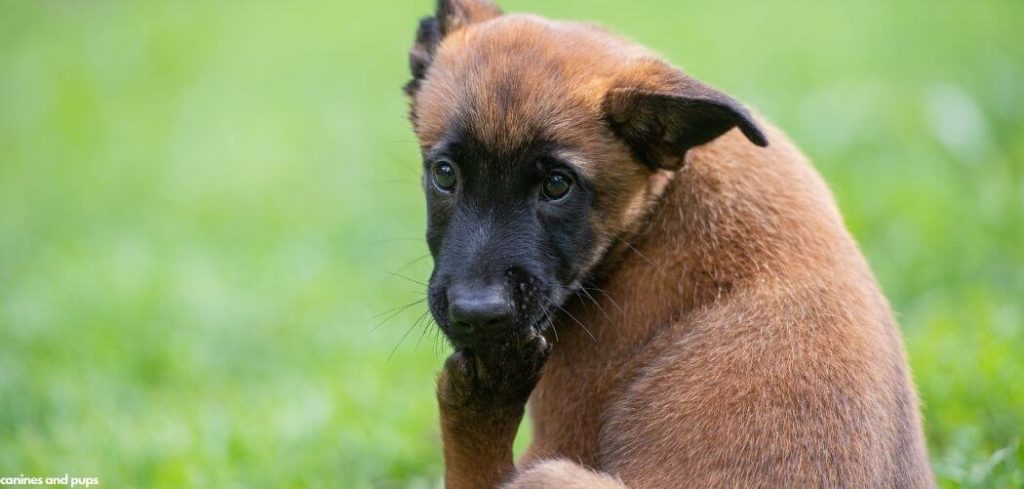
Puppy Has Bloody Stool but Acting Normal: Common Causes
Mild Colon Irritation
A puppy’s digestive tract can become irritated after eating something unusual, getting into food that does not agree with it, or experiencing a sudden dietary change.
Inflammation of the colon can produce mucus, frequent bowel movements, straining, and small amounts of fresh blood.
A puppy with mild intestinal irritation may continue to eat and play normally.
Related: Dog pooping blood and diarrhea but acting normal (Here’s Why)
Dietary Change or Dietary Indiscretion
Puppies often have curious appetites and may eat things they find around the house or outdoors.
A sudden change in food, treats, table scraps, or another dietary indiscretion can upset the gastrointestinal tract.
A small amount of blood may accompany intestinal irritation, but persistent bleeding should not simply be attributed to something the puppy ate without veterinary assessment.
Intestinal Parasites
Parasites are an important consideration when a puppy has bloody stool. Puppies are particularly susceptible to several intestinal parasites, and infections can occur even when a puppy otherwise appears healthy.
Hookworms are especially important because they feed on blood in the intestinal tract and can cause blood loss and anemia in young puppies. Severe infections can result in weakness and other signs of illness.
Other intestinal parasites can cause diarrhea, mucus, poor growth, or changes in stool.
A fecal examination is commonly used to look for intestinal parasites, although different tests may be needed depending on the suspected organism.
Colitis
Colitis means inflammation of the large intestine. It can cause frequent small bowel movements, straining, mucus, and fresh blood.
A puppy with mild colitis may still appear bright and playful. However, ongoing diarrhea can lead to fluid loss, and the underlying cause may be dietary, infectious, parasitic, or related to another gastrointestinal problem.
Related: Dog pooping bloody mucus but acting normal (Here’s why)
Parvovirus
Canine parvovirus is an important concern in puppies, particularly those that have not completed their vaccination series.
It is highly contagious and can cause vomiting, lethargy, loss of appetite, and diarrhea that may become bloody.
A puppy that is initially acting normal does not necessarily have parvovirus.
However, because the disease can progress rapidly, a young or incompletely vaccinated puppy with bloody diarrhea should be taken seriously, particularly if vomiting, reduced appetite, lethargy, or worsening diarrhea develops.
Foreign Material
Puppies commonly explore objects with their mouths and may swallow pieces of toys, fabric, sticks, bones, or other indigestible material.
Foreign material can irritate the digestive tract and may sometimes cause bleeding.
If an object becomes lodged and causes an obstruction, more serious signs such as repeated vomiting, abdominal pain, loss of appetite, lethargy, or difficulty passing stool may develop.
Rectal Irritation
Straining to pass stool or passing unusually hard stool can irritate the rectum and produce a small amount of bright red blood.
If the blood appears mainly as a streak on the outside of an otherwise formed bowel movement, irritation near the end of the digestive tract is one possibility. Persistent bleeding, however, still warrants veterinary evaluation.
Bacterial or Other Intestinal Infections
Certain infectious organisms can cause inflammation of the gastrointestinal tract and bloody diarrhea.
Puppies may be more vulnerable to gastrointestinal infections because their immune systems are still developing.
The specific cause cannot reliably be determined from the appearance of the stool alone.
Depending on the puppy’s symptoms and history, a veterinarian may recommend fecal testing or other diagnostic tests.
Bleeding and Anemia From Parasites
A puppy can occasionally have a parasite-related blood loss problem before appearing obviously sick.
Hookworm infections are particularly significant in young puppies because substantial blood loss can lead to anemia.
This is one reason a puppy that remains playful does not necessarily rule out a meaningful underlying problem, especially when bloody stool keeps recurring.
Related: Dog pooping blood and vomiting (Causes and treatment)
Puppy Has Bloody Stool but Acting Normal and Eating
A puppy that has bloody stool but is still acting normally and eating may have mild irritation of the colon or rectum, particularly if the blood is bright red and appears as streaks on otherwise formed stool.
Intestinal parasites, dietary changes, eating something unusual, or straining to defecate can cause this pattern.
A normal appetite is reassuring but does not exclude parasites or other intestinal problems.
If the blood continues to appear, becomes more noticeable, or the puppy develops diarrhea, vomiting, lethargy, weight loss, or changes in appetite, veterinary evaluation is recommended.
Puppy Has Bloody Stool but Acting Normal and No Diarrhea
Bloody stool without diarrhea may occur when the lower digestive tract or rectum becomes mildly irritated. A small amount of bright red blood on the outside of a formed stool can occur with straining, constipation, dietary irritation, or parasites.
In some cases, the cause may be minor and short-lived.
Nevertheless, blood in a puppy’s stool should not automatically be dismissed because there is no diarrhea.
If the blood is recurrent, the stool becomes black or tar-like, the amount of blood increases, or the puppy develops vomiting, weakness, pale gums, abdominal discomfort, or loss of appetite, veterinary care is needed.
Puppy Has Bloody Stool but Acting Normal After Eating
A puppy that develops bloody stool after eating may be reacting to a dietary change, eating something inappropriate, or intestinal irritation.
Eating table scraps, rich foods, unfamiliar treats, garbage, or non-food objects can upset the digestive tract and sometimes produce small amounts of bright red blood.
The timing after a meal does not necessarily mean the food itself is the direct cause.
If the bloody stool occurs repeatedly after meals, or the puppy has vomiting, diarrhea, abdominal pain, lethargy, or refuses food, a veterinarian should assess the puppy.
In puppies, intestinal parasites and infections should also be considered, particularly if the problem persists.
When to Call or Visit the Vet
Contact a veterinarian if your puppy has bloody stool, especially if:
Blood appears more than once
The amount of blood is increasing
The stool becomes watery or repeatedly bloody
The puppy begins vomiting
Appetite decreases or the puppy refuses food
The puppy becomes tired, weak, or less playful
The puppy develops abdominal pain or swelling
The gums look unusually pale
The puppy is losing weight or failing to grow normally
There is repeated straining to pass stool
The stool becomes black or tar-like
You suspect the puppy swallowed a foreign object
The puppy has not completed its vaccinations
Deworming is overdue or parasite exposure is possible
A very young puppy with significant bloody diarrhea, repeated vomiting, marked weakness, pale gums, or rapidly worsening symptoms needs immediate veterinary attention.
Puppies can become dehydrated and seriously ill more quickly than healthy adult dogs, and parvovirus should be considered in an appropriately exposed young puppy with compatible gastrointestinal signs.
Puppy Has Bloody Stool but Acting Normal: Treatment
Treatment may involve veterinary-directed dietary management, parasite treatment, supportive care, or condition-specific treatment depending on the diagnosis.
Puppies with persistent bleeding, anemia, worsening gastrointestinal signs, or an unclear cause may need additional testing or referral.
Key Takeaway
A puppy that has bloody stool but is acting normal may have something relatively mild, such as temporary intestinal irritation or colitis, but parasites, infections, foreign material, and other gastrointestinal problems are also possible.
Because puppies are particularly susceptible to intestinal parasites and certain serious infections, blood in the stool should be watched closely rather than dismissed simply because the puppy is still playful.
Repeated blood, bloody diarrhea, vomiting, poor appetite, weakness, pale gums, or worsening symptoms should prompt veterinary assessment.


