
When your old dog suddenly starts licking everything — the floor, furniture, blankets, walls, the air, or even themselves — it can be alarming.
A little licking is normal for dogs, but when the behavior becomes constant, repetitive, or new in an older dog, it often signals that something has changed.
We explain the most common reasons for an old dog suddenly licking everything excessively, and what you can do.
Old Dog Licking Everything Excessively Suddenly: Why It Happens
An old dog suddenly licking everything excessively is often reacting to nausea, dental or oral pain, stress or anxiety, neurological changes, cognitive decline, or underlying illness.
Licking can be a self-soothing behavior, a response to discomfort, or a way to cope with confusion or nausea.
While some causes are mild, others require veterinary attention — especially when the behavior appears suddenly in a senior dog.
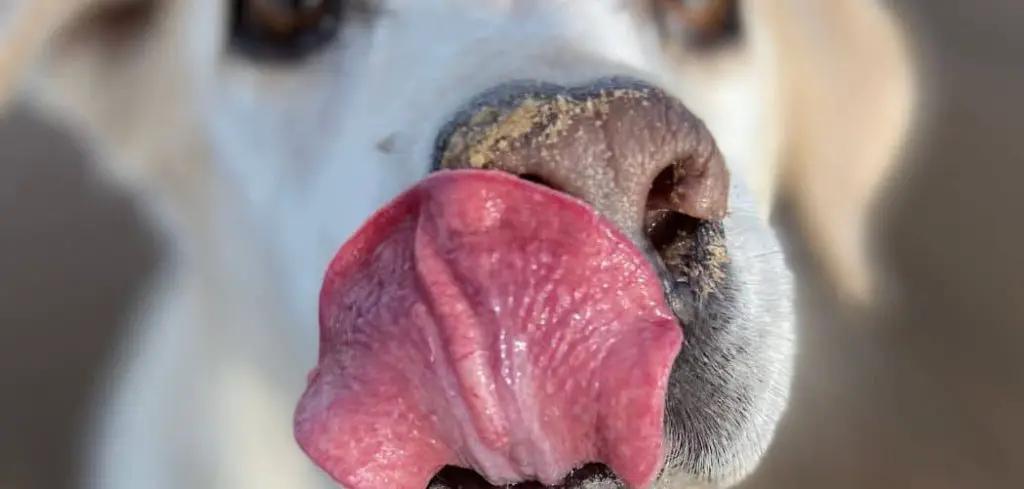
Old Dog Licking Everything Excessively Suddenly: Common Causes
Nausea
One of the most common reasons an older dog suddenly starts licking everything is nausea. Dogs don’t always vomit when they feel sick. Instead, they may lick floors, carpets, furniture, bedding, the air, or their lips in an effort to manage the uncomfortable sensation in their stomach.
This excessive licking is often accompanied by drooling, repeated swallowing, eating grass, burping, restlessness, or a change in appetite.
In senior dogs, nausea can be linked to many underlying causes including kidney disease, liver disease, pancreatitis, gastrointestinal inflammation, toxin exposure, medication side effects, or even acid reflux that becomes more common with age.
Sometimes nausea is the very first sign of illness — and persistent licking may be your earliest clue that something isn’t right.
The licking may seem intense and can continue until the nausea passes. If the behavior repeats frequently or appears alongside other symptoms, it deserves a veterinary evaluation, because gastrointestinal disease is very common in senior dogs.
Related: Old Dog Licking Floor Excessively Suddenly (Here’s why)
Dental Pain
Dental disease is extremely common in older dogs and can trigger sudden excessive licking. When the gums are inflamed or teeth are loose, cracked, or infected, the mouth becomes painful.
Licking is often a response to the discomfort or an attempt to clear saliva caused by drooling.
You may notice bad breath, difficulty chewing, a preference for soft food, pawing at the mouth, or food dropping from the mouth.
Sometimes the signs are subtle, especially if dogs continue eating despite pain — something they are very good at hiding.
In senior dogs, oral tumors and severe infections are unfortunately more likely than in younger dogs. What starts as a “quirky licking habit” can actually be a sign that your dog is uncomfortable — so this cause should never be overlooked.
Stress
Licking is a well-known canine calming behavior. When a dog feels worried, overwhelmed, or unsettled, licking helps soothe the nervous system. In older dogs, new or excessive licking can appear during times of anxiety — such as changes in the home, new pets or babies, visitors, loud noises, or separation.
Senior dogs are also at risk of canine cognitive dysfunction, a form of age-related brain decline similar to dementia in humans.
Dogs with cognitive changes may appear confused, restless, clingy, anxious, or awake at night — and repetitive licking becomes one of the coping behaviors.
You might notice your dog staring into space, pacing, waking at odd hours, forgetting routines, or becoming more vocal.
Licking then becomes a repetitive comfort activity that helps them feel secure in a world that is starting to feel less predictable.
Pain or Physical Discomfort
Dogs rarely show pain openly — especially seniors who may suffer from arthritis, spinal problems, joint disease, or internal discomfort. Excessive licking can actually be a subtle pain signal.
Even when the licking is not directed at the painful area, the behavior itself is often self-soothing. You may also see signs like stiffness when standing, reluctance to jump, slower movement, irritability, or changes in posture.
In some cases, pain may create nausea as well — meaning multiple causes of licking can overlap. Because older dogs frequently live with undiagnosed chronic pain, any new repetitive behavior should prompt a closer look at their overall comfort and mobility.
Neurological Issues
Sudden excessive licking in an old dog can sometimes be linked to neurological activity such as focal (partial) seizures. These seizures don’t always look dramatic. Instead, they may appear as repeated lip licking, swallowing, air licking, snapping at imaginary flies, staring spells, or odd repetitive movements.
During these episodes, your dog may seem distant, frozen, or disconnected. They may be difficult to interrupt or fail to respond normally during the behavior. These events can last seconds to minutes and may occur in clusters.
Because neurological conditions require prompt veterinary care, this possibility should always be considered when the licking appears severely repetitive, trance-like, or is paired with confusion or loss of awareness.
Underlying Disease Affecting Seniors
In senior dogs, excessive licking can sometimes point toward deeper health conditions including kidney failure, liver disease, metabolic disorders, endocrine disease, or toxin exposure.
When the body chemistry changes, nausea, metallic taste sensations, confusion, anxiety, and discomfort can all trigger licking behavior.
What may look like a “behavioral quirk” is sometimes the first visible red flag of internal changes. This is why new or sudden repetitive licking in an older dog should never be ignored.
Related: Old Dog Licking and Swallowing Excessively Suddenly (Explained)
What to Do If Your Old Dog Is Licking Everything Excessively Suddenly
If your old dog suddenly begins licking everything excessively, begin by staying calm and observing carefully. Note when the behavior started, how long it lasts, what your dog licks, and whether it appears before or after meals, during stress, or at night. Small details help your vet uncover the root cause.
Check your dog’s mouth gently if they are comfortable with it. Look for broken teeth, redness, swelling, ulcers, or anything unusual. Do not force their mouth open — especially in painful or arthritic seniors.
Watch for other symptoms like drooling, restlessness, vomiting, decreased appetite, increased thirst, weight loss, or behavior changes. If nausea seems likely, offering smaller, simpler meals and avoiding fatty foods may help temporarily.
Reduce stress by keeping routines predictable, providing a calm environment, and avoiding punishment. Your dog isn’t being disobedient — they are communicating discomfort or emotional distress.
If your dog licks inappropriate surfaces, try to redirect them gently with enrichment, soft interaction, or quiet companionship rather than scolding. The goal is support, not correction.
When to Call or Visit Your Vet
Contact your veterinarian if your old dog:
• Starts licking excessively out of nowhere.
• Continues licking for more than 24–48 hours.
• Also shows vomiting, diarrhea, drooling, or appetite loss.
• Has bad breath or signs of dental pain.
• Seems confused, anxious, or restless at night.
• Appears disoriented or unresponsive during episodes.
• Has pale gums, lethargy, collapse, or severe breathing difficulty.
Seek urgent care if the licking is paired with severe weakness, tremors, collapse, toxin exposure, or seizure-like activity.
Your vet may recommend blood tests, urinalysis, dental assessment, abdominal imaging, or neurological evaluation depending on the suspected cause. Early intervention helps protect your senior dog’s comfort — and quality of life.
Read more: Old Dog Licking Nose Excessively Suddenly (Here’s why)
Key Takeaway
When an old dog is licking everything excessively suddenly, it’s rarely “just a habit.” It is usually your dog’s way of coping with nausea, pain, oral discomfort, stress, confusion, or neurological change.
Because sudden behavior changes in senior dogs can signal underlying illness, it is always safest to observe closely, support your dog calmly, and involve your vet when the behavior is new or persistent.
Your senior dog trusts you to notice the little things — and by responding with care, patience, and love, you’re helping protect their comfort during their golden years.