
If your old dog is curving their body to one side—leaning, bending, or holding their body in a sideways position—it can be concerning to see. While mild posture changes can happen with age, consistent curving to one side usually signals an underlying issue with balance, pain, or neurological function.
Table of Contents
Old Dog Curving Body to One Side: Why It Happens
When an old dog curves their body to one side, it is usually due to imbalance, pain, or neurological disruption affecting one side of the body more than the other. Dogs rely on equal strength and coordination on both sides to maintain posture. When one side is affected, the body may lean, curve, or compensate to stay stable.
Old dog curving body to one side happens because the body is trying to adapt to discomfort, weakness, or altered balance.
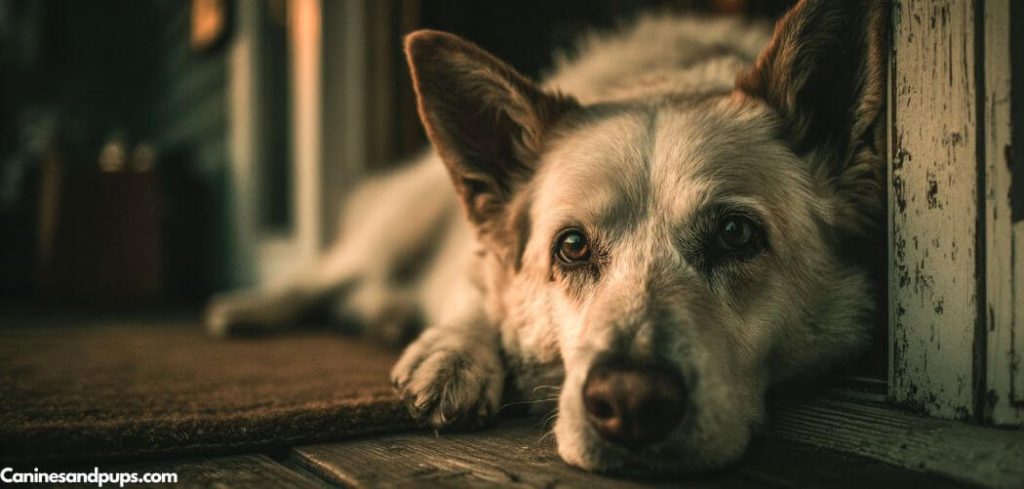
Old Dog Curving Body to One Side: Symptoms
If your old dog is curving their body, you may notice:
Leaning or bending consistently to one side
Walking in a curved path
Head tilt (often on the same side)
Difficulty standing straight
Loss of balance or stumbling
Uneven posture when sitting or lying down
Circling in one direction
Changes in coordination
Old Dog Curving Body to One Side: Common Causes
Vestibular Disease
One of the most common causes of body curving to one side is vestibular disease.
The vestibular system, located in the inner ear and brain, controls balance and spatial orientation. When it is affected—especially on one side—your dog may feel dizzy or off-balance.
This often causes a noticeable lean or curve toward the affected side, along with signs like head tilt, circling, or unsteady walking. The onset is often sudden and can look dramatic, but many dogs improve over time.
Read more: Old Dog Vestibular Disease (Signs, causes and treatment)
Neurological Conditions
Problems in the brain or nervous system can also cause one-sided body changes.
Conditions such as inflammation, tumors, or degenerative diseases can affect how signals are sent to different parts of the body. When one side is impacted more than the other, your dog may lean, curve, or move unevenly.
These cases are often accompanied by additional signs like confusion, weakness, or changes in behavior and should be evaluated promptly.
Related: Old Dog Neurological Problems (Signs to watch out for)
Spinal Problems
Issues in the spine can lead to uneven posture or body curvature.
Degenerative changes, disc problems, or nerve compression can affect how your dog carries their body. If one side is more affected, your dog may curve or lean to compensate.
This can also cause discomfort, reduced mobility, and difficulty maintaining balance.
Pain on One Side of the Body
Pain localized to one side—such as in the hip, leg, or abdomen—can cause your dog to shift their posture.
By curving away from the painful area, your dog reduces pressure and discomfort. This type of posture change is often subtle at first but becomes more noticeable over time.
You may also see reluctance to move, limping, or sensitivity when touched.
Muscle Weakness or Imbalance
Age-related muscle loss can affect one side of the body more than the other.
If muscle strength is uneven, your dog may have difficulty maintaining a straight posture. This can result in leaning or curving as the body compensates for weakness.
This is more likely to develop gradually and may be accompanied by reduced activity or endurance.
What to Do If Your Dog Is Curving to One Side
If your old dog is curving their body to one side, start by ensuring their environment is safe. Remove obstacles and provide non-slip surfaces to prevent falls.
Limit strenuous activity and help your dog move safely if they appear unsteady.
Provide a comfortable resting area with good support to reduce strain on the body.
Observe your dog closely for additional signs such as head tilt, circling, or changes in behavior.
Arrange a veterinary visit as soon as possible to identify the cause.
When to Call or Visit Your Vet
If your old dog is curving to one side, this should be taken seriously. Sudden onset of leaning or imbalance requires immediate attention.
If your dog cannot walk properly, is falling, or seems disoriented, seek urgent care.
Signs like vomiting, head tilt, or rapid worsening should not be ignored. Even gradual changes in posture should be evaluated to rule out underlying issues.
Old Dog Curving Body to One Side: Treatment
Your veterinarian will perform a physical and neurological examination.
Diagnostic tests such as blood work, imaging, or ear exams may be needed.
Treatment depends on the cause. Vestibular issues may require supportive care, while infections or neurological problems may need medication.
Pain-related causes may be managed with appropriate treatment and supportive care.
The goal is to restore balance, reduce discomfort, and improve your dog’s quality of life.
Key Takeaway
An old dog curving body to one side is usually a sign of imbalance, pain, or neurological issues—not normal aging.
Whether the cause is mild or serious, early evaluation is important.
With prompt care and support, many dogs can improve or be managed comfortably.


