
When your old dog circles before laying down, you might wonder if it’s normal or something to worry about.
While a little circling is natural, excessive or prolonged circling in senior dogs often points to discomfort or underlying health changes.
Old Dog Circling Before Laying Down: Why It Happens
When an old dog circles before laying down, it is usually a combination of natural instinct and an attempt to find a comfortable position due to stiffness, pain, or reduced mobility.
Dogs instinctively circle to prepare a resting spot, but in older dogs, this behavior can become exaggerated if lying down is uncomfortable or difficult.
This behavior happens because your dog is trying to adjust their body to reduce pressure, pain, or discomfort.
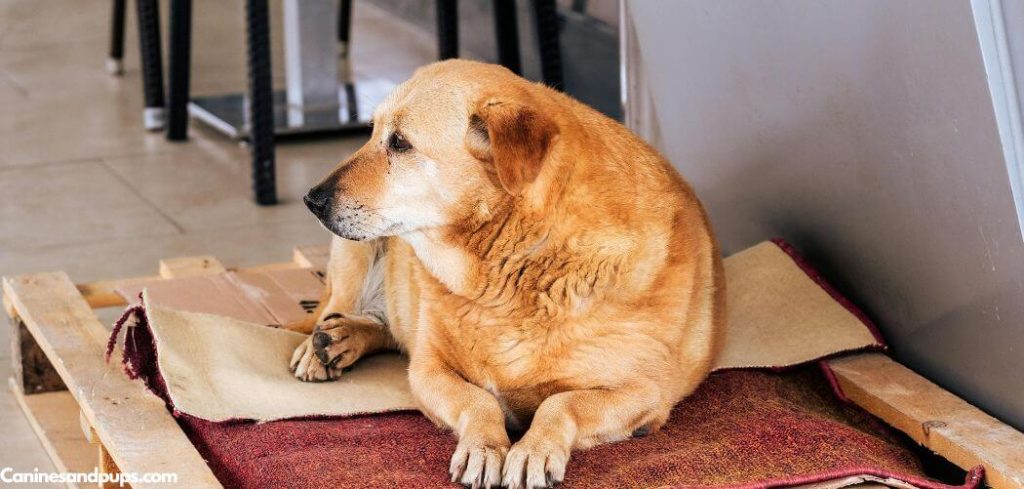
Old Dog Circling Before Laying Down: Symptoms
If your old dog is circling excessively before lying down, you may notice:
Repeated or prolonged circling
Hesitation before lying down
Difficulty lowering themselves to the ground
Groaning or stiffness when settling
Getting up and circling again after lying down
Restlessness at bedtime
Preference for certain surfaces
Slower movements overall
Old Dog Circling Before Laying Down: Here’s Why
Normal Instinctive Behavior
Circling before lying down is a natural behavior that dogs inherit from their ancestors.
In the wild, dogs would circle to flatten grass, check for hazards, and create a comfortable sleeping area. This instinct remains in domestic dogs, even when they have a soft bed.
In older dogs, this behavior may still be present, but it should be brief. If the circling becomes excessive or seems difficult, it often indicates something more than just instinct.
Related: Old Dog Nesting Behavior (Why it happens)
Arthritis and Joint Stiffness
Arthritis is one of the most common reasons circling becomes prolonged or exaggerated.
As joints become inflamed and stiff, it can be uncomfortable for your dog to lie down or find a position that relieves pressure. Circling allows them to slowly adjust their body, testing different positions before committing to lying down.
You may notice that your dog circles more on hard surfaces or takes longer to settle than they used to. This is often accompanied by stiffness, especially after rest.
Muscle Weakness and Loss
Age-related muscle loss can make it harder for your dog to control movements when lying down.
Weaker muscles reduce stability, making the transition from standing to lying more challenging. Circling may help your dog build momentum or position themselves in a way that requires less effort to lie down safely.
This can be subtle at first but becomes more noticeable as muscle strength declines over time.
Pain or Discomfort
Pain from various sources—not just joints—can lead to increased circling behavior.
Internal discomfort, back pain, or pressure sensitivity can make it difficult for your dog to settle quickly. Circling becomes a way to test different positions and avoid discomfort.
Dogs often hide pain, so this behavior may be one of the earliest visible signs that something is wrong.
Anxiety or Restlessness
In some cases, circling before lying down can be linked to anxiety or difficulty settling.
Older dogs may become more sensitive to their environment, especially at night. If your dog feels unsettled, they may circle repeatedly as part of restless behavior rather than physical discomfort.
This is more likely if circling is accompanied by pacing, panting, or inability to relax.
Old Dog Circling Before Laying Down: What to Do
If your old dog is circling excessively before lying down, start by improving their sleeping comfort. Provide a soft, supportive bed—ideally orthopedic—to reduce pressure on joints.
Place the bed in a quiet, familiar area where your dog feels secure and undisturbed.
Encourage gentle daily exercise to maintain muscle strength and flexibility, which can help reduce stiffness.
Keep your dog at a healthy weight, as excess weight increases strain on joints and makes movement more difficult.
Observe patterns in the behavior to help identify whether it’s linked to pain, anxiety, or environmental factors.
When to Call or Visit Your Vet
If your old dog’s circling before lying down has increased or become prolonged, it’s worth discussing with your veterinarian.
Signs of pain, such as stiffness, reluctance to lie down, or vocalizing, should be evaluated.
If your dog struggles to stand or lie down, this may indicate joint or neurological issues.
Sudden changes in behavior or worsening mobility should not be ignored.
Persistent restlessness or inability to settle may also point to underlying health concerns.
Old Dog Circling Before Laying Down: Treatment
Your veterinarian will assess your dog’s joint health, muscle condition, and overall mobility.
Treatment may include pain management, joint supplements, or anti-inflammatory medications.
Physical therapy or controlled exercise plans may be recommended to improve strength and flexibility.
If anxiety or other factors are involved, your vet may suggest behavioral or environmental adjustments.
The goal is to improve comfort, reduce discomfort, and help your dog settle more easily.
Key Takeaway
An old dog circling before laying down is often a mix of normal instinct and age-related discomfort.
While brief circling is normal, prolonged or difficult circling usually signals pain, stiffness, or mobility issues.
By improving comfort and addressing underlying causes early, you can help your dog rest more easily and stay comfortable as they age.