
A dog that suddenly becomes lethargic and refuses to walk is showing a serious change in both energy and mobility that should never be ignored.
When a normally active dog cannot or will not get up, it often means something painful, neurological, or systemic is happening inside their body.
In this guide, we explain the reasons why a dog may suddenly become lethargic and not walk, what you can do and when to seek veterinary care.
Dog Suddenly Lethargic And Not Walking
A dog suddenly lethargic and not walking is usually dealing with pain, injury, infection, neurological problems, or internal illness that makes movement exhausting or uncomfortable.
Joint and muscle injuries, spinal issues, fever, dehydration, and organ disease can all drain energy while also limiting mobility. In some cases, the brain or nerves are affected, making it hard for the dog to coordinate or stand.
Because walking requires strength, balance, and comfort, this combination of symptoms is an important warning sign.
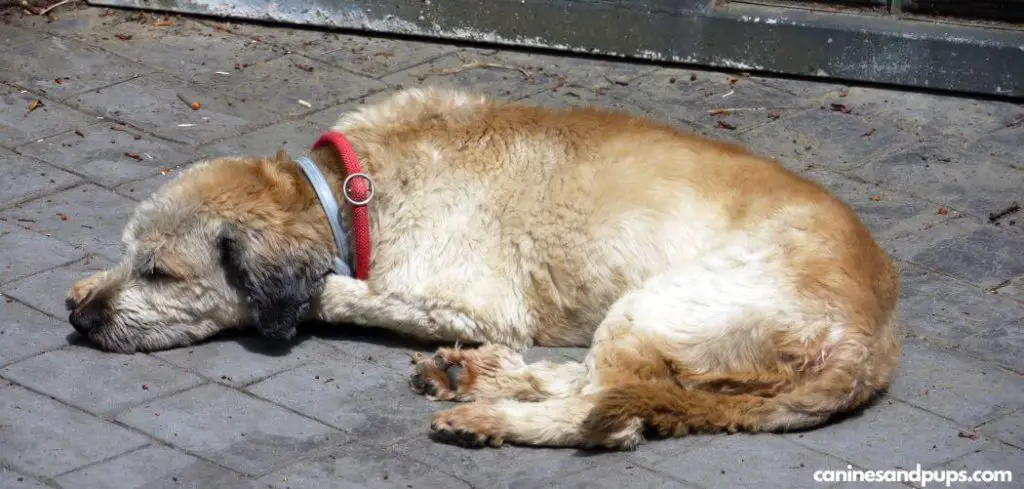
Dog Suddenly Lethargic And Not Walking: Common Causes
Injury or Trauma
A fall, collision, rough play, or even an awkward jump can cause injury to muscles, ligaments, bones, or the spine. These injuries can appear suddenly and may not always have an obvious cause.
You may notice limping, crying out, stiffness, swelling, or a dog that refuses to stand or move. Some dogs will try to get up but lie back down quickly.
Pain makes movement difficult and exhausting. At the same time, pain and stress reduce appetite and energy, leading to lethargy.
Injury is a very common reason a dog suddenly becomes lethargic and not walking and should always be evaluated.
Related: Dog Suddenly Lethargic And Wobbly (Why it happens)
Spinal or Nerve Problems
Problems affecting the spine or nerves can interfere with your dog’s ability to walk. Conditions such as disc disease, nerve inflammation, or spinal compression can develop quickly.
You may see weakness in the back legs, dragging of paws, wobbling, or inability to stand. Some dogs also show signs of pain when their back is touched.
When nerves are not sending proper signals, the muscles cannot work correctly. This makes walking difficult or impossible.
Spinal issues are a serious cause of a dog suddenly lethargic and not walking and require prompt veterinary care.
Infection
Infections in the body cause inflammation, fever, and muscle soreness. This makes dogs feel weak and uncomfortable.
You may notice shivering, warm ears or paws, coughing, nasal discharge, or vomiting along with fatigue. Your dog may prefer to lie still rather than move.
As the immune system works to fight infection, energy levels drop. Muscles can ache, making movement painful.
This combination often explains why a dog suddenly becomes lethargic and not walking during illness.
Dehydration
Dehydration can happen quickly if a dog has been vomiting, had diarrhea, or has not been drinking enough water. Low fluids affect circulation and muscle function.
Signs include dry gums, sunken eyes, weakness, and reduced urination. Dogs may seem too tired to stand.
Without enough fluids and electrolytes, muscles and nerves cannot function properly, leading to weakness and lethargy.
Dehydration can make a dog suddenly lethargic and not walking and can become dangerous without treatment.
Joint or Muscle Disease
Arthritis flare-ups, joint infections, or muscle inflammation can cause sudden pain and stiffness. Even dogs without known joint problems can develop acute inflammation.
You may notice difficulty standing, reluctance to climb stairs, or swelling around joints. The dog may cry out or resist being moved.
Joint and muscle pain makes walking uncomfortable and tiring. The stress of pain also reduces energy and appetite.
This is a common reason a dog suddenly becomes lethargic and not walking.
Organ or Metabolic Disease
Problems with the kidneys, liver, heart, or endocrine system can make a dog extremely weak. These conditions interfere with circulation, oxygen delivery, and energy production.
You may see weight loss, vomiting, diarrhea, increased drinking, or changes in breathing along with lethargy.
As toxins or imbalances build up, muscles and the brain do not work as well. The dog becomes too weak to walk normally.
Internal disease is a serious cause of a dog suddenly lethargic and not walking and requires veterinary evaluation.
Related: Dog Lethargic And Shaking After Vaccination (What it means)
Dog Suddenly Lethargic And Not Walking: What to Do
When your dog is suddenly lethargic and not walking, keep them in a quiet, comfortable place to prevent further injury. Avoid forcing them to stand or move.
Make sure fresh water is nearby and encourage small sips if your dog is willing to drink. Hydration is very important during illness or weakness.
If your dog will eat, offer small portions of bland food like plain boiled chicken and rice. Do not force-feed if they refuse.
Observe your dog closely for changes in breathing, pain, or alertness so you can provide accurate information to your veterinarian.
Making an Appointment With Your Vet
If your dog cannot stand, walk, or seems in pain, you should contact your veterinarian right away.
Seek emergency care if lethargy and inability to walk are accompanied by fever, vomiting, collapse, or difficulty breathing.
A dog suddenly lethargic and not walking after a fall, accident, or possible toxin exposure needs immediate attention.
If symptoms do not improve within a few hours or continue to worsen, veterinary care is essential.
Related: Dog shaking and lethargic (Causes explained)
Key Takeaway
A dog suddenly lethargic and not walking is a clear signal that something serious may be affecting their body, whether it is injury, infection, neurological problems, or internal disease. These symptoms should never be brushed off as simple tiredness.
By keeping your dog calm, monitoring closely, and seeking veterinary care early, you can protect their health and give them the best chance to recover.
When in doubt, always trust your instincts and get professional help.