
Seeing your dog constantly licking their front paws can be concerning — especially when the licking becomes repetitive, noisy, or obsessive.
While occasional paw licking can be normal grooming, excessive front-paw licking almost always means something is bothering your dog either physically or emotionally.
In this guide we explain the most common reasons why a dog may excessively lick their front paws, what you can do at home, and when to seek veterinary care.
Dog Excessively Licking Front Paws: Why It Happens
A dog excessively licking their front paws is usually reacting to itchiness, allergies, infection, irritation, anxiety, or pain. The front paws are easy to reach, so any discomfort there quickly turns into licking.
Over time, the behavior can become compulsive, and the constant moisture may damage the skin — sometimes leading to painful sores or infections.
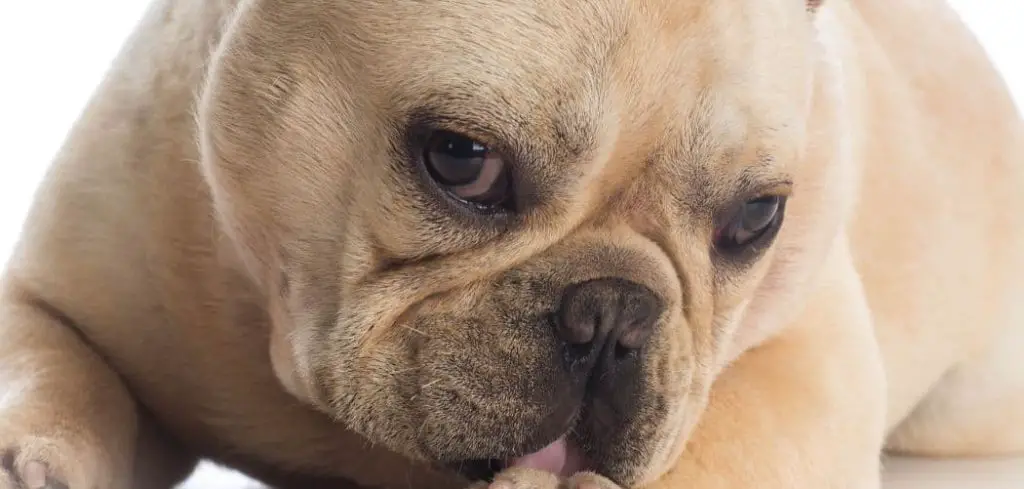
Dog Excessively Licking Front Paws: Common Causes
Paw Infections
Once a dog starts licking frequently, the paws stay damp — and moisture is the perfect breeding ground for yeast and bacteria.
These infections cause even more itching, irritation, and sometimes pain. You may notice a musty or “corn-chip” smell, greasy residue, dark discoloration, swelling, or sores between the toes.
Dogs often lick harder and more frequently when infection is present, which unfortunately makes the infection worse. Over time, they can develop painful hot spots or thickened skin.
Some dogs even limp due to discomfort. These infections typically require veterinary treatment because they rarely go away on their own.
Related: Dog Excessively Licking Back Leg (Why it happens)
Allergies
Allergies are one of the most frequent reasons dogs excessively lick their front paws. Environmental allergens such as pollen, dust mites, grasses, mold spores, and even household cleaners can irritate the skin.
Because dogs walk barefoot everywhere, their paws are constantly in contact with these irritants, leading to inflammation and itchiness that your dog tries to soothe through licking.
Food allergies can also show up as paw licking rather than digestive upset. Many allergic dogs develop redness between the toes, swelling, and brown staining from saliva.
Some dogs chew aggressively at their paws during flare-ups, especially at night when the house is quiet and the itch becomes more noticeable. Left untreated, the skin may thicken, crack, or become more sensitive over time — which only encourages more licking.
Anxiety
Excessive paw licking is not always caused by a skin problem. Sometimes dogs lick their front paws as a self-soothing habit when they feel anxious, lonely, overstimulated, or under-stimulated.
Licking releases calming endorphins in the brain — so the behavior becomes reinforcing and comforting.
This can happen in dogs that spend long periods alone, lack exercise or mental stimulation, or experience major changes at home.
Sensitive or highly attached dogs are especially prone to anxiety-related licking. What often begins as occasional licking may slowly become a compulsive routine, and even when the original stressor is gone, the habit remains.
Because anxiety-related licking still damages the skin over time, it’s important to address both the emotional and physical components — not just the behavior.
Parasites
Parasites don’t just live on the back or tail — they can also affect the paws. Dogs that are allergic to flea saliva may begin licking the paws after a single bite. Even indoor dogs can get fleas, and you may not always see them, especially if your dog licks them away quickly.
Mites, such as those causing mange, can also make the paws itchy and uncomfortable. These microscopic parasites burrow into the skin, triggering intense irritation.
Dogs often focus their chewing and licking on the front paws, particularly between the toes where mites can hide. The skin may become red, scaly, crusty, or thickened as the problem worsens.
Because parasites are rarely visible to the naked eye, they’re easy to miss — which is why persistent paw licking should always be evaluated.
Pain, Arthritis, or Paw Injury
Dogs sometimes lick a specific paw due to pain rather than itchiness. Anything from a sprain or arthritis to a thorn, cracked claw, bee sting, or tiny cut can cause persistent discomfort.
Since dogs cannot massage or examine the sore area like we can, they lick to relieve the sensation.
Pain-related licking usually affects one paw more than the others, although it can involve both front paws if arthritis or joint inflammation is present.
You may also notice limping, stiffness, or reluctance to walk on certain surfaces. Foreign bodies such as burrs, splinters, or glass slivers can get wedged in the paw pads or between the toes — and may be nearly invisible under the fur.
When pain is the cause, addressing the underlying injury or condition is essential. Licking alone will never solve the problem — and may even delay healing.
Contact Irritation
Grass chemicals, salt used for de-icing, lawn treatments, cleaning sprays, asphalt, or even rough walking surfaces can irritate the paw pads. Many dogs lick their paws after walks not because of dirt — but because the skin feels irritated or itchy afterward.
Seasonal licking is especially common during spring and summer due to pollen exposure, or winter when dry air and salt damage the pads.
Dogs with sensitive skin may react more dramatically. Over time, the licking becomes part of the routine, even when the irritant is gone.
Wiping paws after walks and avoiding treated areas can make a big difference — but if the licking continues, a deeper issue may be at play.
What to Do If Your Dog Is Excessively Licking Front Paws
If your dog is excessively licking their front paws, the first step is to gently inspect the paws in good lighting. Spread the toes and examine the pads, nails, and skin between the toes. Look for redness, swelling, moisture, odor, wounds, foreign objects, or discoloration from saliva.
If your dog seems painful or resists strongly, avoid further handling and contact your vet.
Keeping the area clean and dry helps reduce irritation. You can rinse the paws with lukewarm water after walks to remove allergens or irritants, and gently pat dry — especially between the toes.
Avoid applying human creams, ointments, or essential oils unless your vet approves them, because many are unsafe when licked.
Consistent, high-quality flea and parasite prevention is important even if you don’t see pests. If anxiety seems to play a role, increasing exercise, enrichment, companionship, and routine stability can sometimes help — though medical causes should always be ruled out first.
Preventing licking temporarily with a cone or protective bootie may protect the skin, but this should never replace diagnosing the true cause. If the behavior lasts more than a couple of days or the paws look sore, veterinary care is the safest path forward.
When to Call or Visit Your Vet
Contact your veterinarian promptly if:
- Your dog licks the front paws constantly or obsessively.
- You notice redness, swelling, sores, or bleeding.
- The paws smell foul, feel warm, or have discharge.
- Your dog is limping or showing pain.
- There is severe hair loss or thickened skin.
- The licking lasts longer than 2–3 days.
- Your dog is lethargic, anxious, or unwell in other ways.
Your vet may perform skin tests, allergy screening, paw exams, infection checks, or imaging if pain is suspected. Treatment may include anti-itch medication, antibiotics, antifungals, parasite control, diet changes, paw-care plans, or anxiety support depending on the cause.
The sooner treatment begins, the easier it is to prevent chronic skin changes or compulsive licking habits.
Related: Dog Excessive Licking Base of Tail (Here’s why)
Key Takeaway
A dog excessively licking the front paws is almost always reacting to itchiness, irritation, anxiety, or pain — not just grooming.
While it may look harmless at first, repeated licking can quickly damage the skin and lead to infection or long-term discomfort.
By gently checking the paws, supporting skin health, keeping parasite control up to date, and seeking veterinary guidance when needed, you can help your dog feel more comfortable and prevent the habit from becoming chronic.
Trust your instincts — if the licking feels excessive, persistent, or worrying, reaching out to your vet is always the safest step for your dog’s health and happiness.