
When your dog is constantly licking their “bits” — the genital or groin area — it can be uncomfortable to watch and worrying as an owner.
Occasional grooming is normal, but excessive licking almost always means something is irritating, painful, or medically wrong.
We explain the most common reasons a dog may be excessively licking the genital area, what you can do, and when to seek veterinary care.
Dog Excessively Licking Bits: Why It Happens
A dog excessively licking their bits is usually responding to itching, irritation, discharge, infection, urinary tract discomfort, allergies, parasites, or anxiety-related behaviors.
Sometimes the cause is simple, such as normal cleaning after urination. Other times the behavior is constant, intense, and focused — a sign that your dog is trying to soothe discomfort or pain.
Because the genital region is sensitive and prone to moisture, even small issues can quickly become big problems if ignored.
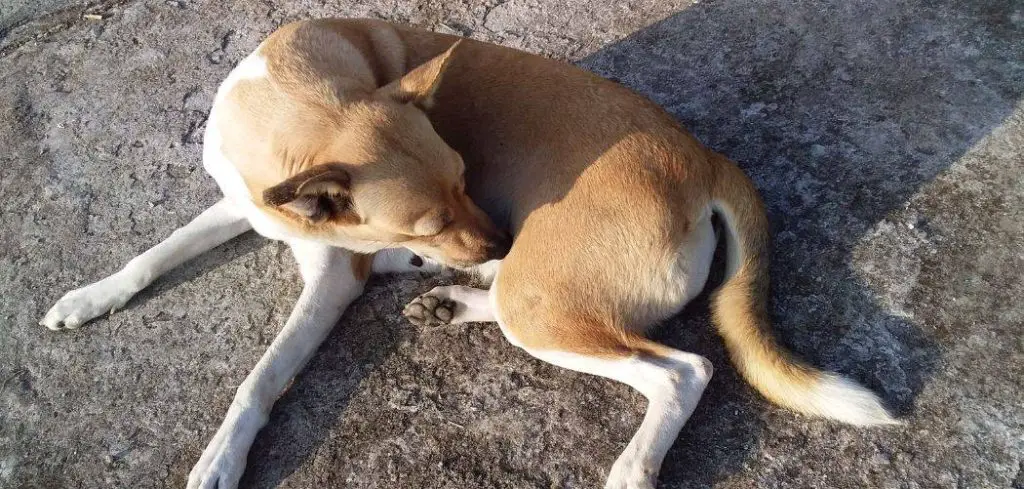
Dog Excessively Licking Bits: Common Causes
Urinary Tract Infection (UTI)
Urinary tract infections are one of the most common reasons dogs start licking the genital area repeatedly. UTIs cause burning, irritation, and a frequent urge to urinate. Since dogs cannot scratch the inside of the urinary tract, they lick the outside instead to relieve the sensation.
You might also notice your dog needing to go outside more often, producing only small amounts of urine, or straining during urination. Some dogs dribble urine or have accidents in the house even though they are normally well trained.
The urine may have a strong odor, appear cloudy, or in some cases, contain a small amount of blood.
Because UTIs are painful and can travel to the kidneys if untreated, this cause always deserves veterinary evaluation.
Read more: Dog keeps licking anus and it smells (What it means)
Allergies
Allergies commonly cause intense itching around the groin and inner thighs. Dogs can be allergic to food ingredients, pollen, grass, cleaning chemicals, laundry detergents, grooming products, or even plastic bowls.
When the skin becomes inflamed, dogs respond naturally by licking. The constant moisture created by licking then irritates the skin further, creating a cycle of itch and lick that is hard to break.
Over time the skin may appear red, thickened, darker in color, or moist. Some dogs lose hair in the area from rubbing and grooming.
Even mild allergies can make the genital area very uncomfortable because the skin there is thin and sensitive. Management typically requires both identifying the allergen and soothing the affected skin.
Skin Infection
Warm, moist environments are ideal for yeast and bacteria to grow. The genital region is naturally warm and often damp, meaning infections easily develop there — especially in dogs who are already licking excessively.
A dog with a yeast or bacterial infection often licks obsessively because these infections are extremely itchy or even painful.
You may notice odor, greasy or flaky skin, redness, or thickened patches. In some dogs, a sticky discharge or crust may be present around the vulva or prepuce.
These infections rarely go away on their own and can spread or worsen if ignored. Veterinary treatment is normally needed to stop the itch, eliminate the infection, and allow the skin to heal.
Anal Gland Problems
Even though the anal glands are not exactly the “bits,” problems here frequently make dogs lick the genital and back-end area.
Dogs have two anal glands just inside the rectum that produce a strong-smelling fluid. If the glands become full, infected, or impacted, they can be extremely uncomfortable.
Dogs with anal gland irritation may lick underneath the tail base and genitals because everything in that area feels uncomfortable at once.
You may also see scooting, foul odor, swelling beside the anus, or sudden sensitivity when touched near the back end.
Anal gland problems are very common and should not be ignored because they can quickly turn into abscesses that are painful and require urgent care.
Parasites
Parasites are another major reason dogs lick their bits excessively. Fleas often congregate near the rear end and groin where the skin is thin, causing intense itching. Even one flea bite can trigger severe licking in sensitive or allergic dogs.
Intestinal worms, especially tapeworms, can also cause irritation around the anus and genital region, leading to licking and scooting. You may even see rice-like segments near the stool or stuck to the fur.
Mites can cause significant itchiness and hair loss around thin-skinned areas including the groin.
Because parasites are contagious and uncomfortable, prompt treatment and year-round prevention are essential.
Hormonal or Reproductive Issues
In female dogs, excessive licking of the bits may be associated with heat cycles, vaginal infections, or uterine problems.
Discharge, odor, swelling, or behavioral changes may occur along with the licking. In rare but serious conditions like pyometra, the licking may be one of the first signs something is very wrong.
In male dogs, licking may be linked to inflammation of the sheath or penis, known as balanoposthitis. Yellow discharge, swelling, or excessive interest in the area are common signs. Unneutered males may also lick more frequently due to hormonal stimulation.
Any persistent discharge or swelling around the genitals should always be checked by a veterinarian, as reproductive conditions can progress quickly.
Anxiety
Not all licking is due to physical irritation. Some dogs develop anxiety-based licking behaviors. This may happen during boredom, after changes in the home, during separation from owners, or when a dog lacks mental stimulation.
Licking releases endorphins — feel-good chemicals — so the action becomes self-soothing.
Over time the behavior may turn compulsive, meaning the dog licks even when the original trigger is gone and the skin is already sore.
Compulsive licking commonly leads to hair loss, raw skin, and infections, so behavior-based causes still need veterinary attention and emotional support.
Related: Dog Excessively Licking Back (Here’s why)
What to Do If Your Dog Is Excessively Licking Their Bits
If your dog is excessively licking the genital area, the first step is gentle observation rather than scolding. Licking is your dog’s way of communicating discomfort, and punishment only increases stress.
Carefully check the area if your dog will allow it. Look for redness, swelling, discharge, odor, rashes, or wounds. Note whether your dog is urinating normally or seems to strain, dribble, or squat more often. It also helps to look under the tail and along the inner thighs where inflammation easily spreads.
Keep the area clean and dry. You can gently wipe with warm water or a veterinarian-approved pet wipe, but avoid human soaps, antiseptics, or creams unless directed by a vet — many are unsafe if licked. Try to limit licking with distraction rather than force while you seek underlying answers.
Think about recent changes. New food, treats, grass exposure, grooming products, carpet cleaners, or flea exposure may all be clues. If worms are suspected, a stool sample will be helpful for your vet.
Most importantly, remember that excessive licking is not just “gross dog behavior” — it’s a symptom. Acting early prevents infection, pain, and long-term complications.
When to Call or Visit Your Vet
You should contact your veterinarian promptly if any of the following are present:
- Your dog licks constantly or seems unable to stop
- There is redness, swelling, discharge, or a foul odor
- You notice blood or pus from the genital area
- Your dog is straining to urinate or urinating frequently
- There is scooting, swelling, or pain near the anus
- There are visible worms or flea dirt
- Your dog appears lethargic, feverish, or refuses food
- The licking lasts longer than 24–48 hours even without other symptoms
Veterinary care may involve medication for infections, parasite treatment, allergy control, urinary testing, or treatment for reproductive disorders. If anxiety is part of the cause, behavior support, enrichment, or calming strategies may be discussed.
It’s always better to be cautious with genital or urinary problems. These areas are sensitive and infections can worsen quickly if left untreated.
Read more: Dog Excessively Licking Back Legs (What it means)
Key Takeaway
A dog excessively licking its bits is not just being “overly clean.” It is usually responding to irritation, itching, discomfort, infection, urinary problems, allergies, parasites, reproductive issues, or emotional stress.
Some causes are mild. Others require quick veterinary treatment. Your best approach is calm observation, gentle cleaning, prevention of further irritation, and timely veterinary guidance if symptoms persist or worsen.
With prompt care, most dogs feel relief quickly and return to normal grooming habits — comfortable, happy, and no longer focused on licking their bits.
If your dog is excessively licking today, trust your instincts. You know your dog best — and early action keeps them healthy and comfortable.