
If your senior dog suddenly starts hopping on their back legs instead of walking normally, it can be both confusing and concerning.
Old dog hopping on back legs is often a sign that something is affecting mobility, joint function, or nerve control. While some causes are mild and manageable, others may indicate more serious orthopedic or neurological problems.
Dogs typically compensate for discomfort in subtle ways. A hopping motion is usually your dog’s way of avoiding pain or instability in one or both hind legs. Recognizing what this movement pattern means can help you intervene early and protect your dog’s comfort.
We explain the most common reasons an old dog may hop on their back legs, how to tell the difference between minor and serious causes, and what treatment options are available.
Table of Contents
What Does Hopping On Back Legs Mean?
When owners describe an old dog hopping on back legs, they often mean one of two things:
The dog is lifting one hind leg and hopping on the other.
The dog is “bunny hopping,” moving both back legs together instead of alternating steps.
Both patterns usually signal discomfort, weakness, or instability in the hind limbs. In older dogs, these movement changes often develop gradually, but they can also appear suddenly if an injury occurs.
Observing when the hopping happens — during exercise, after rest, or consistently — can provide important clues.
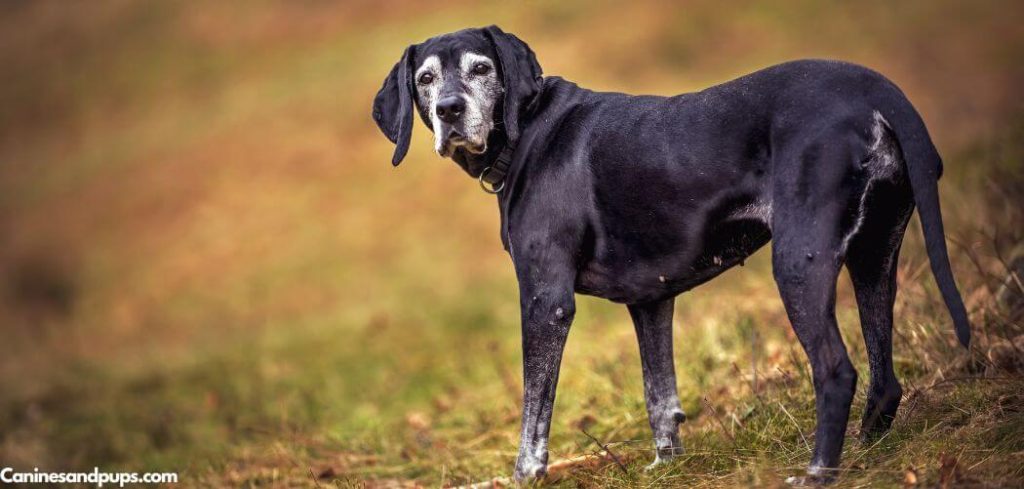
Old Dog Hopping On Back Legs: Common Causes
Arthritis In The Hips Or Knees
Osteoarthritis is one of the most common reasons for old dog hopping on back legs. As cartilage wears down over the years, joints become stiff and painful. When a dog experiences discomfort in one hind leg, they may briefly lift it and hop on the other to reduce pressure.
If both hips are affected, some dogs adopt a bunny-hopping gait, moving both back legs together to minimize individual joint strain.
Arthritis-related hopping is often more noticeable after periods of rest or during cold weather. You may also see difficulty rising, reluctance to climb stairs, or reduced enthusiasm for walks.
While arthritis cannot be cured, early management can significantly improve mobility and comfort.
Related: Old dog back legs splayed out (What it means)
Hip Dysplasia
Hip dysplasia is a structural abnormality where the ball and socket of the hip do not fit together properly. Although the condition often begins in puppyhood, symptoms frequently worsen in old age as arthritis develops.
Dogs with hip dysplasia often exhibit bunny hopping during running or climbing stairs. This gait reduces stress on unstable joints.
In senior dogs, hip dysplasia is often accompanied by muscle loss in the hindquarters and stiffness after activity.
X-rays are typically needed to confirm the diagnosis.
Related: Old Dog Hip Dysplasia (Causes, signs and treatment)
Cranial Cruciate Ligament Injury
A tear or rupture of the cranial cruciate ligament (CCL) in the knee is another common cause of hopping. When this ligament is damaged, the knee becomes unstable, and the dog may avoid bearing weight on that leg.
An old dog hopping on back legs due to a cruciate injury may suddenly lift one hind leg and hop on the other. Swelling around the knee and reluctance to stand are common signs.
In older dogs, degenerative changes can weaken the ligament over time, making rupture more likely even without major trauma.
Treatment may involve surgery or conservative management depending on severity and overall health.
Luxating Patella
A luxating patella occurs when the kneecap slips out of its normal position. This condition is common in small breeds but can affect any dog.
When the kneecap shifts, the dog may suddenly hop on one leg for a few steps until it slides back into place. These episodes may appear intermittent and brief.
Although some cases are mild, repeated dislocation can lead to arthritis and chronic discomfort.
Veterinary evaluation is necessary to determine severity.
Neurological Conditions
Nerve-related disorders can also cause abnormal gait patterns. Degenerative myelopathy, spinal disc disease, or nerve compression may weaken one or both hind legs.
In neurological cases, hopping may be accompanied by dragging of the paws, wobbliness, or loss of coordination.
Unlike orthopedic pain, neurological issues may not always cause visible discomfort but can still significantly affect mobility.
Because neurological conditions can progress, early diagnosis is crucial.
Muscle Weakness From Aging
Sarcopenia, or age-related muscle loss, commonly affects the hindquarters. When muscles weaken, stability decreases. Some senior dogs may hop briefly as they regain balance or compensate for weakness.
Muscle-related hopping is usually gradual and may improve with strengthening exercises and physical therapy.
However, muscle loss often accompanies joint disease, making combined management necessary.
Related: Old Dog Hurt Back Leg (Causes and what to do)
When Is Hopping An Emergency?
Seek immediate veterinary attention if hopping is accompanied by:
Sudden inability to stand
Severe pain
Crying out when touched
Dragging of one or both hind legs
Loss of bladder or bowel control
Collapse
These signs may indicate spinal injury or severe ligament rupture.
Diagnosis
If your old dog is hopping on back legs, your veterinarian will begin with a thorough orthopedic and neurological examination.
They may assess:
Joint range of motion
Knee stability
Hip flexibility
Muscle mass
Reflex responses
X-rays are commonly used to evaluate arthritis, hip dysplasia, and structural abnormalities. In cases where neurological disease is suspected, advanced imaging may be recommended.
Accurate diagnosis ensures targeted treatment.
Related: Old dog suddenly can’t use back legs (Here’s why)
Treatment for Old Dog Hopping On Back Legs
Treatment depends on the underlying cause.
For arthritis and hip dysplasia, anti-inflammatory medications and joint supplements are often prescribed. Weight management reduces strain on affected joints.
Cruciate ligament injuries may require surgical stabilization, although some older dogs can be managed conservatively with rest and medication.
Luxating patella treatment varies from monitoring mild cases to surgical correction in severe cases.
Neurological conditions may require specialized medications, physical therapy, or supportive care.
Physical rehabilitation, including controlled exercise and hydrotherapy, is beneficial in many cases.
Supporting Your Senior Dog at Home
Home modifications can significantly improve comfort.
Provide non-slip flooring to prevent slipping. Use ramps instead of stairs when possible. Offer orthopedic bedding to cushion sore joints.
Maintain a healthy weight to reduce joint stress. Encourage gentle, regular exercise to preserve muscle strength.
Avoid high-impact activities such as jumping or rough play.
Consistency in routine and careful observation help track improvement or progression.
Can Hopping Be Reversed?
In some cases, yes. If hopping is caused by mild joint inflammation or muscle weakness, appropriate treatment can restore normal movement.
In chronic conditions such as advanced arthritis, hopping may not fully resolve but can often be reduced significantly with proper management.
The earlier you address mobility changes, the better the outcome.
Key Takeaway
Old dog hopping on back legs is rarely random. It is typically a sign of joint pain, ligament injury, hip dysplasia, muscle weakness, or neurological disease.
While some causes are manageable and even reversible, others require ongoing treatment to maintain quality of life.
If you notice your senior dog hopping, do not assume it is simply “old age.” Early veterinary evaluation can identify the cause and prevent worsening mobility issues.
With appropriate care, supportive home adjustments, and consistent monitoring, many senior dogs continue to move comfortably and enjoy their daily routines.
Your dog’s change in movement is their way of communicating discomfort. By responding promptly and thoughtfully, you can help protect their mobility and comfort in their golden years.