
If your old dog is suddenly getting up at night, pacing, or waking you repeatedly, it can be frustrating and concerning at the same time.
Ocasional restlessness can happen, but frequent nighttime waking often points to underlying physical or cognitive changes that come with aging.
Old Dog Getting Up at Night: Why It Happens
An old dog gets up at night because they may feel confused, uncomfortable, need to urinate more frequently, or experience pain, anxiety or medical conditions that disrupts their ability to rest peacefully.
As dogs age, their sleep cycles change, and they may struggle to stay settled through the night.
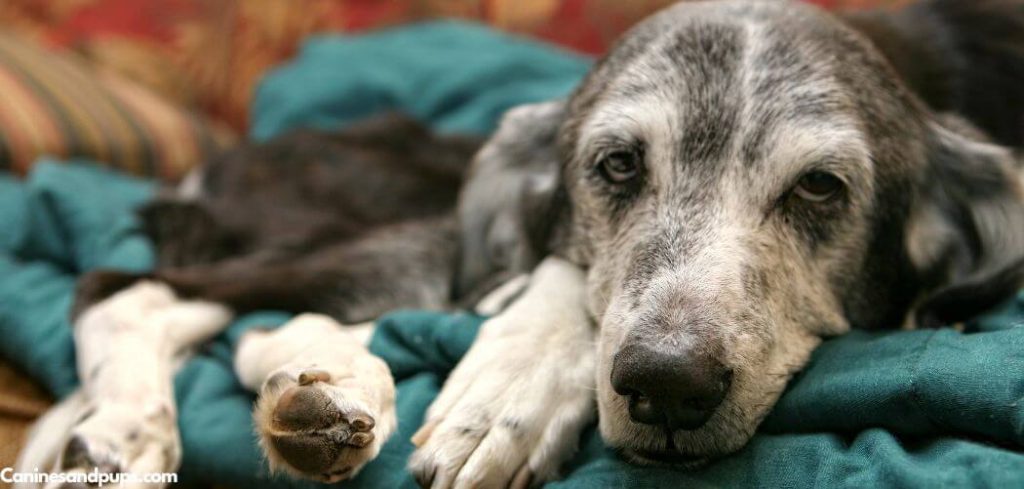
Old Dog Getting Up at Night: Symptoms
If your old dog is getting up at night, you may notice:
Pacing or wandering during nighttime hours
Whining, barking, or restlessness at night
Difficulty settling or staying asleep
Asking to go outside more often
Accidents in the house overnight
Increased daytime sleeping
Confusion or disorientation in the dark
Seeking attention or following you around at night
Old Dog Getting Up at Night: Common Causes
Canine Cognitive Dysfunction
Cognitive decline is one of the leading causes of nighttime waking in older dogs. As brain function changes with age, dogs can develop confusion about day and night, leading to disrupted sleep cycles. They may sleep more during the day and become restless or active at night.
This condition can also cause disorientation, anxiety, and repetitive behaviors like pacing or staring.
Nighttime is often when symptoms are most noticeable because the environment is quiet and less stimulating. Over time, episodes may become more frequent and prolonged.
Related: Old Dog Syndrome (Signs, causes and treatment)
Pain
Chronic pain can make it difficult for your dog to stay comfortable while lying down for long periods.
Arthritis and joint issues often worsen at night when the body is still, causing stiffness and discomfort that wakes your dog up.
Your dog may get up, shift positions, or pace in an attempt to find relief. Groaning, slow movement, or reluctance to lie down again are common signs.
This type of nighttime waking is often linked to mobility issues during the day as well.
Increased Need to Urinate
Older dogs may need to urinate more frequently due to age-related changes. Conditions such as urinary tract infections, kidney disease, or reduced bladder control can cause your dog to wake up needing to go outside.
You may notice your dog asking to go out more often at night or having accidents indoors if they cannot hold it.
This is especially common in senior dogs whose bodies are less efficient at regulating fluids.
Separation Stress
Some older dogs develop anxiety as they age, particularly at night. Reduced vision, hearing loss, or cognitive decline can make the dark feel more unsettling. Your dog may feel insecure when left alone and seek comfort by waking you or moving around the house.
Changes in routine, environment, or household dynamics can also contribute to nighttime anxiety. This behavior is often paired with whining, pacing, or clinginess.
Digestive Issues or Hunger
Digestive discomfort can disrupt sleep in older dogs. Gas, indigestion, or even hunger can cause your dog to wake up and become restless during the night.
Older dogs sometimes benefit from adjusted feeding schedules, as long gaps between meals can lead to discomfort or drops in energy levels.
You may notice your dog licking, pacing, or appearing unsettled until they are able to rest again.
Vision or Hearing Loss
Sensory decline can make nighttime more confusing for older dogs. If your dog cannot see well in low light or hear familiar cues, they may feel disoriented when they wake up.
This can lead to wandering, pacing, or difficulty settling back down. They may also seek you out for reassurance.
This type of behavior often develops gradually as sensory loss progresses.
Read more: Old Dog Crying at Night (Here’s why)
Old Dog Getting Up at Night: What to Do
Start by creating a consistent and calming nighttime routine. Feeding, walks, and bedtime should happen at the same time each day to help regulate your dog’s internal clock.
Provide a comfortable sleeping area with supportive bedding, especially if your dog has joint pain. A warm, quiet space can make a big difference in sleep quality.
Take your dog out for a final bathroom break before bedtime to reduce the chances of nighttime waking due to urination needs.
Limit daytime naps slightly if your dog is sleeping excessively, as this can help encourage better sleep at night.
Offer gentle reassurance if your dog wakes up, but try to avoid reinforcing constant nighttime activity by keeping interactions calm and minimal.
When to Call or Visit Your Vet
If your old dog is getting up at night frequently or the behavior is worsening, it’s important to consult your veterinarian.
Changes in sleep patterns are often linked to underlying health issues.
You should seek veterinary advice if nighttime waking is accompanied by confusion, disorientation, or behavioral changes. These may indicate cognitive dysfunction.
If your dog is waking to urinate more often, has accidents, or shows signs of discomfort, medical evaluation is needed to rule out infections or organ issues.
Sudden changes in nighttime behavior should always be taken seriously, especially in older dogs.
Old Dog Getting Up at Night: Treatment
Treatment for an old dog getting up at night depends on the underlying cause.
For cognitive dysfunction, your vet may recommend medications, supplements, and dietary changes to support brain health.
If pain is a factor, managing arthritis with appropriate medications and supportive care can improve sleep quality.
Urinary or kidney issues will require targeted treatment, including medication or dietary adjustments.
For anxiety-related causes, behavioral strategies and calming aids may be helpful. Addressing the root issue is key to helping your dog rest more comfortably at night.
Key Takeaway
An old dog getting up at night is often a sign of changing physical or mental needs rather than just a habit.
While it can be challenging, understanding the cause is the first step toward improving your dog’s comfort and sleep.
With the right care and support, you can help your dog feel more secure and settled during the night, improving quality of life for both of you.