
It can be alarming to see an older dog biting a puppy, especially when you expect them to get along peacefully.
While some level of correction is normal between dogs, repeated or intense biting can signal stress, discomfort, or deeper issues.
Old Dog Biting Puppy: Why It Happens
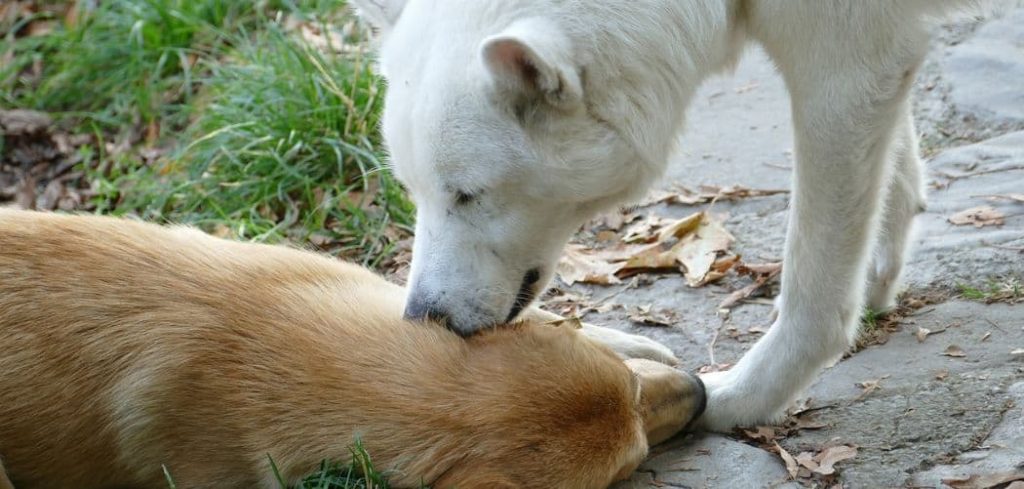
An old dog biting a puppy happens because the older dog is either teaching boundaries or reacting to discomfort, stress, or reduced tolerance, and the behavior can be normal or problematic depending on how intense and frequent it is.
Senior dogs often have less patience for a puppy’s constant energy and may use growling, snapping, or biting to communicate limits. In other cases, discomfort, anxiety, or confusion can make the older dog react more strongly than expected.
Environmental changes, competition, or overstimulation can also increase tension between them.
Old Dog Biting Puppy: Symptoms
If your old dog is biting a puppy, you may notice:
Growling, snapping, or baring teeth
Quick nips when the puppy approaches
Escalation from warnings to actual biting
Avoidance followed by sudden reactions
Guarding food, toys, or resting areas
Stiff body posture before reacting
Signs of stress like panting or pacing
Rough play that becomes aggressive
Puppy appearing fearful or submissive
Old Dog Biting Puppy: Common Causes
Normal Boundary-Setting Behavior
One of the most important things to understand is that not all biting is bad behavior.
Older dogs often play a teaching role when interacting with puppies. Puppies are naturally energetic, curious, and often ignore social cues, which can overwhelm a senior dog. In response, the older dog may growl, snap, or give a quick corrective nip to communicate, “That’s enough.”
This is how dogs naturally teach boundaries. These corrections are typically brief, controlled, and do not cause injury. The older dog usually shows warning signs first, such as stiffening, turning away, or growling.
If the puppy learns and backs off, the interaction resolves quickly. However, problems arise when the puppy ignores these signals or the older dog escalates too quickly, which can turn normal communication into a risky situation.
Read more: Old Dog Jealous Of New Puppy (Why it happens)
Pain
Pain is one of the most overlooked but critical causes of an old dog biting a puppy. Senior dogs commonly suffer from arthritis, joint stiffness, dental pain, or internal discomfort. When a puppy jumps on them, climbs over them, or engages in rough play, it can trigger sudden pain.
Because dogs instinctively protect themselves, the older dog may bite as a reflex to stop the discomfort immediately. This type of biting often happens during physical contact, especially around sensitive areas like hips, back, or legs.
You may notice that the older dog reacts more strongly when resting or when the puppy approaches from certain angles. In many cases, the biting is not about aggression—it is a direct response to pain.
If pain is the cause, the behavior will often worsen over time unless the underlying issue is treated.
Reduced Tolerance With Age
As dogs age, their patience naturally decreases. What they once tolerated as younger adults, constant play, noise, or interruptions, can become overwhelming. Puppies, by nature, are persistent and often do not respect boundaries unless taught.
An older dog may initially try to avoid the puppy, walking away or ignoring them. But if the puppy continues to push for interaction, the older dog may escalate to snapping or biting.
This reduced tolerance is not unusual. Older dogs tend to prefer calm environments, longer rest periods, and predictable routines. A high-energy puppy disrupts that balance.
Over time, if the older dog feels constantly bothered or unable to rest, their reactions can become quicker and more intense.
Resource Guarding
Resource guarding can become more pronounced in senior dogs. As dogs age, they may feel more vulnerable and protective over things that bring them comfort, such as food, toys, or sleeping areas.
When a puppy approaches these resources, the older dog may perceive it as a threat.
This can lead to growling, snapping, or biting as a way to defend what they value. In some cases, even the presence of the puppy near their resting space can trigger a reaction.
Resource guarding is not about dominance—it’s about security. Older dogs may feel the need to protect what they have, especially if they are less confident or physically capable.
Without proper management, this behavior can escalate, particularly if the puppy repeatedly ignores warnings.
Stress From Change
Bringing a puppy into the home is a major change, and not all older dogs adjust easily.
Senior dogs are typically more set in their routines and may struggle with sudden disruptions. A new puppy introduces noise, unpredictability, and competition for attention.
This can lead to chronic stress or anxiety, which lowers the dog’s tolerance and increases reactivity. The older dog may feel overwhelmed, leading to snapping or biting as a coping mechanism.
You might notice additional signs such as pacing, restlessness, avoidance, or changes in appetite. These are indicators that the older dog is not comfortable with the situation.
Stress-related biting often occurs when the dog feels they have no other way to escape or control the environment.
Canine Cognitive Dysfunction
Cognitive decline (dog dementia) can significantly affect how an older dog interacts with a puppy. Dogs with canine cognitive dysfunction may become confused, disoriented, or less able to interpret social cues. They may misread the puppy’s playful behavior as threatening or unfamiliar.
This confusion can lead to inappropriate or exaggerated reactions, including biting. For example, a dog may suddenly react aggressively to a puppy they previously tolerated.
You may also notice other signs such as wandering, staring, disrupted sleep, or forgetting routines. These changes indicate that the dog’s brain is not processing information as clearly as before.
In these cases, the biting is not intentional aggression—it is a result of confusion and reduced cognitive function.
Related: Old Dog Syndrome (Signs, causes and treatment)
Overstimulation and Lack of Breaks
Puppies often have endless energy, while older dogs need more rest. If the puppy is constantly engaging, jumping, or demanding attention, the older dog may become overstimulated. Without enough breaks, their stress levels build up.
Eventually, this can lead to a sudden reaction, such as snapping or biting, as a way to shut down the interaction.
This type of biting often happens after prolonged interaction, rather than immediately. It’s a sign that the older dog has reached their limit.
Providing structured downtime and separation is essential to prevent this buildup of frustration.
Poor Introduction
How the puppy is introduced to the older dog plays a huge role in their relationship.
If introductions are rushed or unstructured, the older dog may feel overwhelmed from the start. Without clear boundaries, the puppy may develop bad habits like jumping, chasing, or ignoring signals.
This creates a pattern where the older dog feels the need to constantly correct the puppy, increasing the likelihood of biting.
A lack of supervision can also allow small issues to escalate into more serious conflicts over time.
Read more: Old Dog Biting (Causes and what to do)
Old Dog Biting Puppy: What to Do
If your dog is biting a puppy, close supervision is essential. Never leave them alone together until you are confident in their interactions.
Give your older dog a safe, quiet space where they can rest without being disturbed. This helps reduce stress and prevents unwanted encounters.
Redirect the puppy’s behavior when they become too pushy or energetic. Teaching the puppy to respect boundaries is key to improving the relationship.
Maintain separate feeding areas and avoid competition over toys or resting spots to reduce tension.
Support your older dog’s comfort with soft bedding and gentle handling, especially if pain may be a factor.
When to Call or Visit Your Vet
If the biting becomes frequent, intense, or results in injury, seek professional help.
Sudden increases in aggression should always be evaluated to rule out pain or medical issues.
If your dog shows signs of discomfort, stiffness, or reluctance to move, underlying pain may be contributing to the behavior.
Confusion, disorientation, or personality changes alongside biting may indicate cognitive dysfunction.
If you feel unsafe or unsure how to manage interactions, professional guidance is essential.
Old Dog Biting Puppy: Treatment
Pain management, cognitive support, or anxiety treatment may be recommended depending on the diagnosis.
Behavioral guidance and structured training plans can also help improve interactions between your dog and puppy.
Key Takeaway
An old dog biting a puppy can be normal communication, but it can also signal discomfort, stress, or deeper issues.
Understanding the cause is key to knowing whether to intervene or allow natural correction.
With proper supervision, training, and care, most situations can improve, helping both dogs feel safe and comfortable.