
Limping of a Blue Heeler is unusual and this can be a reason for concern. It can come on suddenly or gradually as a Blue Heeler slowly develops difficulty in walking.
So what causes Blue Heeler limping?
Let’s dive into the common causes of Blue Heeler limping and when to seek help.
Table of Contents
Why is my Blue Heeler limping?
Blue Heeler limping can be caused by injury, joint problems, bone disease, and neurological disorders that affect their joints, bones, muscle, paws, or other tissue. This leads to a Blue Heeler developing an abnormal gait and limping.
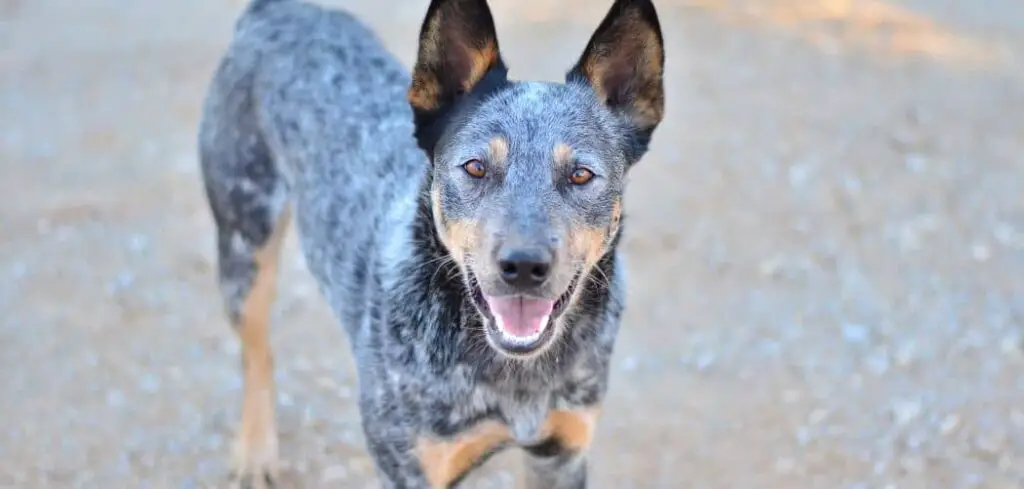
Blue Heeler Leg Problems
Blue Heelers are active, athletic dogs, so leg problems can develop from injuries, overuse, joint disease, ligament problems, arthritis, or abnormalities affecting the bones and muscles.
Puppies can also develop orthopedic problems while growing, while older dogs are more likely to experience arthritis and other degenerative joint conditions.
Signs can include limping, stiffness, difficulty rising, reluctance to jump or climb stairs, reduced activity, swelling, or repeatedly licking a painful leg.
Persistent or recurring lameness should be evaluated rather than assuming it is simply from exercise or aging.
Possible Causes of Blue Heeler Limping
Injury
A Blue Heeler can become injured on their legs or body which can cause limping. Injury can be from stepping on something sharp such as nails, glass, sticks, or animal bites, stings, broken nails, bruising, frostbite, burns, torn ligaments, sprains, fractures, or broken bones.
This can result from having their leg(s) stuck in the fence, an attack from another dog, or car accidents.
Checking for these possible causes of injury can help to initially determine if they are the cause of the limping and your Blue Heeler’s trouble walking.
Bone disease
As a medium-sized dog, Blue Heelers are also susceptible to bone diseases. Bone diseases affect the stability of the legs, making walking difficult and painful.
This includes Eosinophilic panosteitis which affects young Blue Heeler’ legs, arthritis, and bone cancer. These lead to limping and difficulty in walking.
Joint disease
Joint disease or problems are also common in Blue Heeler. The conditions occur during development when the joints do not develop properly due to fast growth, or diet.
Blue Heeler joint diseases include osteoarthritis, hip and elbow dysplasia, osteochondritis dissecans (OCD), and Lyme disease which causes swollen joints and lameness.
A Blue Heeler with bone or joint disease will have difficulty in walking, standing, lying down, or climbing stairs because of their sore weak legs.
Neurological disorders
Neurological disorders limit the transmission of signals from a dog’s nerves to the brain for a particular function of the body. When this affects signals from the legs to the brain, limping occurs.
Canine Degenerative Myelopathy is a neurological condition common in dogs as well as Blue Heeler that causes a Blue Heeler to have an abnormal walk.
Blue Heeler Limping Front Leg
A Blue Heeler may limp on a front leg because of a paw injury, torn nail, muscle strain, sprain, joint inflammation, or an injury to the shoulder, elbow, or wrist.
Active dogs can also develop injuries after running, jumping, or rough play. Arthritis and other joint conditions may become more apparent as the dog ages.
If the limp is mild and the dog otherwise seems comfortable, restrict running and jumping and check the paw for cuts, swelling, or something stuck between the toes.
A sudden severe limp, inability to put weight on the leg, significant swelling, obvious injury, or severe pain requires prompt veterinary assessment.
Read more: Blue Heeler limping front leg: Reasons why and what to do
Blue Heeler Limping Back Leg
Limping on a back leg can result from a paw or nail injury, muscle strain, ligament injury, hip or knee problems, or arthritis.
Cranial cruciate ligament disease, which affects the knee, is an important cause of hind-leg lameness in dogs and can cause difficulty bearing weight or getting up.
A Blue Heeler that repeatedly limps, sits differently, struggles with stairs, or avoids running should be examined by a veterinarian.
Sudden inability to bear weight, severe pain, marked swelling, or an obvious traumatic injury needs immediate veterinary care.
Read more: Blue Heeler limping back leg: The causes and how to help
When To Seek Help
Blue Heeler limping can be moderate or severe. It is not unusual not to know when to seek help when you start noticing the symptom. However, seek help when your Blue Heeler:
- Is injured
- Limping continues for more than 1- 2 days
- Has signs of broken bones or dangling limbs Swelling of the limbs
- Seems in pain
- Health is deteriorating with other symptoms of illness (loss of appetite or lethargy)
The veterinarian will conduct a full examination to determine the underlying cause of the limping.
Limping due to injury may be determined quickly if it is due to injury of the paws by sharp objects or due to a sprain, cut, frostbite, or burn.
Other underlying causes require more tests to determine the problem. Tests that are conducted include x-rays, a biopsy for detection of cancer, or blood tests for determination of infection causing Lyme disease.
Blue Heeler Limping:Treatment
After the determination of the underlying cause for limping, treatment will be provided. This includes a Blue Heeler requiring a few days of rest if limping is due to moderate injury.
Other treatment options include administration of medication, rehabilitation exercises, surgery, or change of diet with supplements having glucosamine and chondroitin to support bone and joints.
Key Takeaway
Limping is a sign that something may be wrong with your Blue Heeler. It could be due to injury or a serious underlying health problem.
If your Blue Heeler is limping due to injury or underlying health condition, medical care is required.
With the right treatment and care, Blue Heeler limping can be managed. Therefore consult your veterinarian when you notice signs of limping.


